





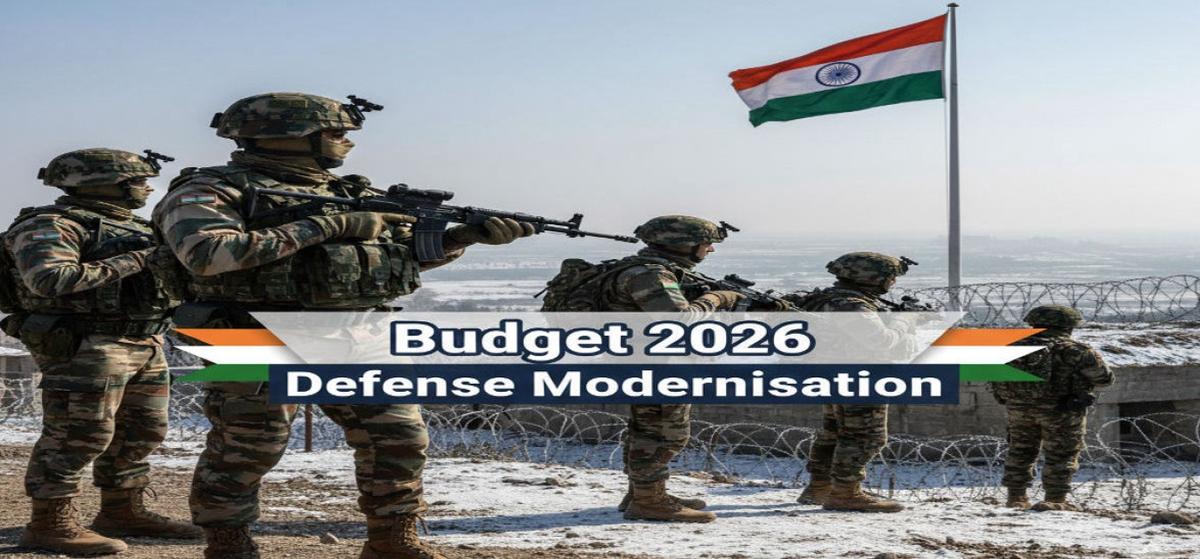
Budget 2026 reinforces India's defence posture with a substantial allocation that balances modernisation, self-reliance and border readiness amid evolving geopolitical realities. As global tensions rise and regional challenges persist, the government prioritises capability building without compromising fiscal discipline, positioning defence as a key growth multiplier through domestic industry.
The headline figure signals continuity in capital outlay, earmarked primarily for procurement of advanced platforms across Army, Navy and Air Force. Focus areas include fighter jets, submarines, missile systems and surveillance tech, addressing critical gaps in high-altitude warfare, maritime domain awareness and integrated theatre commands. This sustained capex trajectory ensures operational superiority while deterring adventurism along contested frontiers.
Atmanirbhar Bharat in defence takes centre stage, with enhanced funding for indigenous design, development and production. DRDO and DPSUs receive mandates to indigenise 75% of equipment by 2027, backed by iDEX schemes for startups and MSMEs. Positive indigenisation lists expand, barring imports in 500+ items from drones to radars. Public-private partnerships accelerate co-development, reducing forex outflows and building a vibrant ecosystem.
Border infrastructure emerges as a strategic priority, with accelerated projects along LAC, LoC and international borders. All-weather roads, strategic tunnels, helipads and forward bases enhance rapid deployment and logistics sustainment. BRO's expanded role includes high-altitude habitats and communication networks, critical for deterrence in terrain-challenged zones. Investments in dual-use civilian-military assets foster regional development alongside security.
Modernisation extends to human capital—modern gear, habitat upgrades and welfare schemes for troops. Agnipath refinements improve retention, training and post-service skilling, addressing concerns while maintaining a youthful force. Special provisions for border guardians like ITBP and BSF bolster internal security amid hybrid threats.
Naval expansion counters maritime challenges, funding blue-water capabilities like aircraft carriers, P-75I submarines and anti-ship missiles. Indigenous shipbuilding at public yards and private players like L&T scales output, supporting coastal security and Indian Ocean outreach.
Air power gets booster shots for Tejas Mk2, AMCA prototypes and UAV swarms. Upgrades to Su-30MKI and Mirage fleets bridge interim gaps, while satellite constellations enhance ISR. Theatre commands integration demands joint platforms, prompting tri-service acquisitions.
Cyber and space domains gain dedicated budgets for offensive-defensive capabilities. Defence Cyber Agency and Space Command build resilience against digital and orbital threats, aligning with global norms.
Export momentum builds with lines of credit, marketing assistance and offset clauses favouring friendly nations. Defence corridors in UP and TN attract FDI, creating jobs and tech spillovers.
Fiscal strategy leverages revenue from ordnance sales, PPPs and asset monetisation to supplement outlays. Outcome budgeting ties funds to delivery timelines, curbing delays plaguing past procurements.
Economically, defence spending stimulates metallurgy, electronics and MSMEs, generating 5 lakh jobs yearly. Atmanirbhar reduces import bills by $5bn annually, freeing resources for welfare.
For troops, Budget 2026 means better equipment, faster postings and family support. Industry sees order pipelines worth ₹2 lakh crore over five years. Nationally, it signals resolve: secure borders enable economic focus.
Challenges—procurement bureaucracy, tech absorption—require reforms like single-window clearances and DAP 2020 tweaks. Success metrics: indigenisation %, export growth, project timelines.
Budget 2026 cements defence as India's shield and sword, blending tradition with innovation for strategic autonomy.
 Budget 2026 Defence: Weapons & Atmanirbhar Push FAQs
POST A COMMENT (0)
All Comments (0)
Replies (0)