





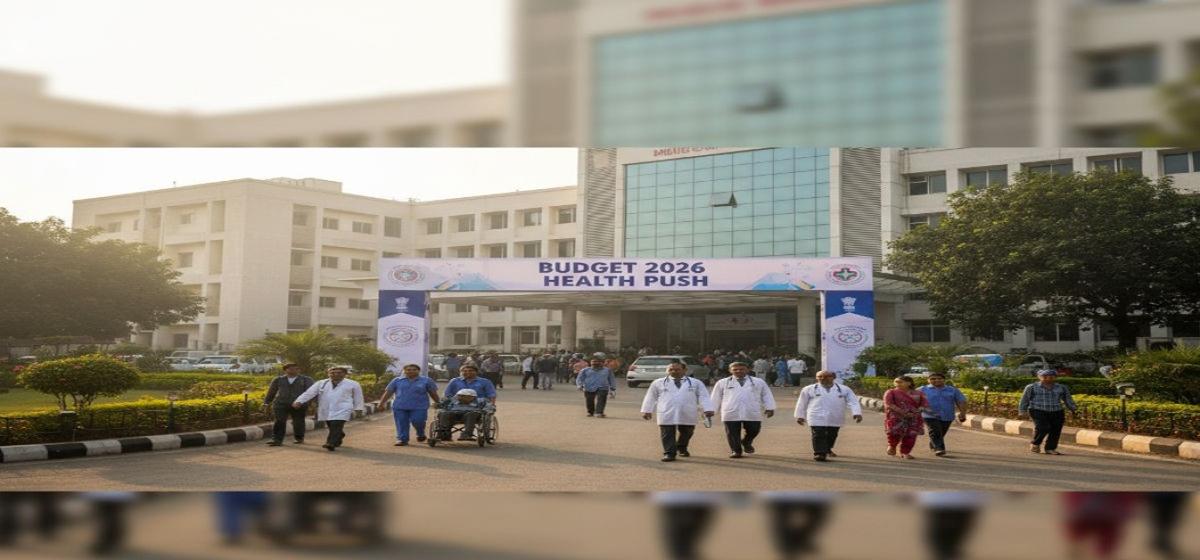
Budget 2026 marks a decisive step forward in India's healthcare journey, with substantial allocations aimed at bridging infrastructure gaps, expanding insurance coverage and integrating technology. As the nation grapples with rising health needs post-pandemic, the government's focus is on making quality care accessible, affordable and preventive rather than reactive.
Central to the Budget's healthcare strategy is the expansion of Ayushman Bharat, India's flagship health insurance scheme. This programme, already covering over 500 million vulnerable citizens, sees enhanced funding to widen eligibility, increase coverage limits and streamline claims. By reducing out-of-pocket expenses for hospitalisation, secondary and tertiary care, the scheme directly alleviates financial distress for low and middle-income families. Budget 2026 emphasises portability across states and private empanelment to ensure seamless access regardless of location.
Hospital infrastructure receives a major thrust, with new allocations for district hospitals, community health centres and specialty wings. The government is prioritising upgrades in underserved regions, including critical care units, operation theatres and diagnostic labs. This addresses longstanding shortages in beds per capita and specialised services, particularly in tier-2 and tier-3 cities where public facilities often face overload. Medical colleges and nursing schools also get boosted funding to build a larger pool of trained professionals.
Mental health emerges as a priority area, reflecting growing awareness of psychological well-being. Budget 2026 supports dedicated centres, helplines and community outreach programmes tailored to urban stress, rural isolation and youth vulnerabilities. Integration with primary healthcare ensures early detection, while training for ASHA workers and counsellors extends support to remote areas. This holistic approach recognises mental health as integral to overall productivity and societal harmony.
Digital health infrastructure forms the backbone of long-term reforms. The Ayushman Bharat Digital Mission (ABDM) is scaled up with investments in electronic health records, telemedicine platforms and unified IDs. Patients can now access records across providers, reducing redundant tests and enabling remote consultations—crucial for rural India where specialists are scarce. AI-driven tools for disease surveillance and predictive analytics promise proactive interventions, from outbreak management to personalised care plans.
Domestic manufacturing of medical devices, pharmaceuticals and vaccines aligns with Atmanirbhar Bharat. Incentives for local production aim to cut import reliance, stabilise prices and foster innovation. Budget 2026 backs R&D in generics, biologics and med-tech startups, positioning India as a global health supply hub. Public-private partnerships accelerate this, with PLI schemes extended to diagnostics and equipment.
Primary and preventive care gets renewed emphasis through wellness centres and screening camps. Nutrition, maternal health and non-communicable diseases like diabetes and hypertension are targeted via awareness drives and subsidised check-ups. This upstream focus aims to lower the burden on tertiary facilities, promoting a healthier population and reducing long-term costs.
Regional equity is woven into the fabric, with special packages for aspirational districts and northeastern states. Tele-ICU links, mobile units and drone deliveries for medicines address geographical barriers. Women's health initiatives, including cervical cancer screening and anaemia control, underscore gender-specific needs.
Financing blends central outlays with state contributions and private involvement. Viability gap funding de-risks projects, while health bonds and insurance pools attract capital. Fiscal prudence ensures sustainable spending, avoiding populism.
For citizens, Budget 2026 translates to shorter queues at government hospitals, cashless treatments under expanded insurance and app-based doctor access. Businesses in pharma, med-tech and health-tech see growth signals, spurring investments. Economically, a healthier workforce boosts productivity, curbing absenteeism and welfare costs.
Challenges remain—execution speed, quality control and last-mile delivery—but the Budget lays a robust foundation. By 2030, these measures could elevate India's health indices, supporting Viksit Bharat ambitions. Success hinges on inter-ministerial coordination, data privacy safeguards and community buy-in.
In essence, Budget 2026 views healthcare as an investment in human capital, blending infrastructure, insurance, tech and equity for universal coverage.
 Budget 2026 Healthcare: Hospitals & Insurance Boost FAQs
POST A COMMENT (0)
All Comments (0)
Replies (0)