





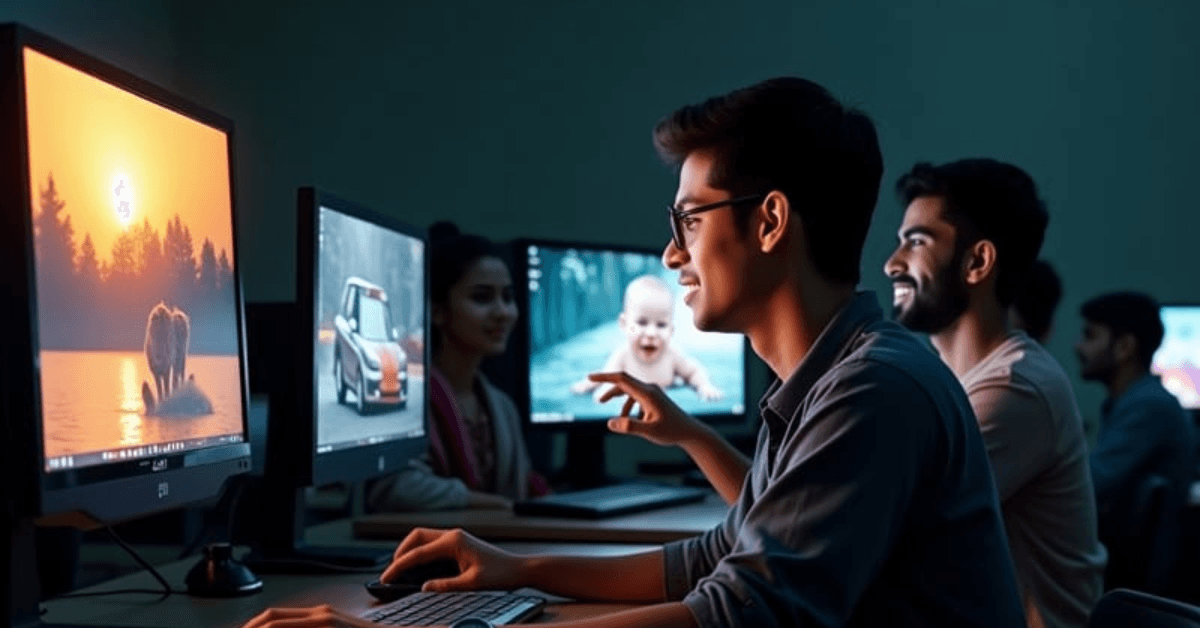
Maharashtra Approves ₹3,268 Crore AVGC-XR
Policy 2025: A New Era for India’s Creative Tech
Industries
The Maharashtra government has taken a major step toward positioning the state as a global hub for creative technologies with the approval of the Animation, Visual Effects, Gaming, Comics, and Extended Reality (AVGC-XR) Policy 2025. With a planned outlay of approximately ₹3,268 crore, the policy seeks to attract nearly ₹50,000 crore in private investment while creating around 200,000 high-tech jobs across diverse segments of the creative economy.
This ambitious framework underlines Maharashtra’s commitment to fostering innovation, supporting entrepreneurship, and building world-class infrastructure for an industry projected to be one of the fastest-growing in the world. The AVGC-XR sector not only contributes to entertainment but also impacts education, healthcare, e-commerce, defense, and industrial applications.
Understanding the AVGC-XR Ecosystem
The AVGC-XR sector encompasses multiple interlinked industries:
-
Animation – Producing 2D and 3D animation for films, advertisements, and digital platforms.
-
Visual Effects (VFX) – Creating high-quality computer-generated effects used in movies, OTT series, gaming, and advertising.
-
Gaming – Video game development for consoles, PCs, mobile phones, and immersive platforms.
-
Comics – Both traditional and digital comic creation, with scope for transmedia storytelling.
-
Extended Reality (XR) – Integrating Virtual Reality (VR), Augmented Reality (AR), and Mixed Reality (MR) for applications in entertainment, education, design, defense, and medicine.
Globally, the AVGC-XR sector is valued at hundreds of billions of dollars, and India has been slowly emerging as an outsourcing destination as well as a creator of original IP. Maharashtra, home to Bollywood, advertising agencies, and major digital media houses, already has a strong foundation to scale these industries.
Policy Objectives and Key Highlights
The Maharashtra AVGC-XR Policy 2025 has been designed with multiple long-term goals in mind:
-
Financial Outlay
A state investment of approximately ₹3,268 crore will support infrastructure, training, and research. -
Private Investment Target
The policy aims to attract around ₹50,000 crore in private sector funding, creating a multiplier effect across the industry. -
Employment Creation
Nearly 200,000 high-tech jobs are expected, ranging from 3D animators to AI-based XR developers. -
Infrastructure Development
The government plans to establish world-class AVGC-XR Centers of Excellence, incubation hubs, and skill development institutes in major cities such as Mumbai, Pune, and Nagpur. -
Skill Development and Training
Collaborations with universities, polytechnic institutes, and international organizations will help build a skilled workforce for future demands. -
Promotion of Original IPs
Incentives will be provided for the creation of original Indian animated films, games, and XR content to reduce dependence on outsourced projects. -
Export Competitiveness
Maharashtra seeks to make India one of the leading exporters of AVGC-XR services, competing with hubs like South Korea, Japan, and Canada.
The Economic Promise of AVGC-XR in Maharashtra
The policy reflects the recognition that AVGC-XR is no longer a niche sector but a mainstream growth driver. Globally, the gaming industry alone has surpassed both the film and music industries in terms of annual revenue. In India, the AVGC sector is expected to grow at a CAGR of more than 20% in the coming years.
Job Creation Potential
With 200,000 new jobs expected, Maharashtra could emerge as the largest employment generator in India’s creative industries. These roles span across storyboarding, 3D animation, game design, coding, XR simulation, and sound engineering.
Boost to Startups
The state hopes to create a fertile environment for startups in gaming and XR technologies. Maharashtra already hosts some of India’s most successful gaming and VFX startups, and the policy framework will give them the financial and infrastructural support needed to scale globally.
Attracting Foreign Direct Investment (FDI)
By aligning with international studios and gaming companies, Maharashtra seeks to attract global players to set up production hubs in India, reducing outsourcing costs for Hollywood and Asian entertainment giants.
Global Comparisons: Learning from Other Countries
Several countries have successfully developed AVGC-XR ecosystems, and Maharashtra’s policy borrows lessons from them:
-
South Korea – Focused investments in gaming and esports transformed it into a global gaming capital.
-
Canada – Tax incentives for VFX and animation have made cities like Vancouver global leaders.
-
Japan – Strong cultural exports in anime and manga showcase how storytelling can drive economic growth.
-
China – Aggressive domestic policy support has made it one of the largest gaming and XR markets worldwide.
By studying these models, Maharashtra’s policy emphasizes incentives, skill-building, and IP protection to replicate global successes in an Indian context.
Challenges Ahead
Despite the optimism, there are multiple challenges that Maharashtra must navigate:
-
Skill Gap – India still lacks enough trained professionals in specialized areas such as real-time rendering, AI-driven XR, and advanced VFX.
-
Infrastructure Deficit – High-quality rendering farms, studio facilities, and XR labs require massive investments.
-
Global Competition – Countries like South Korea and Canada offer heavy subsidies and tax breaks, making competition tough.
-
Piracy and IP Protection – Without strong enforcement of intellectual property rights, original content creators may be discouraged.
-
Technology Access – Rapid evolution of gaming engines and XR platforms requires constant upgrades, which may be expensive for smaller firms.
Socio-Cultural and Educational Impact
The policy is not just about jobs and revenue; it is about cultural transformation. By encouraging the creation of original comics, animations, and games rooted in Indian mythology and history, Maharashtra aims to position itself as a hub of cultural exports. XR applications can also transform education, providing immersive learning experiences to students in both urban and rural areas.
Healthcare is another area with vast potential. Extended reality can enable advanced surgical simulations, patient rehabilitation programs, and mental health therapies. By linking technology to social impact, Maharashtra is widening the scope of the AVGC-XR ecosystem.
A Step Toward India’s Creative Economy Leadership
India has long been a service provider in the global AVGC sector, especially in outsourcing for Hollywood and international gaming studios. However, with this policy, Maharashtra signals a shift from being an outsourcing hub to becoming a creator of original intellectual properties with global appeal.
This aligns closely with the national government’s “Digital India” and “Atmanirbhar Bharat” vision. By investing heavily in creative technologies, Maharashtra could help India secure a leadership position in a rapidly expanding global market.
Conclusion: A Defining Moment for Maharashtra and India
The approval of the AVGC-XR Policy 2025 marks a historic moment for Maharashtra. With a financial outlay of ₹3,268 crore, the aim to attract ₹50,000 crore in private investment, and the promise of 200,000 new jobs, the state has laid down one of the most ambitious blueprints for creative technology development in Asia.
If implemented effectively, this policy could turn Maharashtra into a global hub for animation, gaming, comics, and XR technologies—just as Bollywood made Mumbai the heart of global cinema in the past century. The success of this policy will depend on seamless collaboration between the government, private sector, and academia, as well as the ability to keep up with global trends.
Maharashtra’s AVGC-XR push could transform India’s cultural and digital landscape, redefine its role in the global economy, and secure its place as a leader in the creative industries of the 21st century.
 Related News
POST A COMMENT (0)
All Comments (0)
Replies (0)