





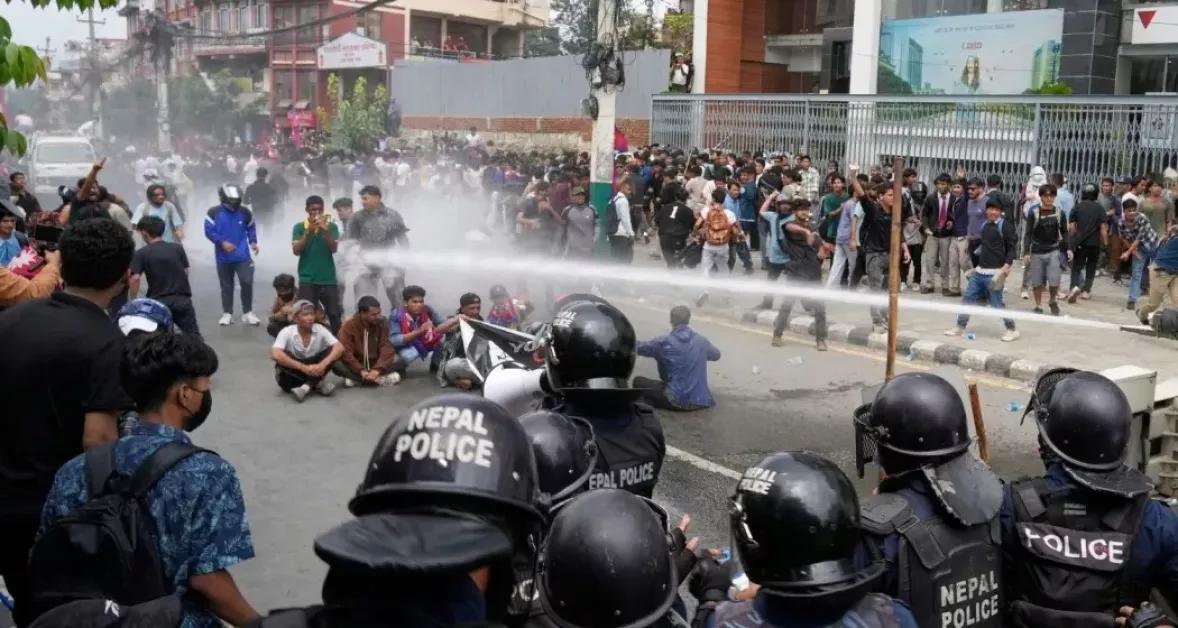
Nepal Gen Z Protests Turn Violent
Nepal has been thrust into a period of heightened turmoil as protests led by members of Generation Z erupted violently in Kathmandu, targeting the very heart of the nation’s political establishment. What began as demonstrations against corruption, unemployment, and lack of opportunities has escalated into one of the most intense confrontations in Nepal’s recent history.
The protests, primarily driven by young Nepalese disillusioned with the country’s political leadership, took a dramatic turn when demonstrators attacked and set fire to the residences of the Prime Minister and President. Offices belonging to major political parties were also vandalized, forcing security forces to intervene in large numbers. Amid the chaos, top officials were evacuated to secure locations as the government scrambled to contain the spiraling crisis.
The Roots of the Protests
The demonstrations are fueled by deep frustrations among Nepal’s youth. Generation Z, which forms a significant portion of the country’s population, has become increasingly vocal about the failures of successive governments to deliver meaningful reforms. Chronic unemployment, limited educational opportunities, and widespread corruption have created a sense of betrayal among young citizens who feel disconnected from traditional political elites.
Adding to this anger is the perception that Nepal’s leaders have prioritized personal power struggles and party politics over public welfare. For years, instability in governance has left infrastructure projects incomplete, job markets stagnant, and international relations strained. This discontent has now boiled over into widespread mobilization.
The Escalation in Kathmandu
While protests had been ongoing in recent weeks, the situation spiraled out of control in Kathmandu when crowds gathered outside government buildings and official residences. Eyewitnesses reported groups of demonstrators hurling stones, setting barricades on fire, and chanting slogans demanding systemic change.
The most shocking scenes unfolded as flames engulfed parts of the Prime Minister’s and President’s residences. Party offices belonging to Nepal’s largest political groups were ransacked, sending shockwaves across the capital. Security forces quickly sealed off affected areas, using tear gas and baton charges to disperse the crowds, but the intensity of the protests overwhelmed initial containment efforts.
Government Response
Faced with the growing unrest, Nepal’s government declared the situation a “national security concern.” Officials have accused “anti-national elements” of exploiting the protests, though critics argue that this rhetoric ignores the genuine grievances of the youth. The evacuation of key political leaders underscored the seriousness of the threat, with armored vehicles seen escorting convoys away from the conflict zones.
The Prime Minister, in a televised address, condemned the violence but also acknowledged the frustrations of young people. He called for dialogue and pledged reforms to address unemployment and governance challenges. However, opposition parties dismissed his remarks as insincere, accusing the ruling coalition of losing control.
The Role of Generation Z
Generation Z has become a defining force in Nepal’s political landscape. Empowered by social media, young activists have used digital platforms to organize rallies, spread information, and highlight corruption scandals. Unlike earlier protest waves, this generation is technologically savvy, globally connected, and less willing to accept the compromises of older political traditions.
Analysts note that this uprising is not only about jobs and corruption but also about identity and aspiration. Many young Nepalese feel trapped between a struggling economy and a political system that has failed to evolve since the end of the monarchy and the establishment of a federal republic. Their demands reflect a desire for transparency, accountability, and modernization.
Regional and Global Reactions
Nepal’s neighbors, India and China, are watching developments closely, given the country’s strategic importance in South Asia. Both have expressed concern over the violence, urging stability and peaceful resolution. International human rights organizations have also called on Nepal’s government to avoid excessive force while respecting the right to protest.
The global Nepali diaspora has voiced solidarity with the youth movement, with demonstrations reported in cities such as New Delhi, London, and New York. Many expatriates argue that the protests highlight decades of mismanagement and the urgent need for structural change.
What Lies Ahead
The escalation of violence raises urgent questions about Nepal’s immediate future. If the government fails to engage with the protesters constructively, the crisis could deepen, leading to prolonged instability. Already, businesses in Kathmandu have shut down, schools have suspended classes, and transportation systems face disruption due to roadblocks and curfews.
Political commentators warn that the legitimacy of Nepal’s ruling institutions is at stake. Without swift reforms and genuine dialogue, the gulf between the youth and the political elite may become irreparable. At the same time, sustained violence risks damaging the fragile democratic framework that Nepal has been struggling to consolidate since its transition from monarchy.
Conclusion
The violent turn of the Gen Z protests in Kathmandu marks a defining moment for Nepal. At its core, this movement reflects the frustrations of a young generation demanding change, justice, and accountability. The storming of political residences and the destruction of party offices send a clear message that symbolic gestures are no longer enough—structural reforms are essential.
Whether the government responds with empathy and decisive action or with repression will determine the country’s trajectory in the months ahead. For now, Nepal finds itself at a crossroads, with the voices of its youth reshaping the nation’s political destiny.
 Related News
POST A COMMENT (0)
All Comments (0)
Replies (0)