





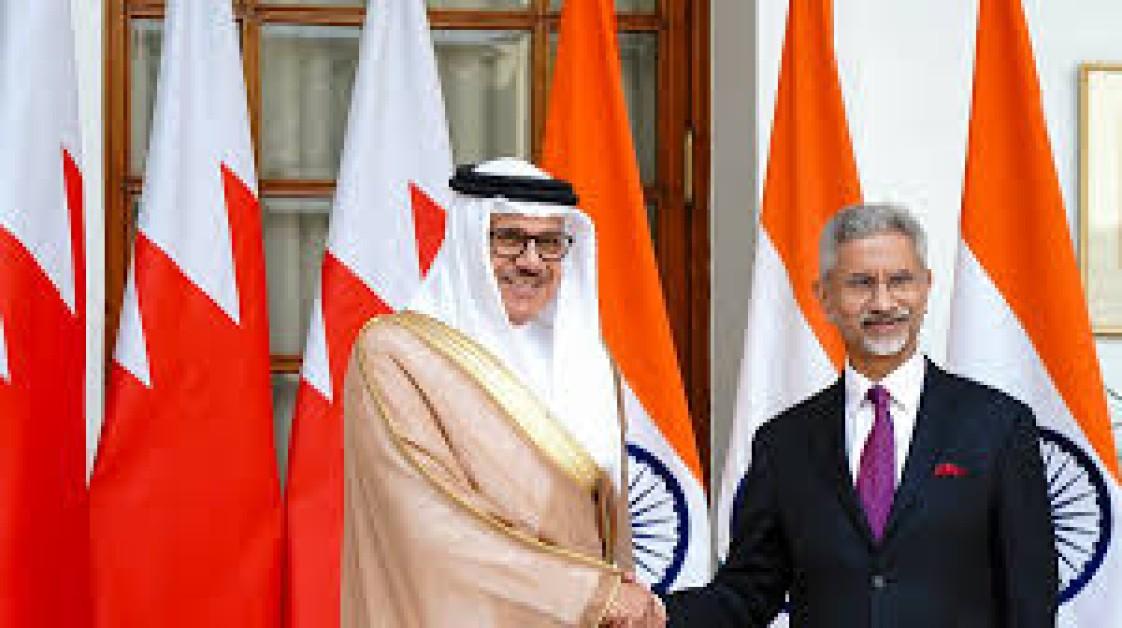
India and Bahrain have taken a decisive step forward in enhancing their long-standing partnership, as both nations reaffirmed their commitment to deepening cooperation in defence, security, and trade during the Fifth High Joint Commission (HJC) meeting held in New Delhi. The meeting marked a significant milestone in bilateral relations, reflecting mutual trust and a shared vision for regional stability and economic growth.
The Indian delegation, led by External Affairs Minister Dr. S. Jaishankar, and the Bahraini delegation, headed by Foreign Minister Dr. Abdullatif bin Rashid Al Zayani, reviewed the full spectrum of bilateral ties. Both sides expressed satisfaction over the progress made since the previous commission and agreed on new frameworks to strengthen strategic engagement. The discussions underscored the importance of defence and maritime security cooperation, particularly in light of evolving geopolitical developments in the Gulf and the Indian Ocean regions.
Defence collaboration remains one of the core pillars of India-Bahrain relations. The two countries have conducted joint exercises and maintained close defence exchanges over the past decade, focusing on naval cooperation, counterterrorism, and intelligence sharing. During the latest meeting, both sides reiterated their intent to expand joint training programmes, technology transfer opportunities, and coordination in maritime surveillance and disaster response. With India emerging as a growing defence manufacturer and Bahrain serving as a critical gateway to the Gulf, both nations see strategic merit in enhancing security collaboration.
Trade and investment featured prominently on the agenda. Bilateral trade between India and Bahrain currently stands at around USD 2 billion, with both sides eager to expand this further. India remains one of Bahrain’s key trading partners, with significant Indian investments in the island nation’s financial services, manufacturing, and construction sectors. The meeting highlighted opportunities in renewable energy, fintech, logistics, healthcare, and education. Bahrain expressed keen interest in India’s “Make in India” and “Invest India” initiatives, while India encouraged Bahraini investors to explore opportunities under its Production Linked Incentive (PLI) schemes.
Energy cooperation was another central theme. As global energy markets undergo transformation, Bahrain acknowledged India’s growing demand for energy security and clean energy transitions. The two sides discussed expanding collaboration in oil refining, petrochemicals, and sustainable energy projects. Bahrain’s strategic location in the Gulf and India’s vast technological capabilities create strong complementarities for future projects in energy diversification and green hydrogen.
The meeting also touched upon issues of people-to-people engagement. Over 350,000 Indians currently live and work in Bahrain, contributing significantly to the nation’s development. The Bahraini delegation praised the Indian community’s role in strengthening social and cultural bridges between the two countries. Discussions included steps to streamline visa processes, improve labour welfare mechanisms, and promote tourism and cultural exchanges.
In terms of security, both countries reaffirmed their joint stance against terrorism and extremism. They agreed to increase information sharing, capacity building, and cyber defence cooperation. The leaders also discussed regional security concerns, emphasizing the importance of maintaining peace and stability in the Gulf and the broader Indo-Pacific region. India and Bahrain’s shared interests in maritime security and countering piracy were reaffirmed as key priorities.
Technology and innovation were also highlighted as new frontiers in bilateral cooperation. The two nations agreed to enhance collaboration in digital transformation, fintech, artificial intelligence, and startup ecosystems. Bahrain, with its advanced regulatory environment and financial sector, offers an attractive base for Indian startups seeking global expansion. Meanwhile, India’s growing technology ecosystem presents valuable opportunities for Bahraini investors and innovators.
On the cultural front, both sides expressed interest in hosting joint cultural festivals and academic exchanges to celebrate the deep historical and civilizational ties that date back over 5,000 years. The enduring relationship between India and Bahrain is rooted in trade, faith, and shared maritime heritage. The modern partnership now builds upon that legacy with a focus on innovation, education, and sustainable development.
The Fifth High Joint Commission meeting concluded with the signing of several Memoranda of Understanding (MoUs) covering trade facilitation, skill development, and renewable energy cooperation. These agreements are expected to lay the groundwork for a more robust and future-oriented partnership. Both ministers emphasized the importance of translating policy discussions into tangible projects that directly benefit both countries’ citizens and economies.
Analysts view this meeting as a reaffirmation of India’s expanding engagement with the Gulf region. Bahrain’s role as a stable and strategically located partner aligns well with India’s interests in the Middle East, particularly as New Delhi seeks to secure energy supply chains and strengthen its influence across West Asia. With deepening defence cooperation and growing trade momentum, the India-Bahrain relationship is poised to enter a new phase of strategic maturity.
As both nations look ahead, the emphasis will be on sustaining dialogue, building institutional linkages, and exploring emerging sectors like green energy, maritime technology, and digital finance. The outcome of the meeting reinforces a shared understanding: that in an era of shifting geopolitical equations, partnerships grounded in trust, development, and mutual respect hold the key to regional stability and prosperity.
The Fifth High Joint Commission thus not only reaffirmed existing commitments but also set a clear course for the future. India and Bahrain’s strengthened collaboration stands as a model of how traditional partnerships can evolve to meet contemporary challenges, ensuring that their relationship remains resilient, relevant, and forward-looking in an increasingly interconnected world.
 Related News
POST A COMMENT (0)
All Comments (0)
Replies (0)