





IIT Guwahati Launches NEST Cluster and Major Infrastructure Expansion
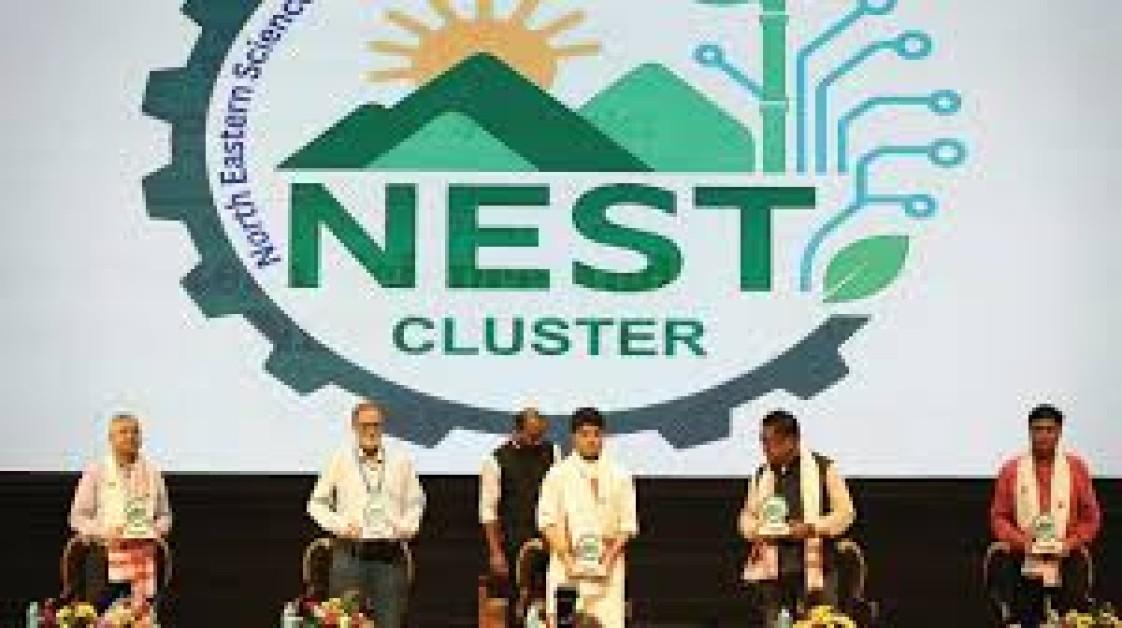
The Indian Institute of Technology Guwahati (IIT-G) has announced a major step forward in research, innovation, and regional development with the launch of a dedicated NEST cluster focused on semiconductors, artificial intelligence, bamboo technology, and biodegradable plastics. Alongside this initiative, the institute also unveiled 65 new secondary school buildings and significant road infrastructure upgrades, reinforcing its role as a key driver of technological and educational advancement in the northeastern region.
The newly inaugurated NEST (North-East Science and Technology) cluster represents a strategic move to position Assam and the wider northeastern states as hubs for high-tech innovation and sustainable development. By combining cutting-edge research with locally relevant industries, the cluster aims to nurture new start-ups, strengthen academic-industry linkages, and promote skill development in next-generation technologies. This initiative aligns with India’s broader national priorities of promoting self-reliance in key sectors such as semiconductors and AI, while supporting environmentally conscious innovation.
One of the cluster’s core focus areas—semiconductor research—addresses a critical global challenge. The semiconductor shortage experienced in recent years has underscored the need for domestic capabilities in chip design and manufacturing. IIT Guwahati’s efforts in this domain are expected to strengthen India’s semiconductor ecosystem, offering research, testing, and prototype development facilities for students, researchers, and industry partners. With the NEST cluster, IIT-G is set to become an anchor institution in India’s semiconductor mission, attracting collaborations and funding from both public and private sectors.
Artificial intelligence forms another pillar of the cluster’s agenda. The AI research wing at IIT Guwahati will focus on developing solutions for agriculture, healthcare, and education—sectors with immense potential to transform lives in the northeastern region. Researchers plan to integrate AI-driven tools with local industries, enabling smarter resource management and improving service delivery across both urban and rural landscapes. The initiative also aims to produce AI-skilled graduates capable of contributing to India’s rapidly expanding digital economy.
In a unique and regionally relevant move, IIT Guwahati is also investing heavily in bamboo technology research. Given the abundance of bamboo in the northeastern states, the NEST cluster’s bamboo-tech division will explore sustainable uses ranging from construction materials and furniture to textiles and bio-composites. The goal is to merge traditional knowledge with modern innovation, creating economic opportunities for local artisans while promoting eco-friendly alternatives to non-renewable materials.
Equally significant is the focus on biodegradable plastics—an innovation stream that supports both environmental sustainability and circular economy objectives. By developing cost-effective and scalable biodegradable plastic materials, the research team hopes to reduce plastic waste and pollution while offering alternatives for packaging and industrial applications. This initiative ties into India’s national mission for reducing single-use plastics and advancing green technology solutions.
The expansion of 65 new secondary school buildings underlines IIT Guwahati’s commitment to inclusive development and educational equity. These schools, built with modern facilities and sustainable architecture, aim to improve access to quality education in rural and semi-urban areas of Assam. By integrating science and technology modules at the foundational level, the initiative seeks to cultivate curiosity and innovation among younger generations. Educational infrastructure remains a crucial element of the government’s development vision, and IIT Guwahati’s contribution in this area demonstrates the institute’s broader social responsibility.
In addition to educational infrastructure, the launch also included announcements of major road and connectivity upgrades around the IIT Guwahati campus and adjoining regions. Improved transportation networks are expected to enhance accessibility to educational institutions, industrial hubs, and local communities, thereby accelerating economic growth. The road upgrades are part of a holistic approach to integrate research, education, and infrastructure in fostering sustainable regional development.
According to the institute’s leadership, the combined impact of these initiatives will extend well beyond academia. The NEST cluster is envisioned as a catalyst for entrepreneurship, innovation, and industrial collaboration across the northeastern states. By fostering partnerships with state governments, industries, and global research networks, IIT Guwahati is positioning itself as a central player in India’s innovation-driven future.
Experts view this multi-dimensional initiative as a template for integrating technological innovation with community development. It reflects a vision of progress where education, sustainability, and industry converge to create tangible societal impact. By blending global research standards with regional priorities, IIT Guwahati is not only advancing scientific discovery but also ensuring that innovation serves the needs of local communities and economies.
In conclusion, the launch of the NEST cluster, along with the establishment of new schools and road upgrades, marks a defining moment for IIT Guwahati and the northeastern region. With its focus on semiconductors, AI, bamboo technology, and biodegradable plastics, the institute is pioneering a model of innovation that merges technology with sustainability and inclusivity. As India strives toward becoming a global innovation hub, initiatives like these reaffirm the country’s ability to lead with vision, resilience, and regional empowerment.
 Related News
POST A COMMENT (0)
All Comments (0)
Replies (0)