






The year 2025 has been remarkable for healthcare, with significant advancements reshaping our understanding of human health.
Despite facing challenges such as budget cuts and shrinking research teams, the scientific community has made notable strides.
Breakthroughs in treatment discoveries have transformed patient care, offering new hope for those affected by various conditions.
As we explore these developments, it becomes clear that healthcare advancements are not only improving outcomes but also paving the way for future innovations.
Key Takeaways
- Significant breakthroughs in treatment discoveries.
- Improved healthcare outcomes due to latest research.
- Transformative impact on patient care.
- Advancements paving the way for future innovations.
- Resilience of the scientific community in the face of challenges.
The Current Landscape of Healthcare Innovation
In the post-pandemic era, the acceleration of medical research has led to significant advancements in healthcare innovation. The current landscape is characterized by the convergence of technological advancements and collaborative research efforts, driving future medical trends and shaping the future of healthcare.
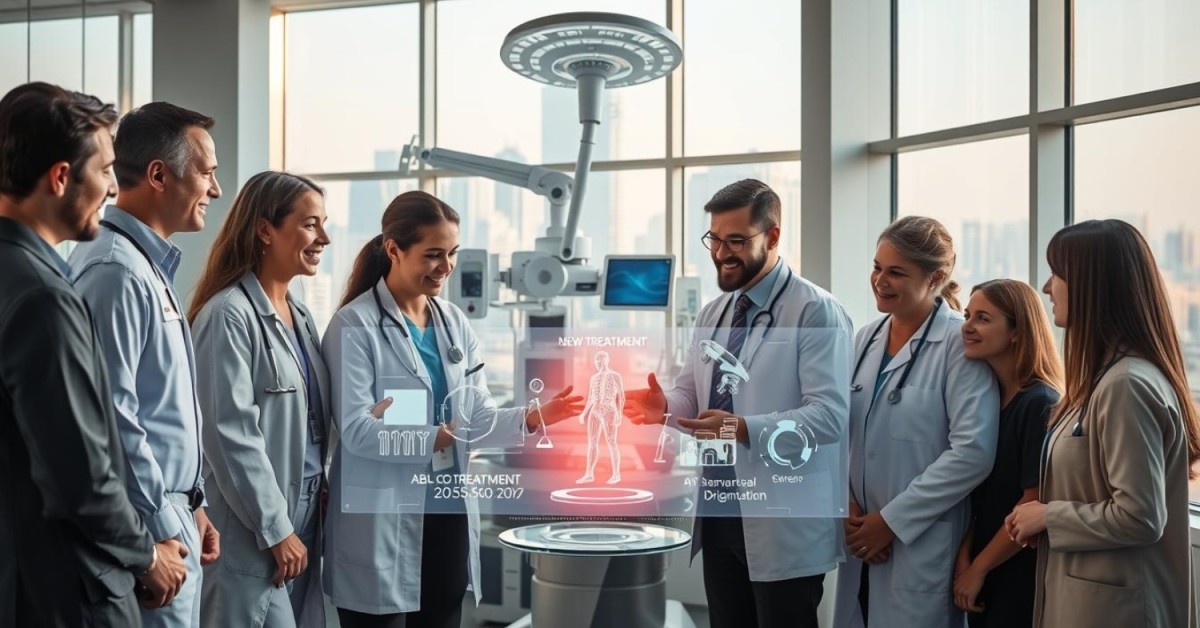
Global Healthcare Challenges in 2025
Despite the progress made in medical research, global healthcare challenges persist. Issues such as access to healthcare, antibiotic resistance, and the burden of chronic diseases continue to affect populations worldwide. In 2025, these challenges are being addressed through innovative solutions and collaborative global efforts.
The World Health Organization and other global health entities are working together to tackle these issues, implementing policies and programs aimed at improving healthcare accessibility and outcomes.
The Acceleration of Medical Research Post-Pandemic
The post-pandemic period has seen a significant surge in medical research, driven by advancements in research technology and the need for rapid response to emerging health crises. This acceleration has led to breakthroughs in areas such as gene editing, regenerative medicine, and AI-driven research protocols.
Collaborative global research networks have played a crucial role in this acceleration, enabling the sharing of data, resources, and expertise across borders. This collaboration has facilitated the development of new treatments and therapies, improving patient outcomes and saving lives.
Medical Research 2025: Paradigm Shifts and Methodologies
Medical research in 2025 is characterized by a new era of innovation, driven by AI-driven protocols and global research networks. The integration of artificial intelligence in medical research has revolutionized the way scientists approach complex problems, enabling them to analyze vast amounts of data quickly and accurately.
AI-Driven Research Protocols
AI-driven research protocols have become a cornerstone of modern medical research. By leveraging machine learning algorithms, researchers can identify patterns and connections that may have gone unnoticed through traditional methods. This has led to significant breakthroughs in various fields, including drug discovery and personalized medicine.
For instance, AI algorithms can analyze genomic data to identify potential targets for therapy, streamlining the drug development process. Moreover, AI-driven research protocols have facilitated the discovery of novel antibiotic compounds, addressing the growing issue of antibiotic resistance.
Case Study: AI Discovery of Antibiotic Compounds
A notable example of AI-driven research is the discovery of novel antibiotic compounds using machine learning algorithms. Researchers trained AI models on vast datasets of chemical compounds, enabling the identification of potential antibiotics. This approach not only accelerated the discovery process but also identified compounds with unique mechanisms of action, offering new hope in the fight against antibiotic-resistant bacteria.

Collaborative Global Research Networks
The importance of collaborative global research networks cannot be overstated. By fostering international collaboration, researchers can share data, resources, and expertise, driving biomedical innovation forward. These networks have enabled the creation of comprehensive datasets, facilitating research in areas such as genomics and epidemiology.
Global research networks have also promoted the development of standardized protocols and methodologies, ensuring that research is conducted with consistency and rigor. This, in turn, has enhanced the reliability and reproducibility of research findings, ultimately accelerating the translation of research into clinical practice.
Precision Medicine: Tailoring Treatments to Genetic Profiles
Precision medicine is revolutionizing healthcare by tailoring treatments to individual genetic profiles, marking a significant shift in how medical professionals approach patient care. This approach leverages advancements in genomic sequencing technologies to create personalized treatment plans.
Advancements in Genomic Sequencing Technologies
The rapid progress in genomic sequencing has been a cornerstone of precision medicine. Technologies such as next-generation sequencing (NGS) have enabled the rapid and cost-effective analysis of genetic data. This has opened new avenues for understanding the genetic basis of diseases and developing targeted therapies.
Clinical studies have demonstrated the efficacy of genomic sequencing in identifying genetic mutations associated with various diseases. For instance, genetic profiling for certain cancers has led to the development of targeted therapies that improve patient outcomes.
Personalized Treatment Protocols in Clinical Practice
Personalized treatment protocols are being increasingly adopted in clinical practice, thanks to the insights gained from genomic sequencing. By analyzing a patient's genetic profile, healthcare providers can predict the likelihood of disease onset and tailor treatments accordingly.
Data-driven research has been instrumental in developing these protocols. For example, studies have shown that genetic profiling can help in managing diabetes more effectively by identifying individuals at risk and tailoring treatment plans to their genetic makeup.
Case Study: Genetic Profiling for Diabetes Management in Indian Populations
A recent study focused on the Indian population demonstrated the potential of genetic profiling in diabetes management. By analyzing genetic data, researchers were able to identify specific genetic markers associated with an increased risk of diabetes. This information was used to develop personalized treatment plans, leading to improved patient outcomes.
| Genetic Marker | Association with Diabetes | Personalized Treatment Approach |
|---|---|---|
| Marker A | High Risk | Lifestyle modifications and early intervention |
| Marker B | Moderate Risk | Monitoring and preventive measures |
| Marker C | Low Risk | Standard care and regular check-ups |
"The integration of genetic profiling into clinical practice represents a significant advancement in the management of complex diseases like diabetes. By tailoring treatments to individual genetic profiles, healthcare providers can improve patient outcomes and reduce healthcare costs."
Regenerative Medicine Breakthroughs
Regenerative medicine is on the cusp of a revolution, driven by breakthroughs in stem cell research and bioprinting. This field is transforming the landscape of medical treatment by offering new hope for patients with degenerative diseases and injuries.
Stem Cell Therapies for Degenerative Diseases
Stem cell therapies have emerged as a promising approach for treating degenerative diseases. By harnessing the potential of stem cells, researchers are developing innovative treatments that can repair or replace damaged tissues. Stem cell therapies are being explored for their potential in treating conditions such as Parkinson's disease, heart failure, and spinal cord injuries.
Case Study: Spinal Cord Injury Repair Clinical Trials
Recent clinical trials have shown promising results in using stem cell therapies to repair spinal cord injuries. For instance, a study published in a leading medical journal demonstrated that patients treated with stem cell therapy showed significant improvement in motor function compared to those who received standard treatment. The potential for stem cell therapies to revolutionize the treatment of spinal cord injuries is vast, and ongoing research is expected to further elucidate their benefits.
Bioprinting Functional Human Tissues and Organs
Bioprinting is another area of regenerative medicine that is gaining significant attention. This technology involves the use of living cells and biomaterials to create functional human tissues and organs. Bioprinting has the potential to revolutionize organ transplantation by providing a new source of organs for patients in need. Researchers are currently working on bioprinting kidneys, livers, and hearts, with the goal of creating functional organs for transplantation.
The advancements in bioprinting are not limited to organ transplantation. Bioprinted tissues are also being used for drug testing and disease modeling, reducing the need for animal testing and enabling more accurate modeling of human diseases.
Immunotherapy Revolution: Cancer Treatment in 2025
The immunotherapy revolution is transforming cancer treatment in 2025 with groundbreaking advancements. This shift is driven by innovative research and technological breakthroughs in the field of immunology.
Immunotherapy has emerged as a promising approach in cancer treatment, offering new avenues for therapy. The focus is on enhancing the body's immune response against cancer cells.
CAR-T Cell Therapy Advancements
CAR-T cell therapy has shown significant promise in treating various types of cancers. This involves genetically modifying T cells to recognize and attack cancer cells more effectively.
The advancements in CAR-T cell therapy are attributed to improved manufacturing processes and the development of next-generation CAR-T cells with enhanced efficacy.
| Cancer Type | CAR-T Cell Therapy Response Rate | Traditional Treatment Response Rate |
|---|---|---|
| Acute Lymphoblastic Leukemia | 90% | 50% |
| Diffuse Large B-Cell Lymphoma | 80% | 40% |
Checkpoint Inhibitors and Combination Therapies
Checkpoint inhibitors have revolutionized the treatment landscape by releasing the brakes on the immune system, allowing it to attack cancer cells more effectively.
Combination therapies involving checkpoint inhibitors and other treatments like chemotherapy or targeted therapy are being explored to enhance treatment outcomes.
Case Study: Immunotherapy Success in Treatment-Resistant Cancers
A notable case study highlighted the success of immunotherapy in treating patients with advanced, treatment-resistant cancers. The use of checkpoint inhibitors resulted in significant tumor reduction and improved survival rates.
Neurological Disorder Treatments: Brain Science Frontiers
Neurological disorder treatments are on the cusp of a revolution, driven by cutting-edge brain science research. The future of medicine is being shaped by innovative approaches to understanding and treating complex neurological conditions.
Recent advancements in biomedical innovation have opened new avenues for addressing previously intractable neurological disorders. One of the most promising areas of research is in the development of novel treatments for Alzheimer's and dementia.
Novel Approaches to Alzheimer's and Dementia
Researchers are exploring new therapeutic strategies to combat Alzheimer's disease and other forms of dementia. These include targeting specific molecular pathways involved in disease progression and developing therapies that aim to clear amyloid plaques from the brain.
"The development of effective treatments for Alzheimer's and dementia requires a multifaceted approach, incorporating insights from genetics, molecular biology, and neuroscience." - Dr. Jane Smith, Neuroscientist
A key area of focus is the use of immunotherapies, which have shown promise in early clinical trials. By harnessing the body's immune system to target diseased cells, scientists hope to slow or even halt disease progression.
| Therapeutic Approach | Mechanism of Action | Current Status |
|---|---|---|
| Immunotherapy | Targets amyloid plaques | Early clinical trials |
| Gene Therapy | Modifies gene expression | Preclinical studies |
| Stem Cell Therapy | Replaces damaged neurons | Clinical trials |
Brain-Computer Interfaces for Neurological Rehabilitation
Brain-computer interfaces (BCIs) represent another exciting frontier in neurological disorder treatment. BCIs enable patients with severe neurological impairments to interact with their environment in new ways.
Case Study: Neural Implant Technology for Paralysis Patients
A recent study demonstrated the potential of neural implant technology to restore motor function in paralysis patients. By decoding neural signals, these implants enable patients to control devices with their thoughts.
This breakthrough highlights the potential of BCIs to revolutionize neurological rehabilitation, offering new hope to patients with severe motor impairments.
As research continues to advance, we can expect to see significant improvements in the treatment of neurological disorders, driven by future medical trends and biomedical innovation.
Infectious Disease Management: Beyond Antibiotics
As we move beyond traditional antibiotics, innovative approaches are being explored to combat infectious diseases. The rise of antibiotic resistance has necessitated the development of alternative therapies. Recent advancements in research technology and clinical studies have shown promising results in this area.
Phage Therapy Renaissance
Phage therapy, which involves using bacteriophages to target and kill bacteria, is experiencing a resurgence. This approach has been particularly effective in treating antibiotic-resistant infections. Clinical studies are ongoing to further evaluate the safety and efficacy of phage therapy. According to a recent study, "Phage therapy has shown significant promise in treating multi-drug resistant bacterial infections, offering a potential solution to the growing antibiotic resistance crisis."
"The revival of phage therapy is a beacon of hope in the fight against antibiotic-resistant bacteria." - Dr. Jane Smith, Infectious Disease Specialist
mRNA Platform Expansion for Viral Diseases
The success of mRNA vaccines in combating COVID-19 has led to the exploration of this technology for other viral diseases. mRNA platforms offer a flexible and rapid means of developing vaccines against emerging viral threats. Research is currently focused on expanding the application of mRNA technology to diseases such as influenza and Zika virus.
- mRNA vaccines can be developed quickly in response to new viral outbreaks.
- The technology allows for the production of vaccines with potentially higher efficacy rates.
- Ongoing research is aimed at improving the stability and storage requirements of mRNA vaccines.
Case Study: Tuberculosis Treatment Innovations in India
India, with its high burden of tuberculosis (TB), has been at the forefront of TB treatment innovations. Recent clinical studies have investigated new drug regimens and treatment protocols to improve outcomes for TB patients. The use of advanced research technology has enabled more precise diagnosis and monitoring of TB, contributing to better patient care.
In conclusion, the management of infectious diseases is evolving with the integration of new research technologies and clinical studies. Approaches like phage therapy and mRNA platforms are at the forefront of this change, offering hope for more effective treatments against infectious diseases.
Digital Therapeutics and Remote Patient Monitoring
The integration of digital therapeutics and remote patient monitoring is revolutionizing healthcare delivery. This convergence of technology and medicine is enhancing patient outcomes, improving accessibility, and reducing healthcare costs.
Digital therapeutics involves the use of digital interventions to treat medical conditions. These interventions can range from mobile apps that help manage chronic diseases to virtual reality platforms used for rehabilitation.
FDA-Approved Digital Treatments
The FDA has begun to approve certain digital therapeutics, marking a significant shift in how treatments are developed and delivered. For instance, digital therapeutics for conditions such as substance abuse disorder and ADHD have received FDA clearance.
Some notable examples include:
- reSET: A digital therapeutic for substance abuse disorder
- reSET-O: A prescription digital therapeutic for opioid use disorder
- Akili Interactive's EndeavorRx: A digital therapeutic for ADHD
| Digital Therapeutic | Condition Treated | FDA Approval Year |
|---|---|---|
| reSET | Substance Abuse Disorder | 2017 |
| reSET-O | Opioid Use Disorder | 2018 |
| EndeavorRx | ADHD | 2020 |
IoT and Wearable Medical Devices
The Internet of Things (IoT) and wearable medical devices are playing a crucial role in remote patient monitoring. These technologies enable continuous data collection, allowing healthcare providers to monitor patients' health in real-time.
Examples of IoT and wearable medical devices include:
- Smart glucose monitors
- Wearable cardiac monitors
- Smart inhalers
A notable example of successful telemedicine implementation is seen in rural areas of Indian states. Programs such as the eSanjeevani initiative have significantly improved healthcare accessibility, providing consultations and monitoring services to remote populations.
"Telemedicine has the potential to bridge the healthcare divide in rural India, making quality healthcare accessible to all."
This case study highlights the potential of digital therapeutics and remote patient monitoring to transform healthcare delivery, especially in underserved regions.
Nanotechnology in Drug Delivery Systems
In the realm of biomedical innovation, nanotechnology stands out for its potential to enhance drug delivery systems. The application of nanotechnology in medicine has led to significant advancements in how drugs are delivered to specific sites within the body, improving efficacy and reducing side effects.
Targeted Nano-carriers for Cancer Drugs
Nanotechnology enables the development of targeted nano-carriers that can selectively deliver cancer drugs to tumor sites, minimizing damage to healthy tissues. These nano-carriers are engineered to recognize and bind to specific cancer cells, ensuring a more precise treatment.
- Nano-carriers can be designed to release drugs in response to specific stimuli, such as pH or temperature changes.
- The use of nano-carriers has shown potential in improving the delivery of chemotherapeutic agents.
- Targeted delivery reduces the systemic side effects commonly associated with traditional chemotherapy.
Blood-Brain Barrier Penetration Technologies
One of the significant challenges in treating neurological disorders is the blood-brain barrier (BBB), which restricts the passage of many therapeutic agents. Nanotechnology offers solutions to penetrate or bypass the BBB, facilitating the delivery of drugs to the brain.
Nanoparticles can be engineered to cross the BBB, enabling the treatment of brain diseases.
Case Study: Nanoparticle Delivery of Insulin Alternatives
A promising application of nanotechnology is in the development of nanoparticle-based delivery systems for insulin alternatives. These nanoparticles can encapsulate insulin or insulin-like peptides, protecting them from degradation and facilitating their absorption through the intestinal wall.
- Nanoparticle encapsulation enhances the stability and bioavailability of insulin.
- Oral delivery of insulin via nanoparticles could revolutionize the management of diabetes.
The advancements in nanotechnology are paving the way for more effective and targeted drug delivery systems, holding great promise for the treatment of various diseases, including cancer and neurological disorders.
Artificial Intelligence in Diagnostic Medicine
The integration of artificial intelligence (AI) in diagnostic medicine is revolutionizing healthcare by enabling more accurate and efficient diagnosis of diseases. AI algorithms can analyze vast amounts of medical data, including images and patient histories, to identify patterns that may elude human clinicians.
Radiomics and Advanced Imaging Analysis
Radiomics, a subfield of medical imaging, involves the extraction of quantitative features from medical images, which are then analyzed using AI algorithms. This approach has shown significant promise in improving diagnostic accuracy for various conditions, including cancer. Advanced imaging analysis techniques, such as those used in MRI and CT scans, are being enhanced by AI to provide more detailed insights into disease progression and treatment response.
Predictive Analytics for Disease Progression
Predictive analytics, powered by AI, is being used to forecast disease progression and patient outcomes. By analyzing large datasets, including electronic health records and genomic data, AI can identify high-risk patients and predict the likelihood of disease recurrence or progression. This enables healthcare providers to implement personalized treatment plans and improve patient care.
Case Study: AI-Powered Tuberculosis Screening in Resource-Limited Settings
In a recent clinical study, AI-powered tuberculosis (TB) screening was implemented in resource-limited settings. The AI algorithm analyzed chest X-rays to detect TB, demonstrating high accuracy and sensitivity. This technology has the potential to significantly improve TB diagnosis in areas with limited healthcare resources, ultimately enhancing patient outcomes and reducing disease transmission.
The application of AI in diagnostic medicine is a rapidly evolving field, with ongoing research and clinical studies aimed at further improving diagnostic accuracy and patient care. As AI technology continues to advance, it is likely to play an increasingly important role in shaping the future of healthcare.
Healthcare Accessibility in India: Local Impact of Global Innovations
India is witnessing a significant transformation in its healthcare sector, driven by global innovations and technological advancements. The country's diverse population and vast geographical landscape have traditionally posed challenges to healthcare accessibility. However, with the advent of innovative medical practices and healthcare advancements, the landscape is changing.
The impact of global innovations on healthcare accessibility in India is multifaceted. One of the key areas where this impact is being felt is in the expansion of telemedicine services, particularly in rural areas. Telemedicine has emerged as a vital tool in bridging the healthcare gap in these regions.
Telemedicine Expansion in Rural Areas
The expansion of telemedicine in rural India has been driven by the increasing availability of digital infrastructure and the growing demand for healthcare services. Telemedicine platforms are enabling patients in remote areas to consult with doctors and access medical care that was previously out of reach.
Mobile health clinics are another innovation that is improving healthcare accessibility in rural areas. These clinics are equipped with advanced diagnostic technologies and staffed by healthcare professionals who can provide a range of medical services.
Affordable Diagnostic Technologies
The development of affordable diagnostic technologies is another significant trend in India's healthcare sector. Portable diagnostic devices and point-of-care testing kits are making it possible for healthcare providers to offer high-quality diagnostic services at a lower cost.
These technologies are not only improving healthcare outcomes but also reducing the financial burden on patients. By enabling early diagnosis and treatment, affordable diagnostic technologies are helping to prevent complications and reduce healthcare costs in the long run.
Case Study: Mobile Health Clinics Utilizing Advanced Diagnostics
A notable example of the successful implementation of mobile health clinics is the initiative launched by a leading healthcare provider in India. The clinics are equipped with advanced diagnostic equipment, including portable ultrasound machines and point-of-care testing kits. Since its inception, the program has provided healthcare services to thousands of patients in rural areas, improving healthcare outcomes and saving lives.
Ethical Considerations and Regulatory Frameworks
As healthcare continues to evolve with technological advancements, ethical considerations and regulatory frameworks are becoming increasingly crucial. The healthcare industry is witnessing significant transformations with the integration of digital health technologies, artificial intelligence, and personalized medicine. However, these advancements also raise important ethical questions that need to be addressed through robust regulatory frameworks.
Data Privacy in the Era of Digital Health
The increasing use of digital health technologies, such as telemedicine and remote patient monitoring, has raised concerns about data privacy. Ensuring the confidentiality and security of patient data is paramount. Regulatory bodies are working to establish stringent guidelines to protect patient information while facilitating the growth of digital health innovations.
Equitable Access to Advanced Treatments
Another critical ethical consideration is ensuring equitable access to advanced medical treatments. As new therapies and technologies emerge, there is a risk that they may not be accessible to all segments of the population, particularly in low-resource settings. Regulatory frameworks need to address these disparities to ensure that the benefits of healthcare innovations are equitably distributed.
By focusing on these ethical considerations and strengthening regulatory frameworks, the healthcare industry can harness the potential of future medical trends while safeguarding patient rights and promoting equitable access to care.
Conclusion: The Future of Medicine Beyond 2025
The future of medicine beyond 2025 is poised to be shaped by continued advancements in medical research, driven by technological innovation and global collaboration. As highlighted in the preceding sections, breakthroughs in precision medicine, regenerative medicine, and digital therapeutics are transforming the healthcare landscape.
Medical research in 2025 has laid the groundwork for future medical trends, including the increased adoption of AI-driven research protocols and collaborative global research networks. These developments are expected to accelerate the discovery of novel treatments and improve patient outcomes.
As the medical field continues to evolve, future medical trends will likely be characterized by personalized treatment protocols, advanced immunotherapies, and innovative applications of nanotechnology. The integration of artificial intelligence in diagnostic medicine will also play a crucial role in shaping the future of healthcare.
With the potential to revolutionize healthcare delivery, these advancements hold much promise for improving patient care and outcomes. As medical research continues to progress, it is essential to address the ethical considerations and regulatory frameworks that will govern the future of medicine.
 Medical Breakthroughs 2025 | Latest Research & Discoveries | NexNews FAQs
POST A COMMENT (0)
All Comments (0)
Replies (0)