





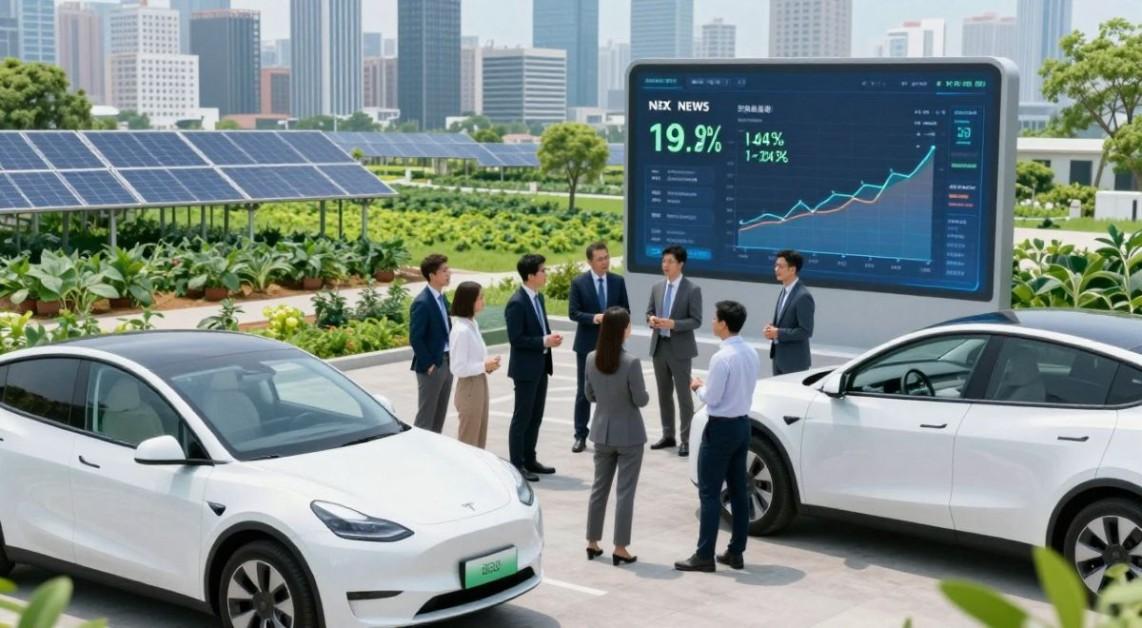
The electric vehicle (EV) sector has seen significant investment in the current year, with $1.4 billion in funding year-to-date, representing a 27% year-over-year increase. This surge is largely driven by late-stage investments doubling, indicating a growing confidence in the sector's potential.
Meanwhile, the agriculture technology sector is poised for substantial growth, with ambitions to reach a $28 billion valuation by 2030 through the integration of artificial intelligence. This article will explore the current landscape of emerging ventures in these sectors, highlighting key trends and insights.
Key Takeaways
- Electric vehicle sector sees $1.4 billion in funding year-to-date.
- A 27% year-over-year increase in EV funding.
- Late-stage investments in EV sector have doubled.
- Agritech aims to reach $28 billion valuation by 2030.
- Artificial intelligence is key to agritech's growth ambitions.
Current State of EV Startup Funding in India
EV startups in India have drawn a remarkable $1.4 billion in funding year-to-date, signaling robust investor confidence. This significant investment underscores the growing interest in the electric vehicle sector within the country.
Record-Breaking Q1-Q3 Performance in 2023
The first three quarters of 2023 have been exceptional for EV startups, with funding reaching new heights. Key factors contributing to this success include:
- Increased Government Support: Policies and incentives favoring electric vehicles have encouraged investments.
- Technological Advancements: Improvements in battery technology and charging infrastructure have made EV startups more attractive.
- Growing Consumer Demand: Rising environmental awareness and the need for sustainable transportation solutions have driven interest in electric vehicles.
This period has seen significant deals, with several startups securing substantial funding rounds.
Sector-Wise Distribution of the $1.4B Investment
The $1.4 billion investment is distributed across various sectors within the EV ecosystem:
- Electric Two and Three-Wheelers: Attracting the largest share due to their popularity and potential for scalability.
- EV Charging Infrastructure: Receiving significant investments to support the growing number of electric vehicles on the road.
- Battery Technology: Innovations in battery tech are a key focus area, driving investments towards more efficient and cost-effective solutions.
This diversified investment across sectors indicates a comprehensive approach to developing India's EV ecosystem.
EV startups: $1.4B YTD (+27% YoY); agritech $28B AI goal
EV startups in India have seen a substantial 27% YoY growth in funding, totaling $1.4 billion YTD, as investors bet big on the emerging ventures. This growth is not isolated to the EV sector alone; the agritech sector is also on a promising trajectory, with projections indicating it could reach a $28 billion market by 2030, driven significantly by the integration of Artificial Intelligence (AI).
Factors Driving the 27% Year-over-Year Growth
The significant growth in EV startup funding can be attributed to several key factors. Government policies and incentives have played a crucial role in fostering this growth.
Government Policies and Incentives Impact
The Indian government has introduced various policies and incentives to promote the EV sector. These include tax exemptions, subsidies for EV manufacturers, and investments in EV charging infrastructure. Such initiatives have made the sector more attractive to investors.
Consumer Demand Shifts and Market Response
There's been a noticeable shift in consumer demand towards more sustainable and environmentally friendly options. In response, EV startups have innovated and expanded their offerings, meeting this new demand and attracting further investment.
Quarterly Funding Breakdown and Projections
Analyzing the quarterly funding breakdown provides insights into the growth trajectory of EV startups. The consistent increase in funding across quarters underscores the sector's potential.
Key highlights from the quarterly funding breakdown include:
- Q1 Funding: A strong start with significant investments in early-stage startups.
- Q2 and Q3 Funding: Continued growth, with notable investments in late-stage rounds.
- Projections: Expectations of sustained growth, driven by ongoing innovation and government support.
As the EV and agritech sectors continue to evolve, the integration of technologies like AI is expected to play a pivotal role in shaping their futures.
Late-Stage Funding Doubles: Analysis and Implications
Indian EV startups have seen a remarkable surge in late-stage funding, indicating growing investor confidence. This trend is significant as it reflects the maturation of the market and the potential for further growth.
Notable Series C and D Rounds in Indian EV Startups
Several Indian EV startups have secured substantial funding in Series C and D rounds. For instance, companies like Ola Electric and Ather Energy have raised significant capital to expand their operations and develop new technologies.
These funding rounds not only demonstrate investor confidence but also highlight the competitive edge of these startups in the global EV market.
Investor Confidence Signals Market Maturation
The doubling of late-stage funding is a clear indicator of market maturation. Investors are increasingly willing to invest in EV startups that show potential for scalability and long-term growth.
Valuation Trends Among Growth-Stage EV Companies
Valuations of growth-stage EV companies have seen an upward trend. This is largely due to the increasing demand for electric vehicles and the potential for these companies to disrupt traditional automotive markets.
Exit Strategies and IPO Potential
With increasing valuations, EV startups are also exploring exit strategies, including Initial Public Offerings (IPOs). A successful IPO can provide significant returns for investors and further capital for the company to expand its operations.
Leading EV Startups Driving the Funding Surge
Innovative EV startups are at the forefront of the funding surge, pushing the boundaries of technology and sustainability. These emerging ventures are not only attracting significant investments but are also transforming the electric vehicle landscape in India.
The funding surge is being driven by various segments within the EV ecosystem. Key among these are innovators in battery technology and energy storage, manufacturers of electric two and three-wheelers, and developers of EV charging infrastructure.
Battery Technology and Energy Storage Innovators
Startups focusing on battery technology and energy storage are revolutionizing the EV sector. Companies like Exide Industries and Amara Raja Batteries are at the forefront, developing advanced battery solutions that enhance the range and efficiency of electric vehicles.
Electric Two and Three-Wheeler Manufacturers
The rise of electric two and three-wheelers is being driven by startups such as Ather Energy and Hero Electric. These companies are not only manufacturing eco-friendly vehicles but are also setting up extensive distribution networks across the country.
EV Charging and Swapping Infrastructure Developers
Infrastructure is a critical component of the EV ecosystem. Startups like Evify and Statiq are developing comprehensive EV charging and swapping networks, addressing range anxiety and making EVs more accessible to the masses.
The collective efforts of these startups are driving the EV revolution forward, making India a hub for electric vehicle innovation and manufacturing.
Venture Capital Firms Betting Big on Indian EV Ecosystem
Venture capital firms are increasingly betting on India's EV ecosystem, driven by the sector's rapid growth and potential. The $1.4B YTD funding in EV startups has attracted both domestic and international investors.
Domestic VC Firms Leading Investment Rounds
Indian VC firms have been at the forefront of investment rounds in EV startups. These firms have recognized the potential of the Indian EV market and are backing innovative companies. For instance, firms like WestBridge Capital and India Quotient have invested in promising EV startups.
International Investors and Strategic Corporate Partnerships
International investors are also showing keen interest in India's EV ecosystem. Climate-focused funds and strategic investments from automotive giants are pouring into the sector.
"The Indian EV market is poised for significant growth, driven by government policies and increasing consumer demand."
Climate-Focused Funds Entering the Indian Market
Climate-focused funds are entering the Indian market, attracted by the potential of the EV sector to reduce carbon emissions. These funds are investing in startups that are developing innovative EV technologies.
Strategic Investments from Automotive Giants
Automotive giants are making strategic investments in Indian EV startups. These investments are not only providing capital but also bringing in industry expertise and networks.
Agritech Sector Overview: Current Funding Landscape
India's agritech industry is on the cusp of a funding revolution. The agritech sector has been gaining momentum, driven by the need for innovative solutions in agriculture.
YTD Funding Metrics and Key Investment Rounds
The year-to-date funding in agritech has shown a significant increase, with several key investment rounds. Investors are keen on backing startups that offer cutting-edge agricultural technology.
Notable investments have been observed in startups focusing on farm-to-market platforms and agricultural supply chain optimization.
Emerging Sub-Sectors Attracting Investor Interest
Within agritech, certain sub-sectors are emerging as particularly attractive to investors.
Supply Chain and Market Linkage Platforms
Startups developing supply chain and market linkage platforms are gaining traction. These platforms aim to reduce inefficiencies and increase transparency in the agricultural supply chain.
Precision Farming and IoT Solutions
Precision farming and IoT solutions are another area of focus. These technologies help farmers make data-driven decisions, improving crop yields and reducing waste.
"The future of farming lies in precision agriculture and the use of IoT devices to monitor and manage crops effectively."

The current funding landscape in agritech is promising, with a growing interest in innovative agricultural technologies.
AI-Powered Transformation in Indian Agriculture
The Indian agricultural sector is on the cusp of a revolution, driven by artificial intelligence. As the country aims to reach a $28 billion AI-driven agritech market by 2030, the integration of AI technologies is transforming traditional farming practices, enhancing productivity, and improving efficiency.
Machine Learning Applications in Crop Management
Machine learning, a subset of AI, is being increasingly applied in crop management to optimize yields and reduce losses. This involves:
- Predictive analytics for yield optimization
- Disease detection and prevention systems
Predictive Analytics for Yield Optimization
Predictive analytics uses historical data, weather patterns, and soil conditions to forecast crop yields. This enables farmers to make informed decisions regarding planting, irrigation, and harvesting. For instance, a study by the Indian Agricultural Research Institute found that predictive analytics can improve crop yields by up to 15%.
Disease Detection and Prevention Systems
AI-powered disease detection systems can identify crop diseases at an early stage, allowing for timely intervention. This is achieved through image recognition technology, where drones or satellite imagery are used to monitor crop health. According to a report by MarketsandMarkets, the precision farming market, which includes AI-driven disease detection, is expected to grow to $12.8 billion by 2025.
AI-Driven Supply Chain and Market Intelligence
AI is also revolutionizing the agricultural supply chain by providing real-time market intelligence. This includes:
| Application | Benefit |
|---|---|
| Demand forecasting | Helps farmers plan production and reduce surplus |
| Price prediction | Enables farmers to make informed decisions about when to sell their produce |
| Logistics optimization | Reduces transportation costs and improves delivery times |
As noted by
"The use of AI in agriculture is not just about increasing efficiency; it's about creating a more sustainable and equitable food system."
The future of Indian agriculture lies in embracing AI technologies. As the sector continues to evolve, we can expect to see significant improvements in productivity, efficiency, and sustainability.
Roadmap to $28B Agritech Market by 2030
With a projected valuation of $28 billion by 2030, the Indian agritech market is poised for significant growth, fueled by AI and other emerging technologies. Achieving this ambitious goal will require a multi-faceted approach, including the adoption of advanced technologies, strategic investments, and collaborative efforts between public and private sectors.
Technology Adoption Curves and Market Penetration Strategies
The successful integration of AI and other digital technologies in agriculture will be crucial for reaching the $28 billion target. This involves not only developing innovative solutions but also ensuring their widespread adoption among farmers and other stakeholders.
Key strategies include:
- Developing user-friendly, cost-effective technologies that address specific agricultural challenges.
- Implementing robust training programs to enhance digital literacy among farmers.
- Fostering partnerships with local agribusinesses to promote technology adoption.
Public-Private Partnerships Fueling Sector Growth
Public-private partnerships (PPPs) are expected to play a vital role in the growth of the agritech sector. These collaborations can leverage the strengths of both sectors to drive innovation, improve efficiency, and expand market reach.
Central Government Initiatives and Funding Programs
The central government has launched several initiatives aimed at promoting agritech innovation, including funding programs for startups and research institutions. These initiatives are designed to stimulate the development and adoption of agricultural technologies.
State-Level Agricultural Technology Missions
Several states have established their own agricultural technology missions to focus on regional needs and opportunities. These missions are working to create state-specific strategies for agritech development, often in collaboration with central government programs.

Challenges and Opportunities in EV and Agritech Sectors
The electric vehicle (EV) and agritech sectors in India are experiencing significant growth, but they also face numerous challenges. As these emerging ventures continue to innovate and expand, they must navigate various obstacles to achieve their full potential.
Infrastructure and Technology Adoption Barriers
One of the primary challenges faced by EV startups is the lack of comprehensive charging infrastructure. Despite the government's initiatives to promote EV adoption, the current charging network is still inadequate to support the growing number of electric vehicles on the road. Similarly, agritech companies face challenges in implementing advanced technologies due to limited rural infrastructure and digital literacy.
Regulatory Framework and Policy Environment
The regulatory framework plays a crucial role in shaping the EV and agritech landscapes. While there have been positive policy developments, such as incentives for EV adoption and initiatives to promote digital agriculture, there is still a need for more comprehensive and cohesive regulations to support the growth of these sectors.
| Sector | Current Regulatory Challenges | Potential Policy Solutions |
|---|---|---|
| EV | Lack of standardized charging infrastructure | Implement uniform charging standards |
| Agritech | Limited data privacy regulations | Establish clear data protection guidelines |
Cross-Sector Collaboration Opportunities
Despite the challenges, there are significant opportunities for collaboration between the EV and agritech sectors. For instance, agritech companies can leverage EV technology to develop electric farm equipment, enhancing sustainability in agriculture.
Renewable Energy Integration in Agriculture
The integration of renewable energy sources, such as solar power, can significantly benefit agricultural operations. Agritech companies can develop innovative solutions to harness renewable energy for farm activities.
Sustainable Farming and Transportation Synergies
There are synergies between sustainable farming practices and eco-friendly transportation methods. By adopting electric vehicles for farm-to-market transportation, farmers can reduce their carbon footprint and contribute to a more sustainable food supply chain.
Conclusion: Future Outlook for India's EV and Agritech Ecosystems
India's EV startups have drawn $1.4B in funding year-to-date, marking a 27% year-over-year growth. This surge is driven by emerging ventures in the electric vehicle sector, with late-stage funding doubling in recent rounds. The agritech sector is also poised for significant growth, with a projected $28B AI goal by 2030.
Startup funding trends indicate a maturing market, with venture capital firms betting big on Indian EV and agritech ecosystems. The integration of AI in agriculture is expected to drive transformation, with machine learning applications in crop management and AI-driven supply chain and market intelligence.
As India's EV and agritech sectors continue to evolve, they present opportunities for cross-sector collaboration and innovation. With the right regulatory framework and policy environment, these emerging ventures are likely to shape the future of India's economy.
 Related News
POST A COMMENT (0)
All Comments (0)
Replies (0)