





A Structural Shift in the World’s Second-Largest Economy
The China economic slowdown supply chain shifts narrative is rapidly becoming one of the most consequential developments shaping the global economy. For decades, China has been the engine of global manufacturing, trade, and industrial growth. Today, however, slowing growth, structural imbalances, and policy recalibrations are triggering a fundamental rethinking of global supply chains.
This shift is not a cyclical slowdown—it represents a deeper transformation in China’s economic model. From property sector stress to weakening export demand and demographic challenges, multiple factors are converging to alter China’s role in the global system.
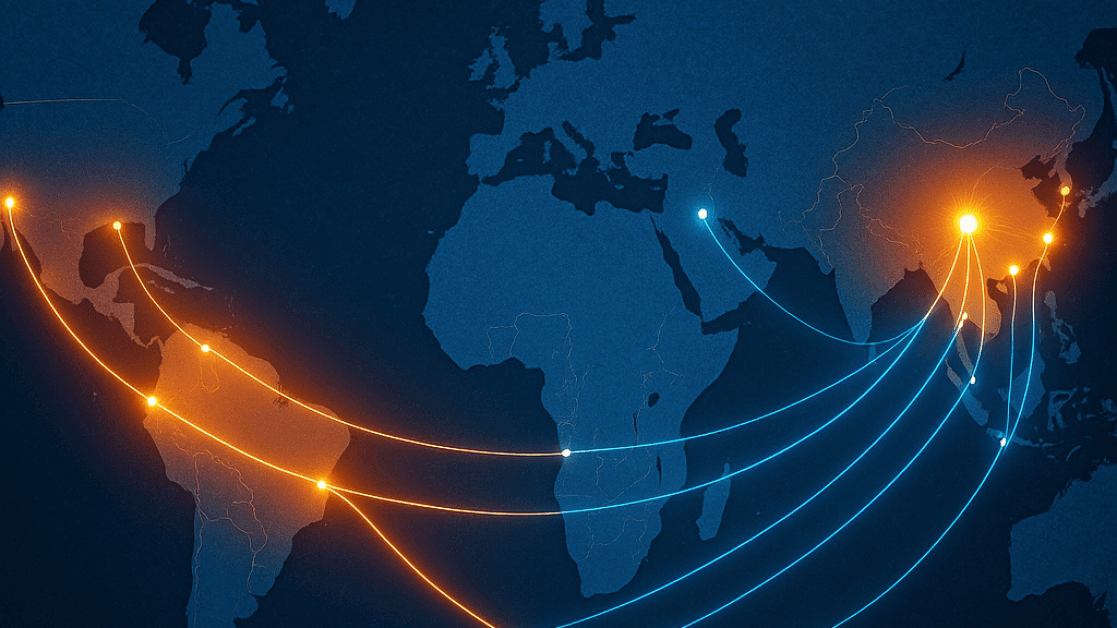
At the same time, multinational corporations and governments are actively diversifying production bases, giving rise to new manufacturing hubs across Asia and beyond. The result is a reconfiguration of global trade networks that could redefine economic power dynamics in the coming decade.
The Slowdown Story: Beyond Cyclical Weakness
China’s economic deceleration is driven by a combination of structural and cyclical factors.
Growth Moderation
China’s GDP growth has slowed significantly compared to its double-digit expansion era.
- Growth is now in the range of 4–5%, reflecting a maturing economy
- Export-driven growth is weakening amid global demand slowdown
- Domestic consumption recovery remains uneven
According to market analysts, the slowdown is less about temporary weakness and more about structural transition.
Property Sector Crisis
The real estate sector, which once contributed a substantial share to China’s GDP, is under stress.
- Declining property sales
- High debt levels among developers
- Reduced construction activity
This has had a cascading effect on:
- Banking sector exposure
- Consumer confidence
- Local government revenues
Demographic and Productivity Challenges
China is also facing long-term structural constraints.
- Aging population
- Slowing workforce growth
- Plateauing productivity gains
These factors are limiting the country’s growth potential.
Supply Chain Shifts: The Rise of the “China+1” Strategy
One of the most significant consequences of China’s slowdown is the acceleration of supply chain diversification.
Why Companies Are Moving
Global companies are rethinking their dependence on China due to:
- Geopolitical tensions
- Rising labor costs
- Regulatory uncertainties
- Pandemic-induced disruptions
This has led to the adoption of the “China+1” strategy, where companies maintain operations in China while expanding to other countries.
Emerging Manufacturing Hubs
Several countries are benefiting from this shift.
- India is attracting investments in electronics and manufacturing
- Vietnam is emerging as a key export hub
- Southeast Asian nations are gaining traction in global supply chains
These regions offer:
- Competitive labor costs
- Policy incentives
- Strategic geographic positioning
Impact on Global Trade Networks
Supply chain diversification is reshaping trade flows.
- Reduction in concentration risk
- Increased regionalization of trade
- Growth in intra-Asia trade
This transition is gradual but significant, with long-term implications for global commerce.
Market Impact: Winners and Losers
Beneficiaries of the Shift
Countries and sectors benefiting from China’s slowdown include:
- Manufacturing hubs outside China
- Logistics and supply chain companies
- Commodity exporters linked to alternative markets
Challenges for China
China faces multiple headwinds:
- Declining export competitiveness
- Pressure on industrial output
- Reduced foreign investment inflows
Global Market Reactions
Financial markets are reacting to these developments.
- Commodity prices are adjusting to demand changes
- Equity markets are reflecting sectoral shifts
- Currency movements are influenced by trade dynamics
Data, Trends & Numbers: The Evidence
Key data points highlight the scale of change:
- China’s export growth has slowed significantly in recent quarters
- Manufacturing relocation is increasing across Asia
- Foreign investment diversification is accelerating
- Global supply chain indices show reduced concentration in China
Market analysts suggest that these trends indicate a long-term structural shift rather than a temporary adjustment.
Strategic Interpretation: What Experts Are Saying
Experts view China’s slowdown as part of a broader global transition.
Key insights include:
- The global economy is moving toward multi-polar manufacturing ecosystems
- Supply chain resilience is becoming a priority over cost efficiency
- Companies are balancing risk diversification with operational efficiency
There is also a consensus that China will remain a major player, but its dominance is likely to decline gradually.
Global Comparison: Shifting Economic Power
The redistribution of manufacturing capacity is altering global economic dynamics.
- Emerging markets are gaining importance
- Developed economies are reshoring critical industries
- Trade alliances are evolving
India, in particular, is positioning itself as a key beneficiary of these shifts, supported by policy initiatives and domestic demand.
Risks and Challenges
Execution Risks in New Markets
- Infrastructure gaps
- Regulatory complexities
- Skill shortages
Global Demand Uncertainty
- Slowing global growth
- Volatility in consumer demand
Transition Costs
- Higher operational costs during relocation
- Supply chain disruptions during transition
Future Outlook: A Reconfigured Global Economy
Looking ahead, the global economy is likely to see:
- Continued diversification of supply chains
- Growth of regional manufacturing hubs
- Reduced dependence on any single country
China will continue to play a significant role, but within a more balanced global framework.
A Turning Point for Global Trade
The China economic slowdown supply chain shifts story marks a turning point in the global economic landscape.
What is unfolding is not just a slowdown—it is a structural realignment of production, trade, and investment patterns. For businesses and investors, this creates both opportunities and challenges.
As supply chains evolve and new hubs emerge, the global economy is entering a phase of transformation—one that will shape trade dynamics, investment strategies, and economic growth for years to come.
 Related News
POST A COMMENT (0)
All Comments (0)
Replies (0)