





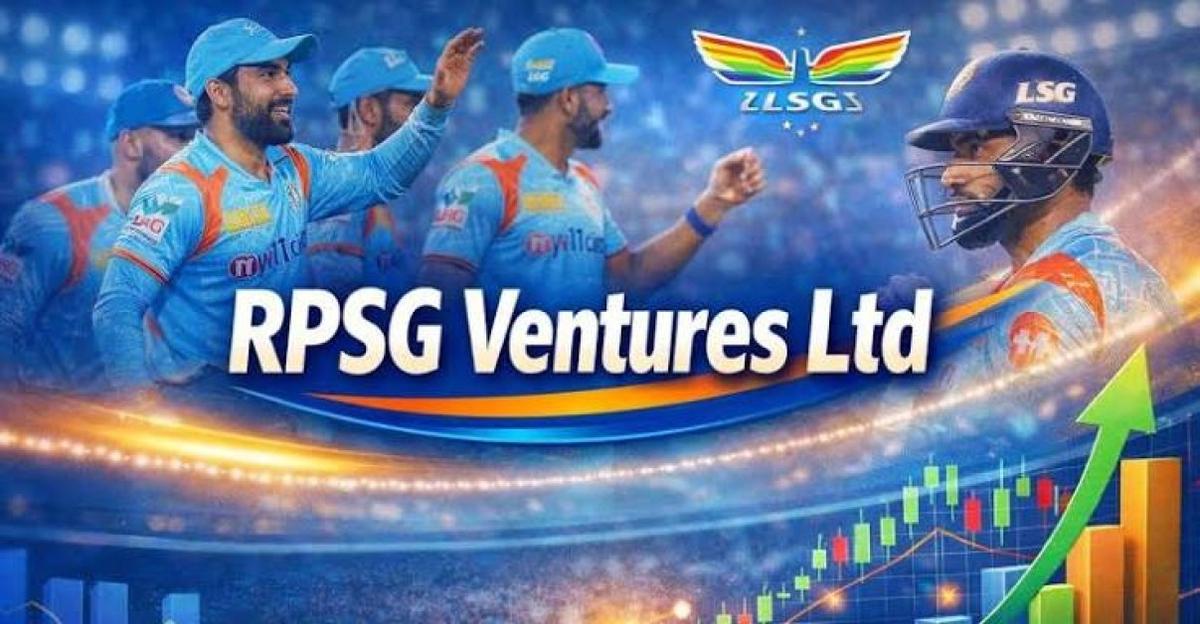
RPSG Ventures Shares Surge Amid Renewed Investor Interest in IPL-Linked Sports Assets
RPSG Ventures has attracted renewed investor attention as the rapidly changing valuation landscape for Indian Premier League franchises encourages markets to reassess the potential value embedded in the company's sports portfolio.
The RPSG Group controls Lucknow Super Giants through RPSG Sports, giving the listed company exposure to one of the IPL's newer franchises and placing it among a relatively small group of publicly traded Indian companies linked to major cricket assets.
Investor interest in IPL-linked companies strengthened significantly earlier in 2026 after major franchise transactions established substantially higher valuation benchmarks for professional cricket teams. RPSG Ventures shares have previously reacted sharply to those developments, including a 20% intraday surge following the Royal Challengers Bengaluru transaction and another rally after the Rajasthan Royals deal. (The Economic Times)
IPL Franchise Valuations Drive Market Reassessment

The most important factor behind investor interest is the rising implied value of IPL franchises.
In March, the sale of Royal Challengers Bengaluru at a reported ₹16,600 crore valuation created a major new benchmark for franchise ownership. RPSG Ventures shares surged as much as 20% following that transaction as investors reassessed the potential value of Lucknow Super Giants. (The Economic Times)
A subsequent transaction involving Rajasthan Royals reinforced the trend.
A consortium led by Lakshmi Mittal and Adar Poonawalla agreed to acquire Rajasthan Royals at a reported valuation of ₹15,600 crore, again prompting a positive reaction in RPSG Ventures shares. (Moneycontrol)
Together, these transactions have changed how markets evaluate IPL ownership.
Lucknow Super Giants Becomes Key Valuation Reference
Lucknow Super Giants was acquired by the RPSG Group for ₹7,090 crore when the Board of Control for Cricket in India awarded new IPL franchises in 2021. (Moneycontrol)
At the time, the acquisition price represented one of the largest investments ever made in an Indian sporting franchise.
The subsequent rise in valuations across established IPL teams has encouraged investors to consider whether Lucknow Super Giants could now command a materially higher value.
That potential valuation uplift is important for RPSG Ventures because public markets can increasingly view its sports interests as standalone assets rather than simply ancillary businesses within a diversified corporate group.
IPL Teams Are Emerging as Financial Assets
IPL franchises were once viewed primarily as strategic or prestige investments by wealthy business groups.
That perception has changed significantly.
Franchises increasingly possess characteristics attractive to institutional and strategic investors, including:
-
Scarce ownership positions
-
Central broadcasting revenue
-
Sponsorship income
-
Ticketing revenue
-
Merchandise opportunities
-
Digital fan engagement
-
International brand potential
-
Long-term league growth
Recent transactions suggest investors are assigning substantial financial value to these characteristics.
Scarcity Supports Franchise Valuations
There are only a limited number of IPL franchises.
That scarcity is one of the fundamental factors supporting valuations.
An investor seeking meaningful ownership of a major IPL team cannot simply create a competing franchise whenever it chooses.
Expansion depends on league decisions and formal bidding processes.
Existing franchises therefore control scarce positions within one of global cricket's most commercially valuable competitions.
Broadcasting Economics Remain Central
Media rights are among the most important revenue sources supporting IPL franchise economics.
Broadcasters and streaming platforms compete aggressively for cricket audiences because IPL matches attract enormous viewership and advertiser demand.
Franchises benefit indirectly from the value generated through central media-rights agreements.
Higher future broadcasting values could therefore support further increases in team revenues and valuations.
Sponsorship Provides Another Revenue Engine
IPL teams also generate substantial commercial revenue through sponsorship.
Potential sponsorship categories include:
-
Team jerseys
-
Training apparel
-
Digital content
-
Stadium branding
-
Official partnerships
-
Merchandise collaborations
Teams with stronger fan engagement can potentially command higher commercial value from advertisers.
For Lucknow Super Giants, building a durable supporter base therefore has direct financial implications.
Sports Assets Can Create Long-Term Brand Value
Unlike many conventional businesses, sports franchises can become more valuable as their history develops.
Successful teams accumulate:
-
Supporters
-
Rivalries
-
Iconic players
-
Memorable matches
-
Brand recognition
These characteristics can strengthen the commercial value of a franchise over decades.
That long-duration brand-building opportunity can make sports ownership particularly attractive to investors willing to accept relatively long investment horizons.
RPSG Is Building a Global Super Giants Network
RPSG's ambitions extend beyond Lucknow Super Giants.
The group has developed a broader cricket franchise portfolio carrying the Super Giants identity across multiple markets.
Its sports interests include exposure to competitions in India, South Africa and England.
The international strategy potentially creates opportunities to share:
-
Brand identity
-
Player development
-
Coaching expertise
-
Sports science
-
Commercial partnerships
-
Fan engagement
A global franchise network can potentially become more valuable than individual teams operating independently.
Manchester Investment Expands International Footprint
RPSG has also expanded its investment in English cricket through Manchester Super Giants.
The group owns 70% of the franchise and has committed additional capital to sports infrastructure around Old Trafford.
RPSG purchased land behind the stadium with plans to develop training facilities incorporating outdoor practice areas, a gym, sports science and medical infrastructure. (The Times)
The investment indicates that the group's sports strategy extends beyond simply purchasing franchise rights.
Training Infrastructure Can Support Multiple Teams
RPSG's planned Manchester facilities could potentially serve players across its broader Super Giants network.
Shared infrastructure creates opportunities to build a more integrated sports organisation.
Players from different competitions could potentially access common:
-
Training facilities
-
Coaching systems
-
Medical resources
-
Sports science
-
Performance analytics
This approach increasingly resembles the multi-club models used by major global sports investors.
Global Cricket Franchises Are Becoming Connected
The international expansion of IPL ownership groups represents one of the most significant structural changes in professional cricket.
Indian franchise owners now participate across competitions including:
-
IPL
-
SA20
-
The Hundred
-
Caribbean Premier League
-
Major League Cricket
This creates global networks of teams connected through common ownership.
RPSG's sports portfolio positions the group within this broader transformation.
Cross-League Ownership Can Create Synergies
Owning teams in multiple competitions can provide several strategic advantages.
Franchise groups can share knowledge around:
-
Scouting
-
Player development
-
Analytics
-
Sponsorship
-
Marketing
-
Operations
Global ownership can also extend the commercial calendar beyond a single IPL season.
Rather than operating primarily during one tournament window, sports organisations can maintain fan engagement throughout the year.
IPL Valuation Benchmarks Matter for Listed Companies
The increasing number of high-value franchise transactions provides investors with reference points for estimating the potential worth of sports assets.
This is particularly relevant for listed companies linked to IPL ownership.
Markets can compare recent franchise transaction values against the market capitalisation of companies holding similar assets.
That comparison can sometimes create significant share-price movements when investors believe a sports asset is undervalued within a larger corporate structure.
RPSG Ventures Has Already Shown This Sensitivity
RPSG Ventures' share-price performance earlier in 2026 demonstrated how quickly franchise valuation news can affect market sentiment.
Shares jumped sharply after the RCB transaction established a ₹16,600 crore valuation benchmark. (The Economic Times)
They later gained again after the Rajasthan Royals transaction was reported at ₹15,600 crore. (Moneycontrol)
The reactions demonstrate that investors increasingly connect RPSG Ventures' valuation with developments elsewhere in the IPL ownership market.
Sports Valuation Is Not Straightforward
Investors should nevertheless avoid assuming that every IPL franchise deserves an identical valuation.
Team values can differ based on:
-
Brand history
-
Competitive performance
-
Fan base
-
Sponsorship
-
Geography
-
Revenue
-
Profitability
-
Ownership structure
Royal Challengers Bengaluru and Rajasthan Royals therefore provide useful benchmarks, but they do not automatically establish the precise value of Lucknow Super Giants.
Newer Franchises Face Different Economics
Lucknow Super Giants entered the IPL in 2022, making it significantly younger than many established teams.
Older franchises have had more time to develop supporter communities and commercial relationships.
However, newer teams also benefit from joining an already mature and globally recognised league.
Their growth potential depends on how successfully they convert league-wide popularity into franchise-specific loyalty.
Team Performance Can Influence Commercial Value
Competitive success can strengthen a franchise's commercial appeal.
Successful teams can benefit from:
-
Higher fan engagement
-
Greater media attention
-
Stronger merchandise demand
-
Increased sponsorship appeal
However, franchise valuation is not determined solely by short-term sporting results.
Long-term league economics and brand strength can remain valuable even through weaker competitive seasons.
Cricket Economics Are Becoming More Institutional
The increasing participation of private equity firms, billionaires and institutional capital in franchise transactions represents a significant evolution for cricket.
Sports ownership is increasingly evaluated through financial concepts such as:
-
Revenue growth
-
Enterprise value
-
Media rights
-
Sponsorship yield
-
Brand monetisation
-
Asset appreciation
This professionalisation could eventually create more sophisticated valuation methods for cricket franchises.
RPSG Could Benefit From Multi-Asset Sports Strategy
A broader sports portfolio gives RPSG opportunities extending beyond individual franchise valuations.
The group can potentially create commercial partnerships spanning multiple teams and markets.
A sponsor interested in cricket audiences across India, South Africa and England could potentially work across the Super Giants network.
Such cross-market opportunities could strengthen the commercial value of the overall sports platform.
Digital Fan Engagement Offers Additional Growth
Sports franchises increasingly operate as digital entertainment brands.
Fans engage with teams through:
-
Social media
-
Streaming
-
Short-form video
-
Mobile applications
-
Online merchandise
-
Fantasy sports
Digital platforms allow franchises to maintain relationships with supporters outside match days.
Strong digital engagement can therefore become an increasingly important component of franchise valuation.
Merchandise Remains Underdeveloped Opportunity
Compared with mature global sports leagues, Indian cricket still has considerable room to expand official merchandise.
Products can include:
-
Jerseys
-
Caps
-
Training apparel
-
Collectibles
-
Accessories
As fan identities around individual IPL teams become stronger, merchandise could become a more meaningful revenue source.
Stadium Economics Could Also Evolve
Ticketing represents another commercial opportunity.
Premium seating, hospitality and corporate experiences can increase match-day revenue.
Over time, franchises and league operators could develop more sophisticated stadium monetisation strategies similar to those used in major international sports.
This could further strengthen the underlying economics of IPL ownership.
Media Rights Remain Major Valuation Risk
The biggest structural driver of IPL franchise economics can also represent a risk.
If future media-rights growth slows, revenue expectations could moderate.
Broadcasters and streaming platforms must generate adequate returns from expensive sports rights.
Franchise valuations therefore remain partly dependent on the continued commercial strength of the wider IPL ecosystem.
Investor Expectations Can Create Stock Volatility
RPSG Ventures' share-price movements show that sports valuation narratives can produce substantial volatility.
Investors may react quickly to new franchise transactions even when those deals do not directly change RPSG Ventures' earnings.
This means market prices can move ahead of fundamental financial changes.
Investors therefore need to distinguish between:
-
Implied asset value
-
Actual earnings
-
Cash generation
-
Ownership structure
-
Realisable value
A high theoretical franchise valuation does not necessarily translate immediately into cash available to listed shareholders.
Unlocking Sports Value Could Become Longer-Term Theme
As franchise valuations rise, investors may increasingly ask how conglomerates intend to realise the value of their sports businesses.
Potential routes in the broader industry could include:
-
Strategic stake sales
-
Private investment
-
Separate listings
-
Corporate restructuring
-
Asset monetisation
There is no automatic requirement for RPSG to pursue any particular route, but rising franchise valuations make sports asset ownership increasingly relevant to shareholder discussions.
What Investors Should Watch
RPSG Ventures' sports-linked investment case puts several indicators in focus:
-
Lucknow Super Giants valuation
-
IPL franchise transactions
-
Media-rights economics
-
Sponsorship growth
-
Team profitability
-
Manchester Super Giants investment
-
Global franchise expansion
-
Digital fan engagement
-
Sports asset monetisation
-
RPSG Ventures' underlying financial performance
Future transactions involving IPL franchises could continue to provide important valuation benchmarks.
Outlook
Renewed interest in RPSG Ventures illustrates how professional sports assets are becoming increasingly relevant to Indian equity investors.
Recent franchise transactions have established substantially higher valuation benchmarks for IPL teams, prompting markets to reconsider the potential worth of Lucknow Super Giants and other cricket assets connected to listed companies.
RPSG's growing international Super Giants network adds another dimension to the investment case, particularly as the group commits additional capital to English cricket infrastructure.
However, investors will still need to distinguish between rising private-market franchise valuations and the actual economic value attributable to shareholders of RPSG Ventures.
Conclusion
RPSG Ventures' renewed market attention reflects a broader transformation in the economics of professional cricket.
High-value transactions involving Royal Challengers Bengaluru and Rajasthan Royals have strengthened perceptions that IPL franchises are scarce, institutional-quality sports assets capable of commanding multibillion-dollar-equivalent valuations. (The Economic Times)
For RPSG Ventures, Lucknow Super Giants provides exposure to that valuation theme, while the wider Super Giants network offers a pathway toward building a multinational cricket platform.
The long-term investment case will depend on more than headline franchise valuations. Commercial growth, media rights, sponsorship, fan engagement, team economics and the group's ability to create value across its international sports portfolio will ultimately determine how significant these assets become for shareholders.
 RPSG Ventures Shares Rally as Investors Reassess Value of IPL-Linked Sports Assets FAQs
POST A COMMENT (0)
All Comments (0)
Replies (0)