





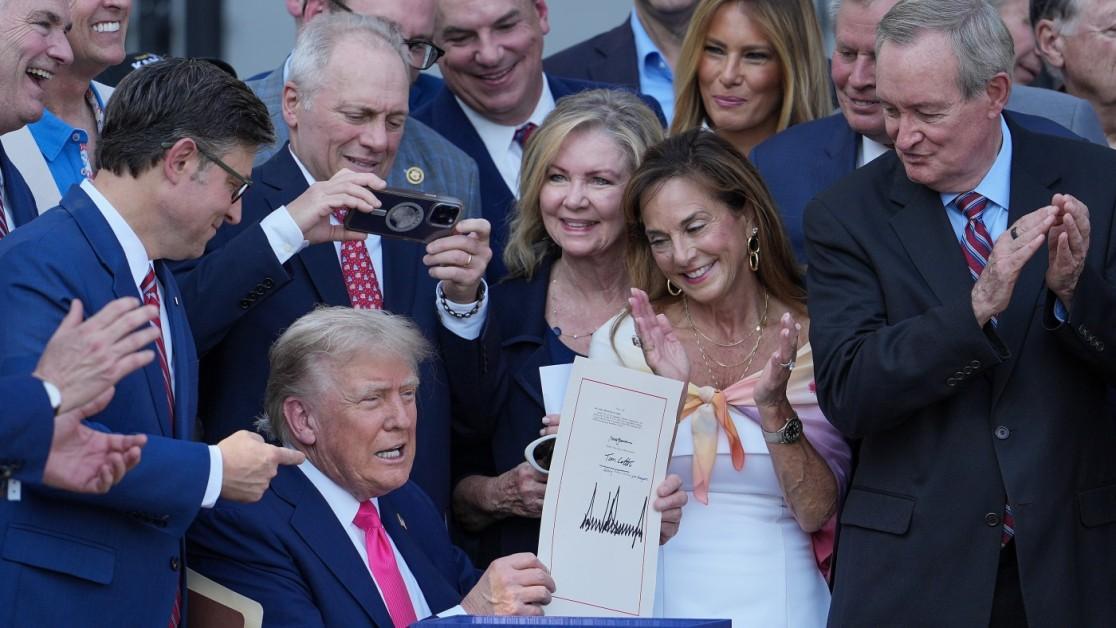
Former US President Donald Trump has reignited controversy by describing the Jeffrey Epstein scandal as a “hoax,” while simultaneously lending his support to a bipartisan resolution that seeks the release of classified and sealed files related to Epstein’s activities. His remarks, which have attracted both criticism and praise, highlight the complex intersection of politics, public trust, and the ongoing demand for accountability in one of the most notorious criminal cases of the past two decades.
The Jeffrey Epstein case has remained an open wound in American society, exposing a network of wealth, power, and privilege that allowed decades of abuse to flourish in secrecy. For Trump to describe the scandal as a hoax, yet also back the release of files, signals both an attempt to discredit ongoing narratives linking him to Epstein and a political calculation to align himself with the public’s demand for transparency. To fully grasp the weight of Trump’s remarks, it is essential to revisit the history of Epstein’s rise, the scandal surrounding his crimes, and the broader implications of unsealing the records.
Jeffrey Epstein’s story is not one of an ordinary financier. Emerging from relatively humble beginnings, he built a fortune and a network of influence through high-profile friendships, hedge fund strategies, and a carefully constructed image of wealth and exclusivity. By the early 2000s, Epstein had established himself as a central figure in elite social circles, with connections to royalty, celebrities, and political leaders on both sides of the aisle. His lavish private properties—including his infamous private island in the Caribbean—became symbols of excess but also, tragically, venues for alleged abuse.
Epstein’s first major brush with the law came in 2005, when a complaint from a young woman in Palm Beach led to a police investigation. What followed revealed a pattern of sexual exploitation of underage girls, many of whom were lured by promises of money, education, or career opportunities. Despite substantial evidence, Epstein managed to avoid serious consequences through a 2008 plea deal that remains one of the most controversial legal agreements in modern history. Under the deal, Epstein pleaded guilty to a minor state charge, served just 13 months in a private wing of a Florida jail, and was allowed work release privileges. This outcome, widely criticized as an egregious miscarriage of justice, was orchestrated in part by then-US Attorney Alexander Acosta, who later became Secretary of Labor under Donald Trump.
By the time Epstein was arrested again in 2019 on federal charges of sex trafficking, public awareness of his crimes had grown significantly, thanks in part to investigative journalism, survivor testimonies, and the #MeToo movement. Epstein’s 2019 arrest seemed to promise justice at last, but his sudden death in a New York jail cell a month later—officially ruled a suicide—only deepened suspicions of foul play. Theories of cover-ups, conspiracy, and the protection of powerful figures have persisted ever since.
Trump’s relationship with Epstein has long been a subject of scrutiny. The two men moved in similar social circles during the 1990s and early 2000s, and photographs exist of them together at parties. Trump himself, in a 2002 magazine interview, described Epstein as a “terrific guy” who liked beautiful women “on the younger side.” However, by the mid-2000s, reports suggested that Trump distanced himself from Epstein, with one account claiming that Epstein was banned from Trump’s Mar-a-Lago club for inappropriate behavior. Trump has consistently denied any involvement in Epstein’s activities, but his connections—like those of Bill Clinton, Prince Andrew, and others—have fueled speculation.
When Trump now calls the scandal a “hoax,” his choice of words reflects a familiar rhetorical strategy. Throughout his political career, Trump has often labeled controversies or investigations into his conduct as hoaxes, from the Russia probe to his impeachments. By applying the same label to the Epstein scandal, he is effectively dismissing any insinuations that he was personally implicated. At the same time, his support for releasing Epstein-related files allows him to appear aligned with public calls for transparency, especially among those who believe that the true scale of Epstein’s network has yet to be revealed.
The bipartisan resolution that Trump supports represents a rare moment of unity in an otherwise polarized Congress. Lawmakers from both parties argue that the sealed files—ranging from court documents to intelligence reports—could shed light on who enabled Epstein, who participated in his activities, and how systemic failures allowed him to continue unchecked. Advocates of the resolution stress that transparency is crucial not only for justice but also for restoring faith in the institutions that failed Epstein’s victims.
For Epstein’s survivors, however, Trump’s characterization of the scandal as a hoax risks minimizing their suffering. Many of the women who came forward described years of grooming, coercion, and abuse. Their testimonies have revealed not only Epstein’s predatory behavior but also the complicity of enablers who recruited victims, silenced dissent, or benefited from his wealth. Survivors continue to fight for recognition and accountability, and hearing one of the world’s most powerful political figures dismiss the scandal as false can feel like a step backward.
Critics of Trump argue that his remarks reflect a broader pattern of undermining serious allegations of abuse when they involve powerful men. They note that labeling the scandal a hoax could be a calculated move to downplay any lingering suspicions about his own association with Epstein. Supporters, on the other hand, contend that Trump’s push for unsealing files demonstrates his commitment to exposing the truth, even if it implicates other elites. This duality—dismissal of the scandal’s narrative while supporting transparency—has become a focal point in analyzing Trump’s approach.
The release of Epstein files, if it occurs, could have far-reaching consequences. It may expose new names, detail how Epstein evaded justice for so long, and reveal the scope of institutional failures. For political figures, the risk is particularly high, as both Democrats and Republicans could face embarrassment or worse. Beyond individual accountability, however, the release could spark broader reforms in how the justice system handles cases involving wealth and power.
Trump’s stance also plays into his ongoing political strategy as he campaigns for influence in the upcoming election cycle. By framing the scandal as a hoax, he shields himself from potential attacks while appealing to his base, which has grown accustomed to his anti-establishment rhetoric. By supporting the resolution, he aligns with populist anger toward elites and secretive institutions. This balancing act allows Trump to both deflect blame and project strength as a champion of truth.
What makes the Epstein scandal so enduring in public consciousness is not only the horrific nature of the crimes but also the sense that the full story has yet to be told. Epstein’s death, the secrecy surrounding his files, and the continued reluctance of some institutions to confront their role all feed into narratives of conspiracy and cover-up. In this context, Trump’s comments are more than just political posturing—they reflect the deep mistrust between the public and the systems meant to protect them.
Moving forward, the debate over Epstein’s legacy will likely intensify. If the files are released, the revelations could dominate political and media discourse for months, if not years. For survivors, the hope is that the truth will finally be exposed, providing a measure of closure and ensuring accountability. For Trump, the risk is that his words today could be scrutinized against future disclosures. For the American public, the outcome will be a test of whether transparency can prevail over secrecy, and whether justice can be delivered even when it implicates the powerful.
In conclusion, Trump’s dismissal of the Epstein scandal as a hoax, coupled with his support for releasing files, encapsulates the contradictions of his political style. It is a strategy that both deflects suspicion and seizes the mantle of transparency. Yet the real stakes lie beyond Trump himself. The Epstein case continues to symbolize the dangers of unchecked power, the failures of institutions, and the long road survivors must travel for justice. As the bipartisan resolution moves forward, the United States stands at a crossroads between exposing uncomfortable truths and allowing yet another chapter of abuse and privilege to remain shrouded in secrecy.
 Related News
POST A COMMENT (0)
All Comments (0)
Replies (0)