





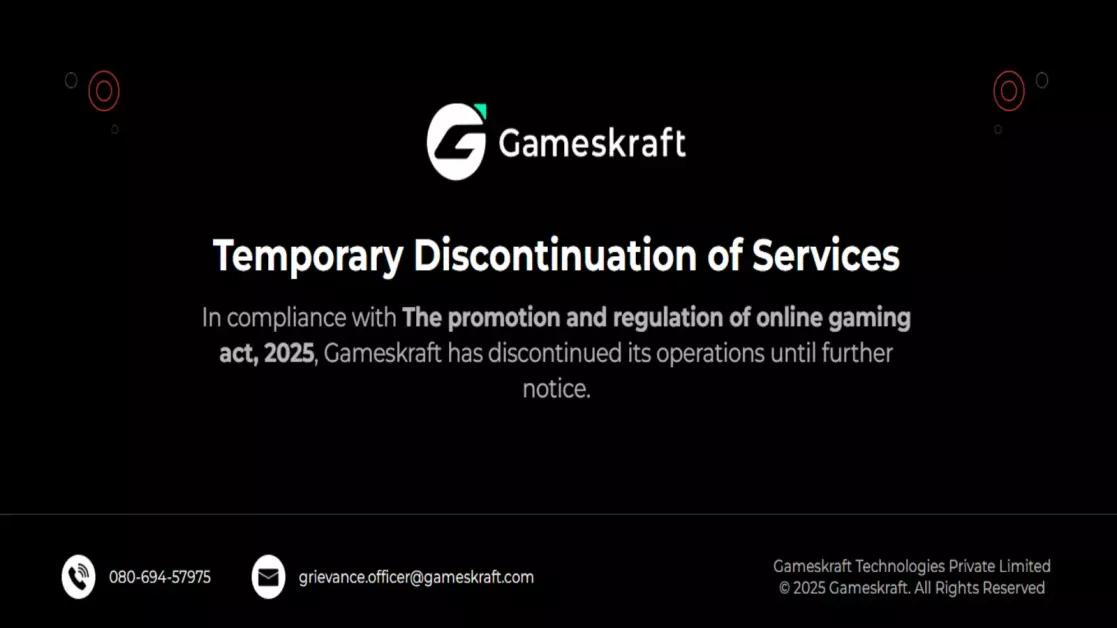
After Dream11, Gameskraft Says It Won’t Pursue a Legal Challenge to Government’s Real-Money Gaming Ban
Introduction
In a big change for India's online gaming world, Gameskraft Technologies has decided not to fight the government's ban on real-money games. This move comes after Dream11, a leading gaming company, also chose not to challenge the ban. It shows that these big players are now focusing on following the rules rather than fighting them.
This decision by Dream11 and Gameskraft strengthens the government's stance on real-money gaming. It's a key moment for India's digital economy. It could change how gaming, taxes, and how people interact with games in the country.
Background: The Government’s Ban on Real-Money Gaming
India's real-money gaming world has faced a lot of uncertainty. The Ministry of Electronics and Information Technology (MeitY) proposed rules in 2023 to sort out online games. They wanted to make a clear line between skill-based games and chance-based gambling.
In early 2025, the government decided to ban real-money gaming. They were worried about addiction, financial losses, and protecting players. This ban covers all games where money is involved, whether they're based on skill or luck.
The ban was also pushed by states, activists, and law enforcement. They were concerned about debt traps, suicides linked to gaming, and unfair business practices.
This ban was a huge shock for India's gaming startups. They had attracted a lot of foreign investment.
Dream11’s Earlier Decision
The first big move was when Dream11 said it wouldn't fight the government's ban. Dream11 is a top fantasy sports platform in India.
Dream11 had been fighting for years to prove that fantasy sports are not gambling. They had won cases in several courts, including the Supreme Court.
But after the ban, Dream11's founders decided to follow the law. They didn't want to get into another long legal fight. They were worried about the extra scrutiny on fintech and digital businesses.
Gameskraft’s Withdrawal: A Strategic Choice
Gameskraft Technologies has decided not to fight the government's ban on real-money gaming in court. This move follows Dream11's lead.
Gameskraft runs popular sites like RummyCulture, Gamezy, and Pocket52. It faced a huge tax issue in 2022. The DGGI demanded ₹21,000 crore in GST for misclassifying games.
Many thought Gameskraft would fight hard against the ban. But in a recent statement, the company said:
“We respect the government’s decision and will ensure full compliance with the current legal framework. While we have consistently believed in the distinction between skill-based and chance-based games, we also recognize the importance of constructive engagement over litigation. Our focus will now shift to innovation in non-real-money gaming formats and technology-led entertainment.”
This change is a big shift for Gameskraft. It had grown by offering real-money rummy and card games.
Industry Reactions
The decision has caused a stir in India's startup and gaming world.
-
Investors: Venture capitalists have invested over $3 billion in real-money gaming. They are now rethinking their investments. Gameskraft's decision might discourage others from operating.
-
Smaller Startups: Many mid-tier companies were hoping for a court victory. Without Dream11 and Gameskraft's support, their hopes are dwindling.
-
Government Officials: Regulators see this as a positive sign. They believe companies are willing to follow the law rather than challenge it.
Impact on the Sector
The effects of these decisions are huge:
-
Revenue Hit – Real-money games made up nearly 70% of India’s online gaming revenues. Without them, the sector could shrink a lot.
-
Job Losses – Thousands of jobs are at risk in this industry.
-
Investor Sentiment – Global investors might think twice before investing in regulated markets.
-
Shift to Casual Gaming – Companies might move to casual, ad-driven games or in-app purchases. These make less money than real-money games.
Legal and Regulatory Landscape
The collapse of resistance raises questions about India's gaming laws. Courts had said fantasy sports and rummy were games of skill. But the government's ban makes those distinctions irrelevant.
Lawyers say this could affect how India regulates other digital sectors. If the state can override past judgments, it sends a strong message to other industries facing rules, like fintech and crypto.
Expert Opinions
Industry experts and analysts have different views.
-
Policy Analysts say the government's move protects consumers. They point out gambling addiction and financial problems.
-
Economists fear the ban could harm a growing industry. They worry about job losses, tax cuts, and losing tech leadership.
-
Legal Experts think companies chose not to fight for practical reasons. The government's power and court costs made compliance easier.
The Future of India’s Gaming Market
What's next for the gaming industry in India?
-
Casual & Esports Growth – Companies might focus on esports, casual games, and ads.
-
Global Expansion – Some firms might play games in other countries where rules are easier.
-
Innovation in AR/VR – Without real-money games, new tech like AR, metaverse, and storytelling apps could become popular.
-
Regulatory Engagement – Industry groups might push for better rules, but without lawsuits.
Conclusion: A Defining Moment
The pullout of Dream11 and Gameskraft marks a key moment for India's digital economy. Real-money gaming, once booming, now faces a major setback.
The government says the ban is for public safety, but critics see it as a sudden loss of an industry. For Gameskraft and Dream11, survival is key. They must adapt, keep investors happy, and hold onto their best workers.
This story is more than gaming for India. It's about finding the right balance between innovation and rules, business and safety, and global and local interests. The outcome will influence online fun and India's reputation as a digital leader.
 Related News
POST A COMMENT (0)
All Comments (0)
Replies (0)