





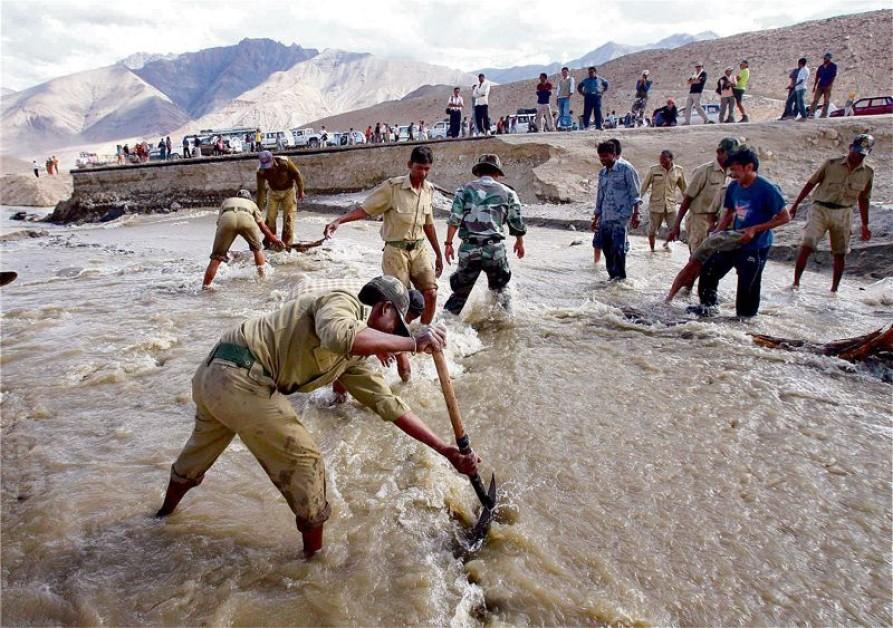
The Indus Waters Dispute: A Historical Overview of India’s Relationship with Pakistan
The Indus Waters Treaty (IWT), signed in 1960 between India and Pakistan, has been one of the most pivotal agreements in South Asian geopolitics. It governs the sharing of water from the Indus River system, which comprises six rivers: Indus, Jhelum, Chenab, Ravi, Beas, and Sutlej. Over the past six decades, this treaty has not only played a crucial role in regulating water distribution but has also been a source of tension, diplomacy, and at times, outright conflict between India and Pakistan.
A Historical Context: The Birth of the Treaty
The roots of the Indus Waters dispute trace back to the Partition of India in 1947, which divided the subcontinent into India and Pakistan. The partition created major issues regarding water distribution from the Indus River system, with the bulk of the river’s flow originating in India but its course flowing through Pakistan. In the years following Partition, both nations fought over control and rights to these vital water resources, a matter made all the more pressing given the agricultural reliance of both countries on the waters.
By the late 1950s, tensions were high, and a solution was necessary. This led to the involvement of the World Bank, which played a mediating role in helping India and Pakistan reach an agreement. The Indus Waters Treaty was signed in September 1960 by Indian Prime Minister Jawaharlal Nehru and Pakistani President Ayub Khan with the help of World Bank President Eugene R. Black.
The Treaty’s Provisions and Impact on Both Nations
Under the terms of the treaty, the three western rivers – Indus, Jhelum, and Chenab – were allocated to Pakistan, while India retained control over the eastern rivers – Ravi, Beas, and Sutlej. India was given the right to use these western rivers for purposes of irrigation, power generation, and domestic use, but the treaty strictly regulated the storage and usage of water from these rivers to ensure that Pakistan’s access was not hindered.
While the treaty was hailed as a masterstroke of diplomacy, ensuring peaceful cooperation over water resources, its implementation has not been without challenges. Over time, the treaty has acted as a diplomatic safety net that has largely prevented major water-related conflicts between the two countries. However, it has also been a source of tension during times of war, conflict, and political instability.
The War and the Water Crisis: Challenges to the Treaty
Despite the treaty, relations between India and Pakistan have often been fraught with tension, particularly during times of conflict. During the 1965 India-Pakistan War, the water-sharing issue was almost disrupted when India began constructing dams on the eastern rivers that fed into Pakistan. Similarly, the 1971 India-Pakistan War and Kargil War in 1999 saw both countries accusing each other of violating the terms of the treaty.
A key moment in this ongoing dispute came after the 2016 Uri Attack and the 2019 Pulwama Attack, when Indian Prime Minister Narendra Modi and other officials publicly suggested that India would consider using water as a weapon in the diplomatic conflict with Pakistan. India proposed withholding water from the rivers that flow into Pakistan as a means of exerting pressure on Islamabad to curb terrorism.
Though the idea was largely symbolic, it highlighted the ever-present tension surrounding the control of water resources and the delicate balance needed to maintain peace. More recently, India’s suspension of the Indus Waters Treaty has further intensified the water dispute, leaving Pakistan’s agricultural and hydropower sectors vulnerable.
Geopolitical and Environmental Implications
The dispute over water from the Indus River system has not only had bilateral consequences but also broader geopolitical and environmental implications. The growing threat of climate change and fluctuating monsoon patterns are expected to exacerbate water scarcity in both nations, making the Indus Waters Treaty even more critical. As populations continue to rise in both India and Pakistan, the pressure on these water resources will only intensify.
The Indus River system supports over 200 million people across both countries, providing vital water for drinking, irrigation, and industry. Any disruption in water supply could spell disaster for the millions who depend on it. Therefore, the treaty remains a central point of tension in Indo-Pakistani relations, with future water crises potentially leading to more significant geopolitical disputes.
Conclusion: A Delicate Balance
The Indus Waters Treaty is an intricate balance of diplomacy, political maneuvering, and environmental challenges. While it has managed to avert full-scale war over water, its long-term viability depends on the evolving diplomatic relations between India and Pakistan, environmental conditions, and the capacity of both nations to uphold the treaty in the face of mounting challenges.
As water becomes an increasingly precious resource, the future of the Indus Waters Treaty will continue to be a focal point in India-Pakistan relations, where cooperation is essential, but history and distrust loom large.
 Related News
POST A COMMENT (0)
All Comments (0)
Replies (0)