





India-Pakistan Tensions Escalate Post-Pahalgam Attack: A Region on the Edge
The devastating terror attack in Pahalgam has set the stage for one of the most dangerous escalations in recent India-Pakistan relations. In the immediate aftermath, India’s swift diplomatic and military responses have significantly altered the geopolitical landscape, sparking intense border skirmishes and plunging the region into a state of heightened alert.
Diplomatic Fallout: A Total Breakdown of Dialogue
India wasted no time in taking firm diplomatic action against Pakistan. Measures included the revocation of visas for Pakistani nationals, downgrading of diplomatic ties, and the expulsion of Pakistani military and diplomatic personnel from New Delhi. India also suspended the Indus Waters Treaty, withholding vital hydrological information critical to Pakistan’s agriculture and power sectors.
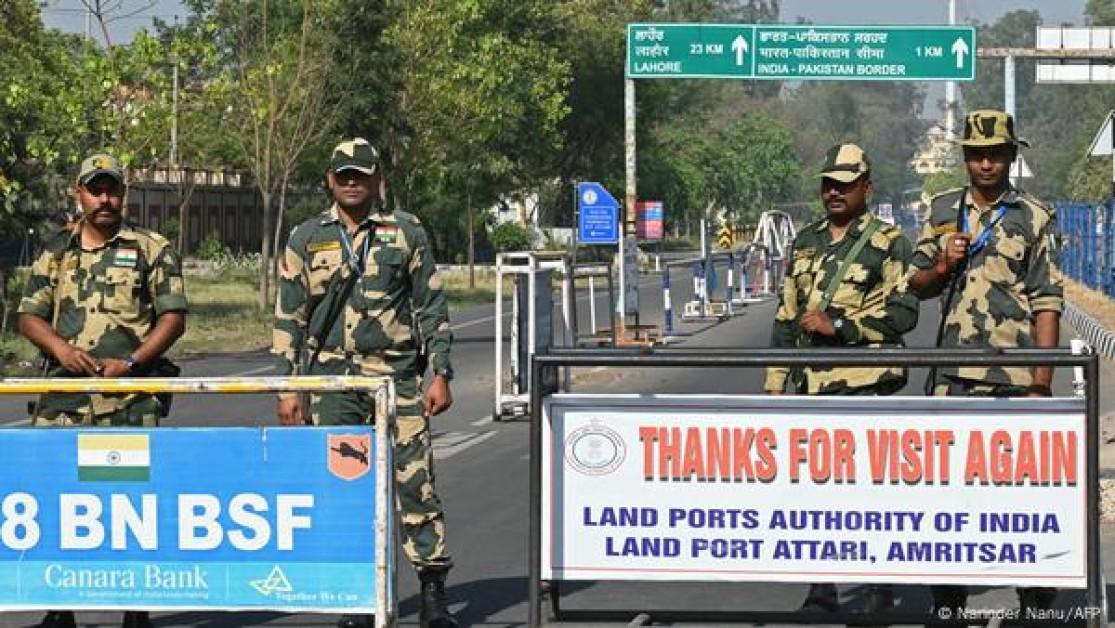
The closure of the primary border crossing between the two nations, along with a ban on official Pakistani social media accounts, further underscored the complete diplomatic isolation of Pakistan. These moves signaled that New Delhi had shifted from a policy of strategic restraint to proactive countermeasures.
Military Mobilization and Skirmishes at the Border
On the military front, India has visibly ramped up its preparedness along the Line of Control (LoC). Reports confirm multiple skirmishes and exchanges of fire between Indian and Pakistani forces across the contested border regions. Indian forces, acting on intelligence inputs, have also conducted targeted operations to neutralize potential terror launch pads close to the LoC.
While India has not officially declared any major offensive, the mobilization of troops, air patrols, and artillery units near the western frontier indicates that New Delhi is keeping all options open. Border villages have been put on high alert, and evacuation protocols have been initiated in sensitive zones.
Prime Minister Modi’s Strategic Calculations
Prime Minister Narendra Modi, after returning from an abbreviated visit to Saudi Arabia, convened an urgent Cabinet Committee on Security (CCS) meeting. In this high-stakes meeting, the CCS reviewed a wide range of potential responses, including covert operations, cross-border precision strikes, and economic sanctions targeting Pakistani interests.
Sources close to the Prime Minister’s Office have hinted that no option is off the table. India is prepared to escalate or de-escalate based on Pakistan’s actions in the coming days.
International Responses and Mediation Efforts
While global powers such as the United States, Russia, and Saudi Arabia have expressed strong support for India’s stance against terrorism, entities like the European Union and the United Nations have called for restraint and dialogue to prevent a full-blown conflict.
Despite these calls, both India and Pakistan appear firmly entrenched in their positions, making the path to diplomatic resolution increasingly narrow.
The Road Ahead: A Critical Juncture
As India fortifies its diplomatic, economic, and military fronts, and Pakistan grapples with growing isolation, the subcontinent stands at a critical crossroads. Whether this crisis spirals into a larger military confrontation or finds a tenuous diplomatic resolution will depend on decisions made in the coming hours and days.
Conclusion
The Pahalgam attack has not only devastated lives but has also reshaped South Asian geopolitics overnight. With India adopting a no-nonsense approach and Pakistan refusing to back down, the region is witnessing a historic moment of tension. The world watches anxiously, hoping for de-escalation, but preparing for the possibility of a deep and dangerous conflict.
 Related News
POST A COMMENT (0)
All Comments (0)
Replies (0)