





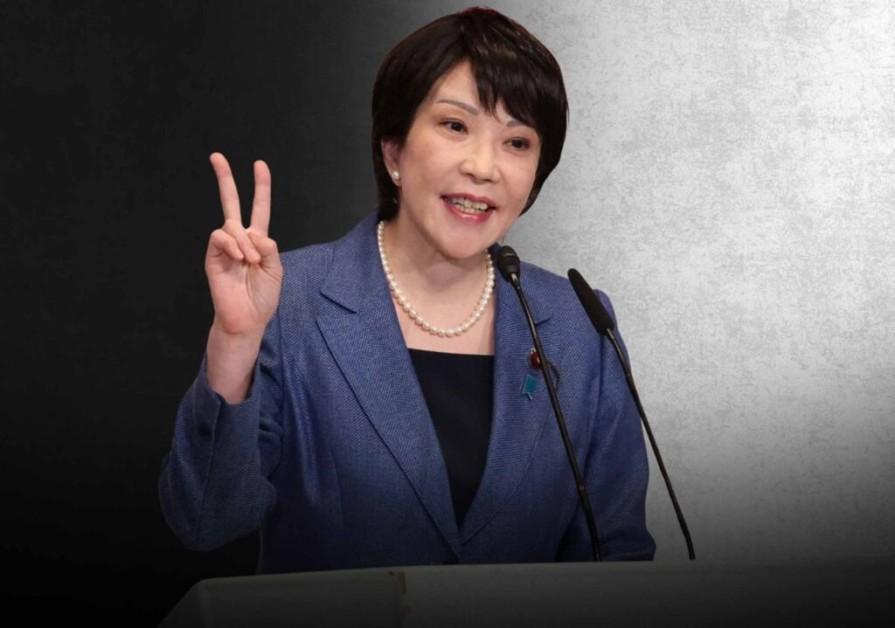
Sanae Takaichi’s Japan: A New Defence Era Unfolds
Japan stands at the threshold of a defining transformation under Prime Minister Sanae Takaichi’s leadership. Her announcement to advance the government’s target of spending 2% of GDP on defence marks a decisive shift in Japan’s post-war posture. This move, coupled with her promise to revise the nation’s security strategy by the end of 2026, signals a new chapter in Tokyo’s response to a volatile regional order dominated by growing military rivalries and power recalibrations in the Indo-Pacific.
The decision has stirred both national debate and global attention. Japan’s security policy has long been anchored in pacifism under Article 9 of its Constitution, which renounces war and restricts the use of force. However, the geopolitical environment surrounding Japan has evolved drastically in recent years. Takaichi’s government views these changes as pressing reasons to strengthen the nation’s deterrence capabilities. From North Korea’s missile tests to China’s assertive military maneuvers near the Senkaku Islands and rising uncertainties around U.S.-China relations, Japan now faces the most complex security landscape in decades.
Prime Minister Takaichi’s approach marks a philosophical as well as practical departure from the policies of her predecessors. While previous administrations gradually expanded Japan’s Self-Defense Forces’ (SDF) capabilities within constitutional limits, Takaichi appears determined to redefine the balance between restraint and readiness. Her administration’s goal is to not only meet the NATO benchmark of 2% of GDP in defence spending but to reach it ahead of schedule—a move that underscores Tokyo’s urgency to act before regional tensions further escalate.
Critics within Japan have expressed concerns about the pace and intent of these reforms. Opposition parties argue that increasing defence spending without corresponding diplomatic measures risks inflaming regional arms races. Some constitutional scholars have also warned that the proposed security revisions might blur the line between self-defense and preemptive action. Yet Takaichi’s supporters, including a significant portion of Japan’s strategic community, contend that the country can no longer rely solely on U.S. protection or symbolic pacifism. For them, the Prime Minister’s stance is a realistic acknowledgment of changing global power dynamics.
In practical terms, Japan’s new defence agenda will likely focus on three key areas: missile defense, cyber and space security, and advanced weapon systems. Takaichi has already hinted at expanding Japan’s counterstrike capabilities—an area once considered taboo. This would involve deploying long-range missiles capable of targeting enemy launch sites, a controversial but increasingly mainstream discussion within Japan’s defence circles. Cybersecurity and space surveillance, both critical in modern warfare, are also expected to receive major funding under the revised budget.
Another crucial aspect of Takaichi’s vision is the deepening of strategic partnerships. Japan’s alliance with the United States remains its cornerstone, but the Prime Minister is also seeking to strengthen ties with Australia, India, and Southeast Asian nations under frameworks such as the Quad and ASEAN partnerships. Her government’s approach suggests a diversification of security cooperation, aiming to create a broader network of stability in the Indo-Pacific. This shift indicates Tokyo’s desire to play a more active role, not merely as a U.S. ally but as a regional power capable of independent strategic influence.
The international response to Takaichi’s declaration has been mixed but largely watchful. Washington has welcomed the move, viewing it as a reinforcement of shared defence commitments. Beijing, however, has criticized the announcement, warning that Japan’s “militarization” could destabilize the region. South Korea’s reaction has been cautious, balancing its own defence modernization with historical sensitivities regarding Japan’s military expansion. Across Europe, particularly among NATO states, Tokyo’s initiative is seen as part of a larger trend where democratic nations are re-evaluating their security readiness in an era of great-power competition.
Economically, Japan faces a delicate balancing act. While a stronger defence budget could stimulate certain sectors—such as technology, manufacturing, and aerospace—it also raises concerns about fiscal sustainability. Japan already carries one of the world’s highest debt-to-GDP ratios. Takaichi’s administration will have to justify how defence spending aligns with domestic priorities like social welfare, aging demographics, and economic recovery. Analysts suggest that a portion of the funding could come from tax reforms or reallocation within the existing budget, though such decisions may trigger public resistance.
Politically, Sanae Takaichi’s assertive stance consolidates her image as a decisive and nationalistic leader. Known for her conservative leanings and strong advocacy for constitutional revision, she represents a generation of politicians unafraid to challenge Japan’s post-war limits. Her leadership style contrasts with the pragmatic caution of former leaders, projecting a new confidence rooted in sovereignty and self-determination. This recalibration could redefine Japan’s identity—not as a passive player shaped by global currents, but as a nation actively sculpting its strategic destiny.
Beyond the immediate policy implications, the Prime Minister’s announcement carries symbolic weight. It challenges decades of domestic hesitancy and tests Japan’s social consensus about its role in the world. The country’s younger population, more detached from the memories of World War II, appears increasingly open to discussions about national defence modernization. Meanwhile, older generations remain wary, fearing the erosion of pacifist ideals that have defined Japan’s moral standing for over seven decades. Takaichi’s task, therefore, extends beyond legislation—it involves guiding a generational dialogue about security, responsibility, and peace.
By pledging to revise Japan’s security strategy by 2026, Takaichi is also setting a timeline for institutional transformation. This process will involve redefining the missions of the Self-Defense Forces, integrating new technologies, and enhancing coordination between defence and intelligence agencies. The ultimate goal is to create a force structure that can respond rapidly and effectively to both conventional and hybrid threats. Analysts expect the forthcoming National Security Strategy to highlight resilience, deterrence, and multilateralism as the three pillars of Japan’s new defence doctrine.
Sanae Takaichi’s Japan is entering uncharted territory—one that seeks to balance tradition with transformation. Her push for stronger national defence is not merely a budgetary adjustment but a statement of strategic intent. It reflects Japan’s recognition that peace today requires preparation, and sovereignty demands capability. The coming years will reveal whether this new course secures Japan’s place as a proactive stabilizer in the Indo-Pacific or ignites the very tensions it aims to prevent.
In redefining Japan’s defence philosophy, Takaichi is also redefining its identity. The era of strategic restraint may be giving way to one of strategic readiness—an era where Japan, guided by its first female prime minister with a distinctly assertive vision, stands ready to safeguard its future in a world where the boundaries of security are being rewritten every day.
 Related News
POST A COMMENT (0)
All Comments (0)
Replies (0)