





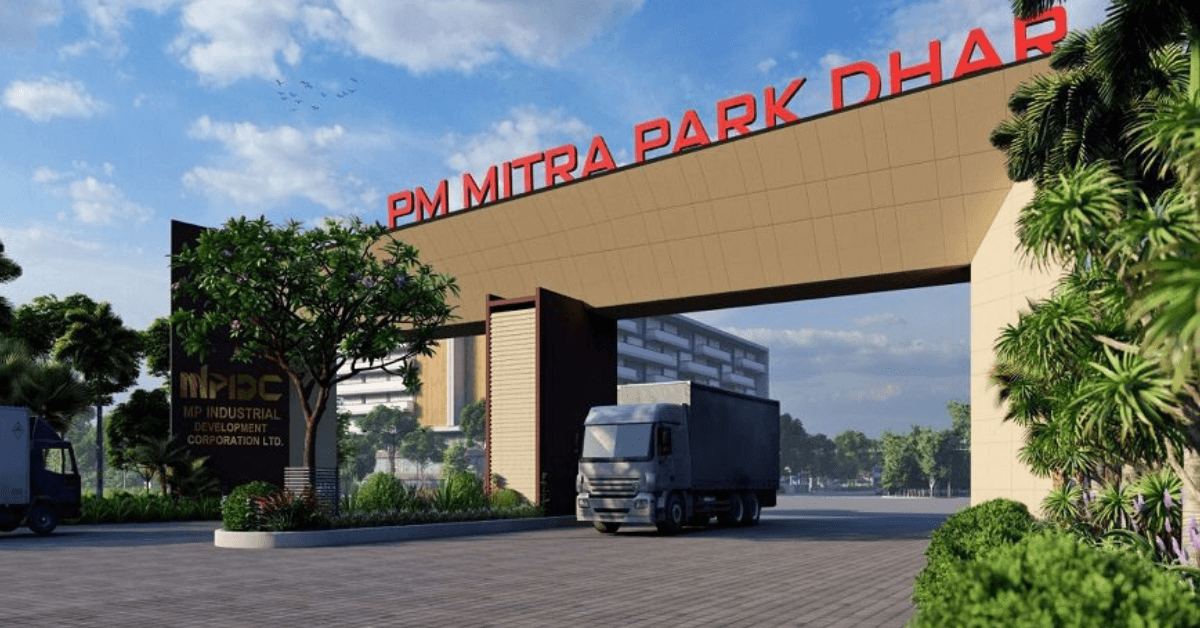
PM MITRA Textile & Apparel Park in Dhar, Madhya
Pradesh: A New Hub for India’s Textile Future
The Indian textile and apparel industry, one of the oldest and most significant sectors of the country’s economy, is entering a new growth chapter with the establishment of the PM MITRA Mega Integrated Textile & Apparel Park in Dhar, Madhya Pradesh. As part of the government’s ambitious PM MITRA scheme, this integrated hub is already drawing investment commitments worth more than ₹23,000 crore from over 114 manufacturers, reflecting strong confidence in India’s textile future.
The park is expected to emerge as a major industrial and employment center, not only boosting production capacity but also enhancing India’s competitiveness in global textile exports.
PM MITRA Scheme: Vision and Objectives
The PM MITRA (Mega Integrated Textile Region and Apparel) scheme was launched by the Government of India to develop world-class infrastructure for textiles, creating holistic hubs that integrate the entire value chain—from spinning, weaving, processing, dyeing, and printing to garment manufacturing and exports.
The objectives include:
-
Reducing logistical costs through integrated clusters.
-
Attracting large-scale investments from domestic and global players.
-
Generating employment, both direct and indirect, across the textile value chain.
-
Positioning India as a global leader in textile exports, leveraging its raw material strength.
By selecting Dhar in Madhya Pradesh as one of the PM MITRA sites, the government has strategically chosen a location with land availability, connectivity advantages, and strong industry potential.
Investment Interest: ₹23,000 Crore and Counting
The most striking development is the overwhelming investment interest shown by textile and apparel companies. According to officials, more than 114 manufacturers have already pledged over ₹23,000 crore, making the Dhar park one of the most attractive destinations for the sector.
These investments span across:
-
Spinning and weaving units to strengthen fabric production.
-
Dyeing and processing plants with a focus on sustainability.
-
Garmenting and apparel facilities catering to domestic and global markets.
-
Technical textiles and non-woven segments, aligned with India’s diversification goals.
This surge of commitments highlights the park’s potential as a future powerhouse of textile exports.
Employment and Economic Impact
The Dhar PM MITRA Park is expected to generate tens of thousands of direct jobs and many more indirect jobs through allied services like logistics, warehousing, packaging, and retail. Experts project that the park could eventually employ over 200,000 people once fully operational.
For Madhya Pradesh, this represents a significant boost to both industrial growth and local livelihoods. Rural areas surrounding Dhar, traditionally dependent on agriculture, will benefit from new avenues in manufacturing and services.
The state government, in partnership with the central government, is also working on skill development initiatives to train workers in textile technologies, ensuring a steady supply of skilled manpower.
Export Potential and Global Competitiveness
India’s textile exports currently contribute around $40 billion annually, but policymakers believe this figure could grow substantially with the support of PM MITRA parks.
The Dhar hub offers:
-
Integrated infrastructure, reducing costs and delays.
-
Proximity to raw material sources, including cotton and synthetic fibers.
-
Export-oriented facilities, including bonded warehouses and customs clearance.
-
Sustainability-focused investments, essential for meeting global buyers’ ESG requirements.
By offering scale and efficiency, the park will help Indian exporters compete with textile giants like Bangladesh, Vietnam, and China.
Policy Support and Incentives
Both the central and Madhya Pradesh governments are providing policy incentives to encourage investment. These include:
-
Land at concessional rates.
-
Infrastructure development support.
-
Subsidies under central schemes like PLI (Production Linked Incentive) for textiles.
-
Assistance with technology adoption and green manufacturing.
This ecosystem is designed to create a “plug-and-play” environment for manufacturers, reducing entry barriers and accelerating project execution.
Challenges and Considerations
Despite the strong promise, the Dhar PM MITRA Park will need to overcome challenges:
-
Sustainability requirements: Textile processing is water-intensive, and ensuring eco-friendly practices will be crucial.
-
Global market volatility: Demand cycles in the U.S. and EU, India’s key export markets, can influence growth.
-
Competition from peers: Neighboring countries continue to benefit from lower labor costs and preferential trade agreements.
-
Skill gaps: Bridging the technology and design skills gap will be essential to move up the value chain.
Addressing these concerns will determine how successful the park becomes in the long term.
Conclusion
The PM MITRA Textile & Apparel Park in Dhar, Madhya Pradesh is emerging as a landmark initiative in India’s industrial growth story. With over ₹23,000 crore of investment commitments from 114 manufacturers, the park is set to become a major textile and apparel hub, generating large-scale employment and positioning India strongly in the global textile export market.
If implemented effectively with sustainable practices and strong policy support, the Dhar PM MITRA Park could transform Madhya Pradesh into a national leader in textiles, helping India achieve its larger vision of becoming a global powerhouse in this critical sector.
 Related News
POST A COMMENT (0)
All Comments (0)
Replies (0)