





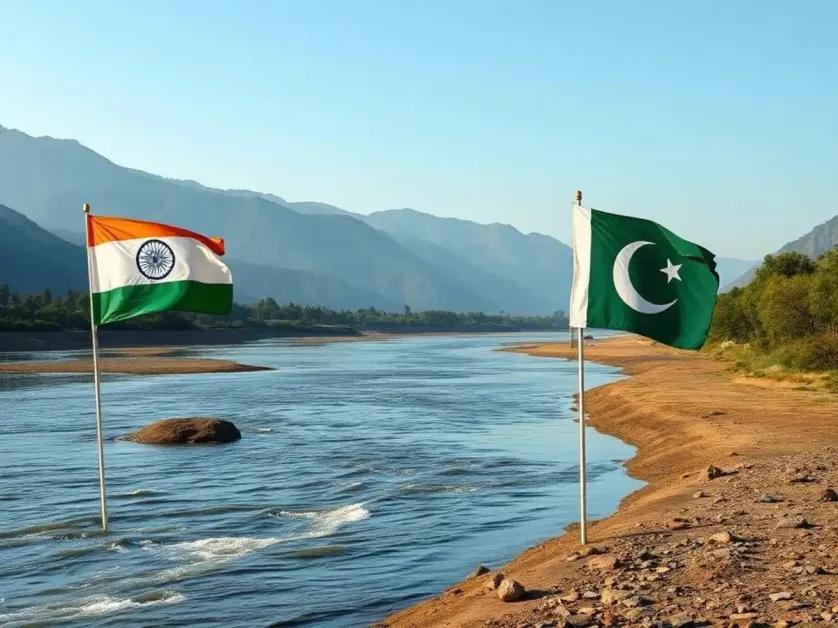
The Indus Valley, the lifeline of Pakistan's agriculture and economy, is once again at the center of rising tensions between India and Pakistan. Recent discussions within India about potentially blocking or modifying water flow to Pakistan under the Indus Waters Treaty (IWT) have sent shockwaves through diplomatic circles. If India were to take serious action, it could trigger an economic catastrophe for Pakistan, profoundly destabilizing the region.
But why would a move on water cripple Pakistan so badly? Here's a deep dive into the growing crisis.
The Indus River System: Pakistan's Lifeblood
Pakistan is heavily dependent on the Indus River System, which includes the Indus and its tributaries — the Jhelum, Chenab, Ravi, Beas, and Sutlej rivers. Remarkably, about 90% of Pakistan's agriculture relies on this river system. From wheat and rice to cotton and sugarcane, the Indus waters are essential to Pakistan’s food security and economic survival.
The Indus Waters Treaty of 1960, brokered by the World Bank, grants Pakistan exclusive rights over the western rivers (Indus, Jhelum, and Chenab), while India controls the eastern rivers (Ravi, Beas, Sutlej) but can use the western rivers for limited non-consumptive purposes like hydropower.
If India were to alter the flow, divert, or diminish the western rivers — even within the treaty's technical boundaries — Pakistan would immediately face a severe water shortage.
How India's Actions Could Unfold
India has several tools at its disposal without officially violating the treaty:
-
Accelerated dam construction: India could expedite hydroelectric projects on the western rivers, reducing downstream water availability.
-
Diversion of river flows: While large-scale diversion is currently limited by geography and treaty restrictions, smaller diversions could still have significant cumulative impacts.
-
Suspension or withdrawal from the treaty: Though extreme, India has hinted at reviewing the treaty post-terror attacks attributed to Pakistani elements.
In any of these scenarios, Pakistan’s vulnerability is stark.
The Economic Fallout for Pakistan
-
Agricultural Collapse:
Crops like wheat, rice, and sugarcane, major contributors to Pakistan’s GDP and employment, could wither without irrigation support. The food supply would shrink, prices would soar, and rural unemployment would surge. -
Energy Crisis:
Pakistan relies heavily on hydroelectric power generated from the Indus system. Reduced river flows would mean electricity shortages, further crippling industries and urban centers already facing frequent power cuts. -
Water Scarcity for Cities:
Urban centers like Karachi, Lahore, and Islamabad could face acute drinking water shortages, leading to health crises, social unrest, and mass migrations. -
Inflation and Economic Recession:
A collapse in agriculture and energy would drive up inflation, crash exports (particularly in textiles and agriculture), and push the economy into a deep recession. -
Social and Political Unrest:
Food and water shortages would likely trigger mass protests, instability, and possibly the toppling of governments — creating an internal crisis as dangerous as any external threat.
The Diplomatic Domino Effect
An Indian move against the Indus Waters Treaty would not just trigger bilateral tensions but could also internationalize the Kashmir dispute even further:
-
China, which has its own water issues with India, could exploit the situation.
-
The United Nations and global powers could intervene, but their influence might be limited.
-
South Asian regional stability would suffer, with ripple effects on trade, security, and counterterrorism cooperation.
Pakistan might even consider this an act of aggression, leading to serious military escalations.
Is India Really Ready to Take This Step?
While India has strategic reasons to pressure Pakistan by squeezing its water resources — especially after terror attacks — completely cutting off water is fraught with risks:
-
It could damage India's international image as a responsible rising power.
-
Environmental concerns could arise, since large-scale river engineering can hurt Indian ecosystems too.
-
It might provoke desperate retaliatory actions from Pakistan, worsening regional security.
Thus, New Delhi must weigh the strategic gains against the enormous risks involved.
Conclusion: Water as a Weapon?
In the 21st century, wars may not just be fought with bullets — they may be fought with water. For Pakistan, whose very survival hinges on the Indus, India's control over the upstream flows represents a geopolitical lever of immense power.
If India were to weaponize water, it could devastate Pakistan’s economy without firing a single shot — but it would also plunge the region into dangerous, unpredictable territory.
As tensions mount, the Indus Waters Treaty, once hailed as a model for peaceful resource sharing, stands at a precarious crossroads — and so does the future of South Asia.
 Related News
POST A COMMENT (0)
All Comments (0)
Replies (0)