





India — ASEAN Trade Agreement Review
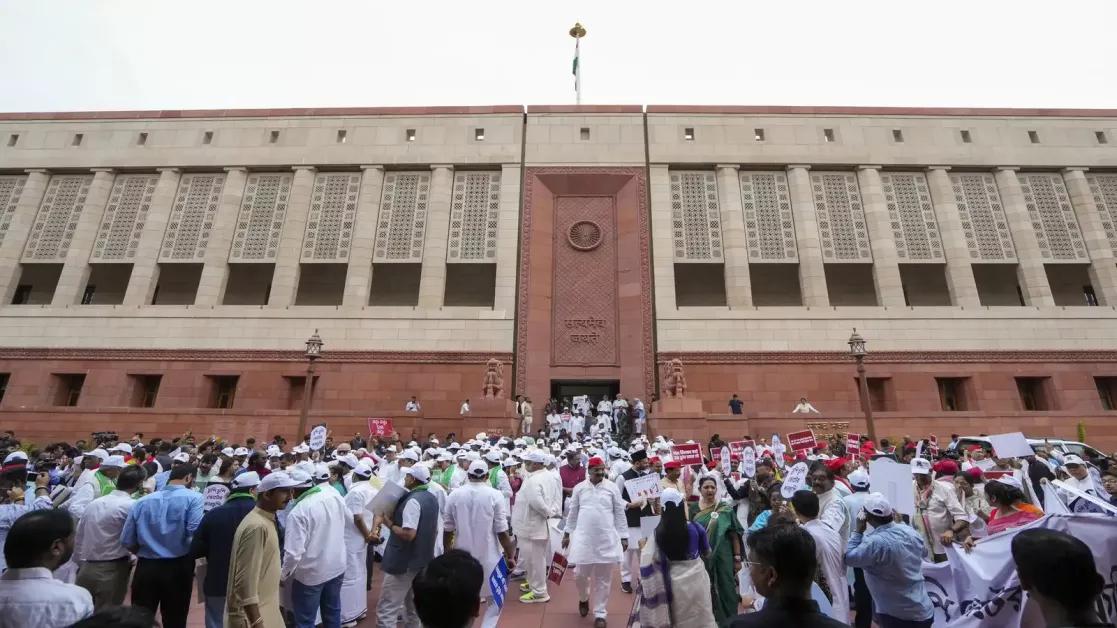
Progresses in Parliament
Introduction
India’s engagement with the Association of Southeast Asian Nations (ASEAN) has been a cornerstone of its “Act East” policy for over a decade. The ASEAN-India Trade in Goods Agreement (AITIGA), signed in 2009 and implemented in 2010, was envisioned as a powerful framework to deepen economic cooperation. However, over the years, concerns have emerged over trade imbalances, non-tariff barriers, and the impact on India’s domestic manufacturing and agriculture. In August 2025, Parliament entered a decisive phase of reviewing the agreement, with lawmakers, industry leaders, and policy experts closely watching the developments. This article examines the ongoing review, its political significance, its economic implications, and the possible outcomes for India’s trade future.
The Background of the ASEAN-India Trade in Goods Agreement
The AITIGA was part of a broader effort to integrate India more deeply into the dynamic economies of Southeast Asia. Covering trade in goods, the agreement aimed to progressively eliminate tariffs on more than 80% of traded products between India and the 10 ASEAN nations: Brunei, Cambodia, Indonesia, Laos, Malaysia, Myanmar, the Philippines, Singapore, Thailand, and Vietnam.
When it came into force in January 2010, the deal was celebrated as a milestone in India’s foreign trade policy. At the time, ASEAN collectively represented one of the world’s largest economic blocs, with a GDP exceeding $2 trillion and rapidly expanding consumer markets. For India, the agreement promised access to a market of over 600 million people.
Yet, optimism soon gave way to concerns. By 2015, Indian industry associations were voicing dissatisfaction, pointing to a rising trade deficit with ASEAN countries. Imports surged—particularly in sectors like palm oil, electronics, and machinery—while Indian exports struggled to gain similar market penetration due to stringent non-tariff barriers, quality standards, and logistical challenges.
The Parliamentary Review: Current Developments
In the current monsoon session, the Indian Parliament has taken significant steps toward reassessing the AITIGA. The review process, initiated in 2022 after joint discussions with ASEAN counterparts, is now moving into a phase where legislative inputs will directly shape India’s negotiation stance.
Lawmakers are debating:
-
Revising tariff reduction schedules for sensitive products
-
Addressing the trade deficit, which stood at approximately $43 billion in FY 2024-25
-
Introducing safeguard mechanisms to protect vulnerable domestic industries
-
Streamlining customs procedures to match ASEAN efficiency levels
-
Negotiating for reciprocal removal of non-tariff barriers affecting Indian exports like pharmaceuticals, auto parts, and agricultural goods
A senior official from the Ministry of Commerce and Industry stated during a committee hearing:
"We are not against free trade, but free trade must be fair trade. The review is an opportunity to recalibrate our terms to ensure mutual benefit rather than unilateral disadvantage."
Political and Diplomatic Dimensions
While the trade review is primarily an economic exercise, its political significance is considerable. ASEAN is central to India’s regional strategy, especially amid rising Chinese influence in Southeast Asia. The review comes at a time when several ASEAN nations are recalibrating their supply chains to reduce overdependence on China, opening potential opportunities for India to position itself as an alternative manufacturing and investment hub.
Diplomatic insiders suggest that the Indian government is treading a careful path:
-
Too harsh a revision could alienate ASEAN partners and be perceived as protectionist.
-
Too soft a stance risks domestic political backlash, particularly from industry lobbies and farmers who feel the agreement has cost them market share.
The Ministry of External Affairs has been working in tandem with the commerce ministry to ensure that the review is communicated as a “mutual upgrade” rather than a “renegotiation,” avoiding any appearance of hostility.
Economic Impact: Sector-by-Sector Analysis
Agriculture
Indian farmers, especially in the plantation sector, have felt the impact of cheap imports from ASEAN—particularly palm oil from Malaysia and Indonesia, and rubber from Thailand. The government is considering longer exclusion lists for these commodities in the revised agreement.
Manufacturing
Electronics and machinery imports from countries like Vietnam, Thailand, and Singapore have surged. While this benefits consumers with lower prices, it has also put pressure on domestic manufacturers. The review aims to create tariff structures that encourage local assembly and component production.
Pharmaceuticals
India is a major global supplier of generic medicines, yet its pharmaceutical exports to ASEAN face significant regulatory hurdles. Streamlined certification processes and mutual recognition agreements are being discussed.
Services Linkage
Though AITIGA is focused on goods, there is growing consensus that linking it with services and investment agreements could enhance mutual gains. Indian IT and professional services firms see ASEAN as a growth market.
Voices from Industry and Experts
The Confederation of Indian Industry (CII) has submitted a detailed memorandum urging the government to push for stronger rules of origin (ROO) to prevent third-country imports—particularly from China—being routed through ASEAN with preferential tariffs.
Dr. Meera Desai, a trade economist at Jawaharlal Nehru University, notes:
"India’s trade deficit with ASEAN is not simply about tariffs. It’s about competitiveness, infrastructure, and the ability to meet quality standards. Any review that ignores these factors will be incomplete."
Meanwhile, exporters in textiles, handicrafts, and engineering goods have expressed optimism that a well-negotiated review could unlock significant market opportunities.
Historical Lessons: What Went Wrong Before
The original AITIGA suffered from a few key shortcomings:
-
Limited Stakeholder Consultation — Domestic industries had little input during initial negotiations.
-
Overly Ambitious Tariff Cuts — India committed to steep tariff reductions without parallel improvements in competitiveness.
-
Weak Enforcement of ROO — Loopholes allowed goods from non-ASEAN countries to enter India duty-free via ASEAN partners.
-
Neglect of Non-Tariff Barriers — While tariffs were reduced, many ASEAN markets maintained complex regulations that hindered Indian exports.
These lessons are shaping the current review strategy.
Potential Outcomes of the Review
Three broad scenarios could emerge:
1. Minimal Adjustments — Minor tweaks to tariff schedules and procedural improvements without major structural changes.
2. Moderate Overhaul — Significant adjustments to exclusion lists, stronger ROO, and targeted sectoral protections.
3. Comprehensive Upgrade — A complete reworking of the agreement to integrate goods, services, investment, and e-commerce chapters—essentially creating a new-generation free trade agreement.
Conclusion: Balancing Ambition and Protection
The review of the ASEAN-India Trade in Goods Agreement is more than a technical trade exercise—it is a test of India’s ability to balance economic openness with strategic protection of domestic interests. The outcome will have far-reaching consequences, not only for bilateral trade flows but also for India’s geopolitical positioning in Asia.
For now, Parliament’s debates indicate a determination to create a more equitable framework. If successfully renegotiated, the revised agreement could become a cornerstone of India’s trade policy for the next decade, offering a more balanced path toward regional integration.
 Related News
POST A COMMENT (0)
All Comments (0)
Replies (0)