





Introduction
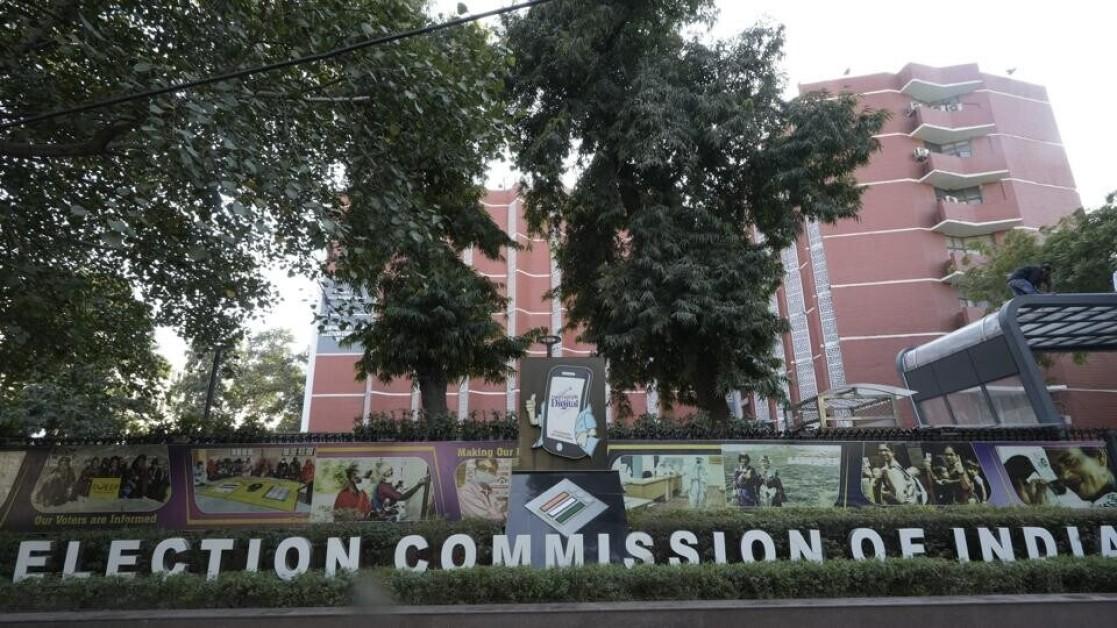
In recent days, a major confrontation has emerged between the Government of West Bengal, led by Chief Minister Mamata Banerjee, and the Election Commission of India (ECI). The issue, on the surface, appears procedural — involving the withdrawal of an Assistant Electoral Registration Officer and a data entry operator from poll duty by the state government. However, the underlying narrative reveals a much deeper conflict, touching upon the limits of state autonomy, the scope of ECI’s constitutional authority, and the ever-intensifying tensions between the Centre and opposition-ruled states in India.
The ECI had issued firm directives demanding that the state not only retain these officials but also take punitive action, including suspensions, FIRs (First Information Reports), and departmental proceedings. The West Bengal administration, however, outright refused to comply, asserting its own administrative prerogatives. This defiance has set the stage for yet another flashpoint in India’s already polarised political landscape.
Political and Historical Context
To understand the gravity of the dispute, one must first consider West Bengal’s recent political history. Since 2011, the state has been under the leadership of Mamata Banerjee and her party, the Trinamool Congress (TMC), after dislodging the 34-year-long Left Front rule. Over the past decade, West Bengal has witnessed some of the most heated electoral contests in the country, with allegations of violence, voter intimidation, and administrative bias becoming recurring themes.
The ECI, as a constitutional body, is tasked with ensuring free and fair elections. However, its interventions in West Bengal have often been met with accusations of bias by the TMC, which claims that the Commission acts under pressure from the ruling party at the Centre — the Bharatiya Janata Party (BJP). Conversely, the BJP and its allies argue that West Bengal’s government uses state machinery to tilt the electoral process in its favour. This mutual distrust forms the backdrop for the latest standoff.
Constitutional Provisions and Legal Framework
The Election Commission of India derives its authority primarily from Article 324 of the Constitution, which empowers it to direct, control, and prepare for elections to Parliament, state legislatures, and the offices of the President and Vice-President.
When elections are underway, the Model Code of Conduct (MCC) and related directives from the ECI hold sway over state machinery, including police forces and administrative officials. This means that officers — even if employed by the state — are required to follow ECI orders without interference from the state government.
However, the key legal question in the current dispute is jurisdiction during non-election periods. Since the withdrawal of the two officials occurred during a voter list revision exercise — not during polling — the West Bengal government claims that its normal administrative powers apply, allowing it to transfer or withdraw officers at its discretion. The ECI, on the other hand, asserts that voter list preparation is an integral part of the electoral process, thus falling under its authority.
Timeline of Events
-
ECI Directive Issued – The Election Commission instructed that certain officials remain in their roles for poll-related duties.
-
Allegations of Misconduct – The Commission reportedly received complaints regarding administrative irregularities and voter roll manipulation, prompting it to seek strict action.
-
State Defiance – The West Bengal government withdrew the officials from duty, citing administrative reshuffles and denying any wrongdoing.
-
ECI Escalation – The Commission issued another directive, demanding reinstatement and disciplinary measures, including FIRs.
-
Open Confrontation – The state refused to comply, framing the ECI’s move as an overreach and infringement upon state rights.
Stakeholder Perspectives
West Bengal Government’s Position
The TMC-led state administration frames its defiance as a stand for federalism. Mamata Banerjee’s government argues that the ECI’s instructions amount to micromanagement and that such interventions weaken state autonomy. Furthermore, it alleges that these directives are politically motivated, designed to benefit the BJP in upcoming elections.
Election Commission’s Position
The ECI maintains that its orders are rooted in the Constitution and are essential to safeguarding the integrity of the electoral process. It argues that voter roll revisions, even outside formal polling periods, are critical and therefore must remain under its direct supervision to prevent fraud or bias.
Opposition Parties in West Bengal
The BJP’s state unit and other opposition groups have backed the ECI, claiming that the TMC’s defiance is a sign that it has something to hide. They also accuse the state of shielding officials complicit in malpractice.
Legal Experts
Many constitutional scholars note that while Article 324 gives the ECI broad powers, these powers are not unlimited. The matter, they argue, might require judicial intervention to clearly define the boundaries between central and state authority in electoral administration.
Implications for Indian Democracy
The standoff between West Bengal and the ECI is not just a state-level administrative quarrel; it is a test case for the functioning of India’s federal system. If the ECI’s authority is deemed absolute in such matters, state governments could lose significant control over their own bureaucracies during any electoral process, however minor. On the other hand, if states are allowed to override ECI directives, the risk of electoral malpractice may increase.
This conflict also underscores a broader issue — the erosion of trust between central institutions and opposition-led states. In recent years, several non-BJP governments, including those in Delhi, Punjab, and Kerala, have accused central agencies and commissions of political bias. The West Bengal-ECI clash thus fits into a larger pattern of centre-state disputes.
Historical Precedents
India has seen similar confrontations before. During the 1990s, the ECI under T.N. Seshan clashed repeatedly with state governments over transfers of officials and enforcement of the MCC. More recently, in Tamil Nadu and Uttar Pradesh, state leaders have accused the ECI of siding with their political opponents.
However, the difference in the West Bengal case lies in its timing — this dispute has erupted outside an official election period, potentially setting a precedent for the ECI’s reach throughout the electoral cycle.
Possible Outcomes
-
Judicial Intervention – The matter could end up before the Supreme Court, which would then have to interpret the constitutional provisions and define the extent of ECI authority in non-election periods.
-
Negotiated Settlement – Behind-the-scenes discussions between the ECI and the West Bengal government might lead to a compromise, avoiding a public showdown.
-
Escalation into Political Campaign Material – Both the TMC and BJP could use the dispute to rally their respective voter bases, turning an administrative disagreement into a full-fledged election issue.
-
Policy Reform – This case could prompt Parliament to clarify the legal framework governing the ECI’s powers in relation to state governments, especially during preparatory electoral work.
Conclusion
The confrontation between the West Bengal government and the Election Commission is more than a bureaucratic tussle — it is a reflection of deepening political fault lines in India. At its heart lies a constitutional question about the balance between central oversight and state autonomy in a democracy as vast and diverse as India’s.
While the immediate impact may be limited to administrative functioning in West Bengal, the long-term consequences could reshape how elections are managed across the country. Whether through judicial intervention, political compromise, or legislative reform, the resolution of this conflict will likely become a reference point for future centre-state relations in India.
 Related News
POST A COMMENT (0)
All Comments (0)
Replies (0)