





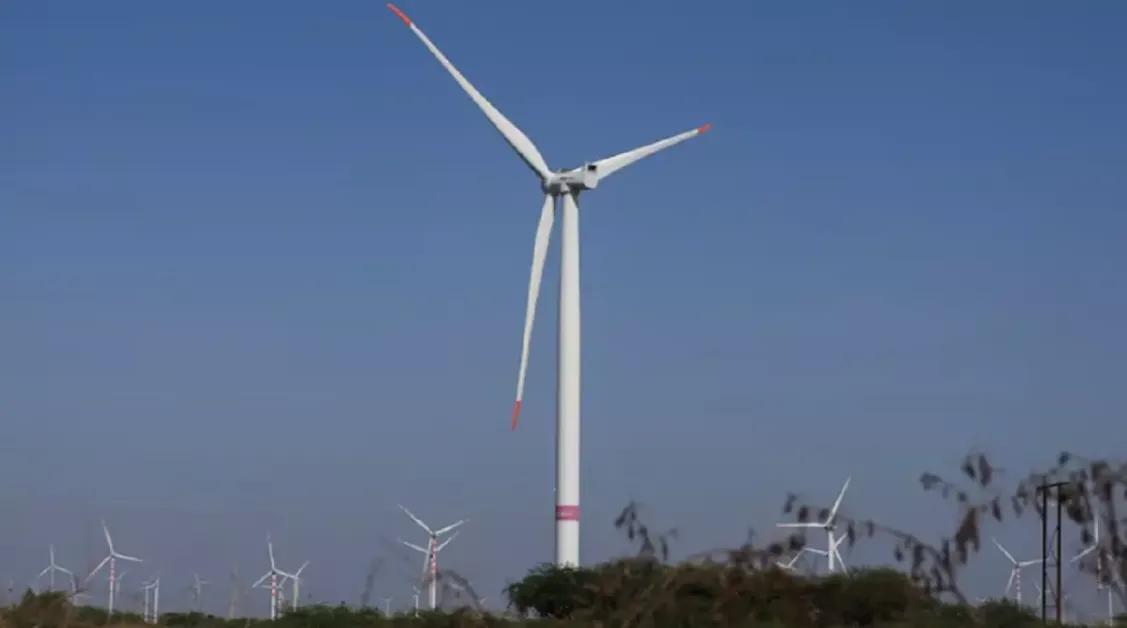
India has achieved a historic milestone by crossing the 5 lakh megawatt mark in its total installed electricity capacity. In an achievement that signals a major global shift, the country’s clean energy capacity has now officially overtaken its fossil-fuel-based capacity. This transformation positions India among the world’s leaders in renewable energy adoption and places the nation firmly on the path toward long-term energy sustainability and reduced carbon emissions.
According to the latest government and energy-sector reports, the clean-energy segment, which includes solar, wind, hydro, biomass and nuclear, has shown unprecedented growth over the past decade. Solar power alone has witnessed exponential expansion, driven by falling technology costs, large-scale government tenders and rooftop installations. Wind power continues to strengthen coastal and onshore corridors, while hydro and pumped storage projects provide essential balancing support to the renewable grid.
In contrast, traditional coal-based capacity has stagnated, with fewer new thermal projects being commissioned due to environmental concerns, financing challenges and rising global pressure to cut carbon emissions. This marks a major shift for a country that once depended heavily on coal for its industrial and economic growth.
Industry analysts note that India’s ambitious climate commitments, including its pledge to achieve 500 GW of non-fossil electricity capacity by 2030, have driven massive investments in clean-energy infrastructure. International funding, domestic manufacturing incentives and policy reforms such as simplified approvals, green energy corridors and updated bidding mechanisms have played crucial roles in supporting this transition.
For consumers, the shift toward clean energy is expected to bring long-term benefits such as lower energy costs, improved environmental conditions and reduced dependence on imported fuels. Large corporations are increasingly adopting renewable energy for operations, driven by sustainability targets and lower operational expenses. Cities and industries are also seeing improved energy security as the nation diversifies its power mix.
However, the transition is not without challenges. Integrating large amounts of variable renewable energy into the grid requires advanced storage systems, robust transmission networks and modernized grid management tools. Investments in battery storage, pumped hydro and hydrogen-based solutions are becoming essential to ensure stability and uninterrupted supply.
Despite these hurdles, India’s achievement marks a bold step forward. As clean energy continues to expand, the country is moving closer to establishing itself as a global renewable powerhouse. With supportive policies, technological innovation and greater public-private collaboration, India’s green-energy revolution is poised to reshape the next decade of power generation and sustainability.
 Related News
POST A COMMENT (0)
All Comments (0)
Replies (0)