





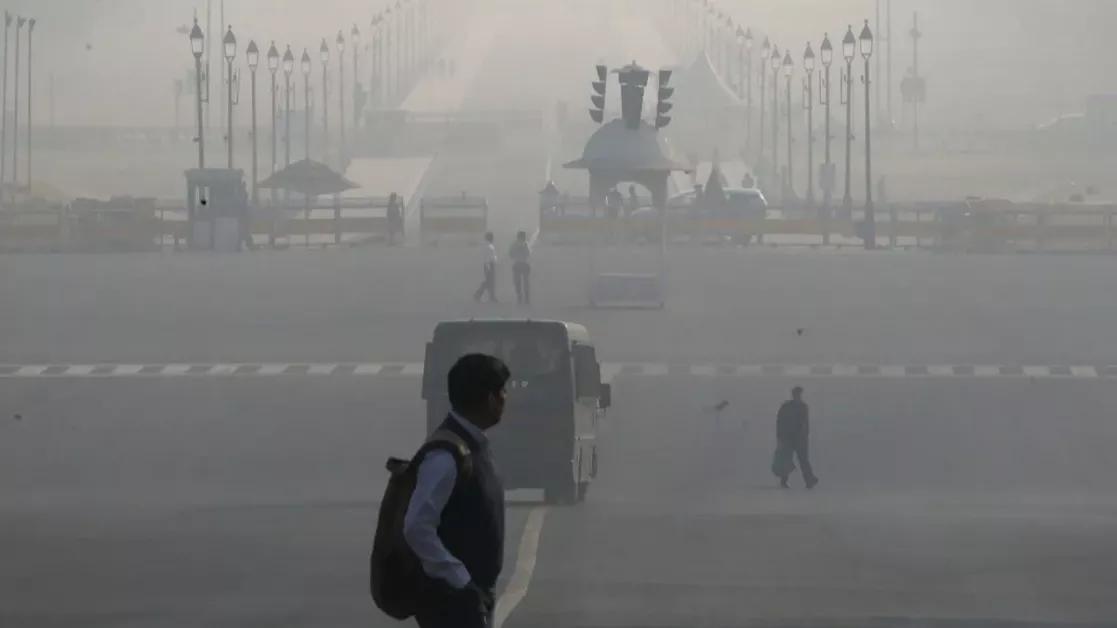
Delhi-NCR continues to struggle under a thick layer of smog as the Air Quality Index (AQI) remained firmly in the “very poor” category throughout the day. Several monitoring stations across Delhi, Noida, Gurugram and Ghaziabad recorded high concentrations of PM2.5 and PM10, raising concerns for both short-term and long-term public health. The deteriorating air conditions have cast a heavy winter haze over the region, significantly reducing visibility in many pockets, especially during early morning and late evening hours.
According to pollution-monitoring agencies, calm wind speeds, high moisture levels and low temperatures have trapped pollutants close to the surface, creating a smog-fog mix that worsens respiratory discomfort. Commuters reported difficulty driving through dense haze in areas such as Dwarka, Rohini, Noida Expressway and the Delhi-Gurugram border, where visibility dropped sharply during peak traffic hours.
Health experts have warned that prolonged exposure to current pollution levels can aggravate asthma, trigger throat and eye irritation, and increase the risk of respiratory infections. Vulnerable groups, including children, senior citizens and individuals with heart or lung conditions, have been advised to limit outdoor movement. Several hospitals in NCR reported a rise in cases related to breathing difficulties, chest congestion and pollution-linked allergies.
The worsening air quality has once again brought attention to persistent winter pollution contributors, including vehicular emissions, biomass burning in neighboring regions, construction dust and industrial activities. Despite ongoing restrictions such as bans on construction work and curbs on diesel generators under pollution-control measures, the improvement has been minimal.
Authorities have stepped up enforcement of anti-pollution directives and increased the use of anti-smog guns, road sprinkling and dust-control measures. However, environmental experts argue that short-term interventions are insufficient and long-term structural changes in urban planning, transportation and waste management remain essential to break the yearly winter pollution cycle.
As Delhi-NCR braces for the coming days, forecasts indicate that improvement may be slow unless wind conditions change. The persistent smog-fog layer continues to serve as a stark reminder of the region’s recurring air-quality emergencies, demanding both immediate and long-term action to protect public health.
 Related News
POST A COMMENT (0)
All Comments (0)
Replies (0)