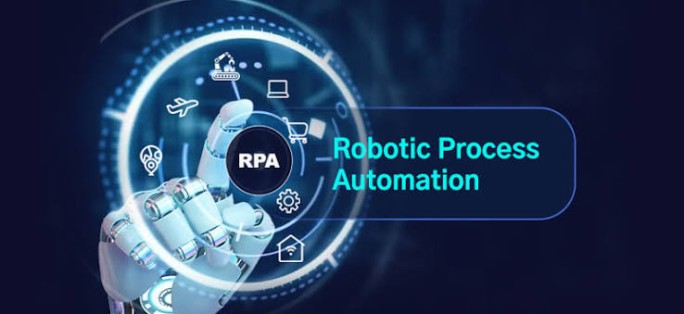
What Is Robotic Process Automation (RPA)? How It Works, Benefits and Applications
Robotic Process Automation (RPA) is a technology that uses software bots to automate repetitive, rule-based digital tasks that humans typically perform on computers. These bots can interact with applications, enter data, process transactions, generate reports, and perform many other routine tasks without changing existing systems.
RPA helps organizations improve efficiency, reduce errors, lower operating costs, and free employees to focus on higher-value work. It is widely used across industries such as banking, healthcare, manufacturing, retail, insurance, telecommunications, and government.
What Is Robotic Process Automation (RPA)?

Robotic Process Automation is a software automation technology that enables digital bots to perform repetitive business processes by interacting with existing applications in much the same way a human user would.
How RPA Works
RPA bots follow predefined rules and workflows to complete tasks. They can log into systems, copy and paste information, read structured documents, fill out forms, move files, send emails, and update databases. Advanced RPA platforms may also integrate Artificial Intelligence (AI), machine learning, and optical character recognition (OCR) to handle more complex or semi-structured information.
Why RPA Matters
Many organizations spend significant time on repetitive administrative work. RPA automates these routine activities, increasing productivity, improving accuracy, and enabling employees to focus on decision-making, customer service, and innovation.
Key Components of an RPA System
Several technologies work together in an RPA solution.
Software Bots
Digital workers that execute automated tasks according to predefined instructions.
Workflow Designer
A visual interface used to create, edit, and manage automation processes.
Control Center
A centralized platform for scheduling, monitoring, and managing software bots.
Application Connectors
Enable bots to interact with business applications, databases, websites, and enterprise systems.
Artificial Intelligence Integration
AI enhances RPA by enabling document understanding, language processing, image recognition, and intelligent decision support for suitable use cases.
Common Applications of RPA
RPA is used across many business functions.
Finance and Accounting
Automates invoice processing, expense management, reconciliations, and financial reporting.
Banking
Processes loan applications, customer onboarding, account updates, and compliance checks.
Healthcare
Manages patient records, insurance claims, appointment scheduling, and billing processes.
Human Resources
Automates employee onboarding, payroll processing, leave management, and recruitment workflows.
Customer Service
Handles routine inquiries, updates customer information, and routes support requests.
Supply Chain
Processes purchase orders, inventory updates, shipment tracking, and supplier communications.
Information Technology
Automates user account creation, password resets, software deployment, and system monitoring.
Benefits of Robotic Process Automation
RPA provides numerous advantages.
Increased Productivity
Bots work continuously and complete repetitive tasks much faster than manual processes.
Improved Accuracy
Automation reduces the risk of human errors in repetitive activities.
Lower Operating Costs
Organizations can automate routine work without significantly increasing staffing requirements.
Faster Processing
Business transactions and workflows are completed more quickly.
Better Compliance
Bots follow predefined rules consistently and generate detailed audit logs.
Challenges of RPA
Despite its benefits, RPA presents several considerations.
Process Selection
RPA works best for stable, rule-based processes rather than tasks requiring complex human judgment.
Maintenance
Automation workflows require updates when business applications or processes change.
Initial Implementation
Planning, testing, and integration can require significant time and resources.
Change Management
Organizations must prepare employees for new workflows and automation initiatives.
RPA vs. Artificial Intelligence
Although often used together, they serve different purposes.
Robotic Process Automation
RPA automates repetitive, rule-based tasks by following predefined instructions.
Artificial Intelligence
AI enables systems to learn from data, recognize patterns, make predictions, and support decision-making in situations where fixed rules alone may not be sufficient.
Many organizations combine RPA with AI to create intelligent automation, allowing bots to process documents, understand natural language, and handle more dynamic workflows.
Best Practices for Implementing RPA
Organizations should follow these recommendations.
Start with Simple Processes
Automate repetitive, high-volume tasks before expanding to more complex workflows.
Document Business Processes
Clearly map existing workflows before automation begins.
Monitor Performance
Track automation success, processing times, and error rates.
Maintain Security
Control bot access using strong authentication, role-based permissions, and audit logging.
Continuously Improve
Review automation performance regularly and optimize workflows as business needs evolve.
Future of Robotic Process Automation
RPA continues to evolve through Artificial Intelligence, machine learning, generative AI, process mining, cloud computing, and intelligent document processing. AI-powered automation platforms are increasingly capable of understanding natural language, analyzing documents, making recommendations, and supporting end-to-end business workflows. As organizations accelerate digital transformation, RPA is expected to become an even more important tool for improving operational efficiency and enterprise productivity.
Conclusion
Robotic Process Automation is transforming how organizations handle repetitive business processes by using software bots to automate routine digital tasks. By improving productivity, reducing errors, enhancing compliance, and lowering operational costs, RPA enables businesses to focus more on innovation and customer value. As AI and intelligent automation continue to advance, RPA will remain a key technology driving the future of enterprise operations.