





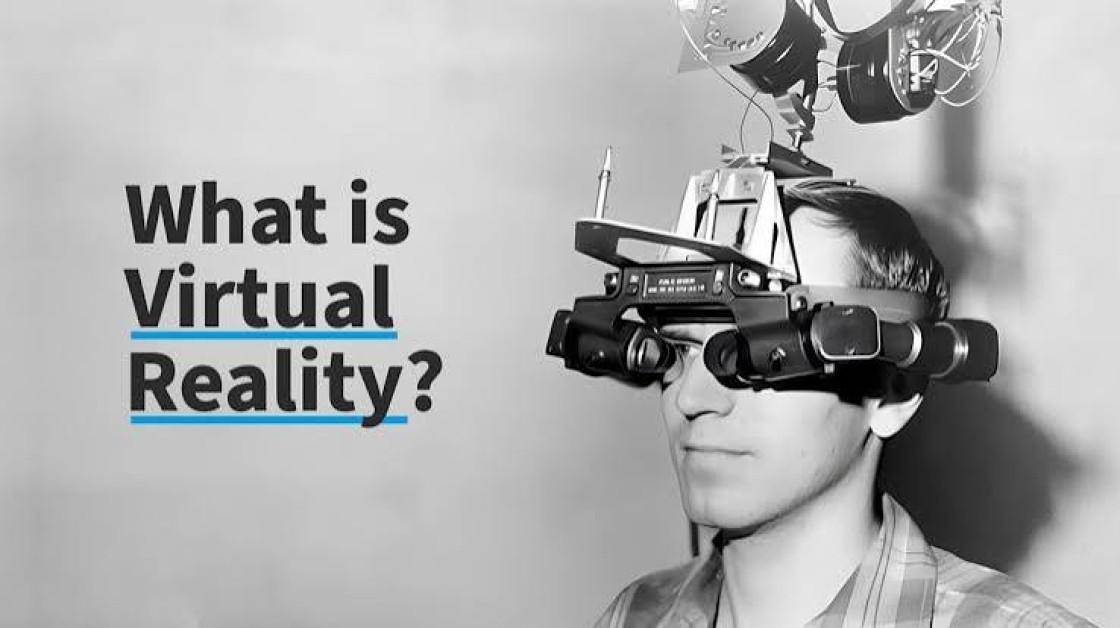
What Is Virtual Reality (VR)? How It Works, Uses and Benefits
Virtual Reality (VR) is an immersive technology that uses computer-generated environments to simulate realistic experiences. By wearing a VR headset, users can enter a fully digital world where they can look around, interact with objects, and experience environments as if they were physically present.
Unlike Augmented Reality (AR), which adds digital elements to the real world, Virtual Reality replaces the user's physical surroundings with a completely virtual environment.
Today, VR is widely used in gaming, education, healthcare, military training, engineering, architecture, entertainment, and business collaboration.
What Is Virtual Reality (VR)?

Virtual Reality is a technology that creates a simulated three-dimensional environment, allowing users to interact with digital objects and spaces in an immersive way.
How Virtual Reality Works
VR systems combine specialized hardware and software to create immersive experiences. A VR headset displays separate images for each eye, creating a sense of depth through stereoscopic vision. Motion sensors, cameras, and controllers track the user's head and hand movements in real time, allowing the virtual environment to respond naturally as the user moves.
Many advanced VR systems also incorporate spatial audio, eye tracking, and haptic feedback to make experiences feel more realistic.
Why Virtual Reality Matters
Virtual Reality enables people to experience environments and scenarios that may be expensive, dangerous, or impossible to access in the real world. It improves learning, training, collaboration, product design, and entertainment through immersive digital experiences.
Key Components of Virtual Reality
Several technologies work together to deliver VR experiences.
VR Headset
The headset displays immersive digital environments directly in front of the user's eyes.
Motion Tracking
Sensors monitor head and body movements to update the virtual environment instantly.
Controllers
Handheld controllers allow users to interact with objects, menus, and virtual tools.
Spatial Audio
Three-dimensional sound enhances realism by making audio appear to come from different directions.
Haptic Feedback
Some VR devices provide vibration or force feedback that simulates touch and physical interaction.
Types of Virtual Reality
Virtual Reality systems vary in capability and immersion.
Non-Immersive VR
Users interact with virtual environments through standard computer screens using keyboards, mice, or controllers.
Semi-Immersive VR
Large displays, simulators, or projection systems provide greater immersion while maintaining awareness of the physical environment.
Fully Immersive VR
Dedicated VR headsets and motion tracking systems create highly realistic digital experiences that replace the user's view of the real world.
Common Applications of Virtual Reality
VR is transforming many industries.
Gaming
Players experience immersive games with realistic environments and interactive gameplay.
Education
Students explore historical sites, scientific simulations, and virtual laboratories without leaving the classroom.
Healthcare
Medical professionals use VR for surgical training, rehabilitation, pain management, and mental health therapy.
Manufacturing
Engineers visualize product designs, simulate manufacturing processes, and train workers safely.
Architecture and Real Estate
Architects and property developers create virtual walkthroughs of buildings before construction.
Military and Aviation
Pilots, soldiers, and emergency responders train in realistic virtual simulations.
Business Collaboration
Companies use VR for virtual meetings, design reviews, employee training, and remote teamwork.
Benefits of Virtual Reality
VR offers numerous advantages.
Immersive Learning
Users understand complex concepts more effectively through interactive experiences.
Safe Training
Professionals can practice high-risk procedures without real-world danger.
Better Collaboration
Teams can meet and interact in shared virtual workspaces regardless of physical location.
Enhanced Entertainment
VR provides highly engaging gaming, sports, concerts, and cinematic experiences.
Improved Product Design
Businesses can evaluate prototypes and digital models before manufacturing begins.
Challenges of Virtual Reality
Despite its advantages, VR has several limitations.
Hardware Costs
High-quality VR headsets and accessories can be expensive.
Motion Sickness
Some users experience dizziness or discomfort during prolonged VR sessions.
Content Development
Creating realistic VR applications requires specialized software and development expertise.
Processing Requirements
High-performance computers or dedicated hardware are often needed for advanced VR experiences.
Virtual Reality vs. Augmented Reality
Although both are immersive technologies, they serve different purposes.
Virtual Reality (VR)
- Creates a completely digital environment.
- Blocks the user's view of the physical world.
- Typically requires a dedicated VR headset.
Augmented Reality (AR)
- Adds digital content to the real world.
- Allows users to see their physical surroundings.
- Often works on smartphones, tablets, or smart glasses.
Best Practices for Using VR
Organizations should follow these recommendations.
Design Comfortable Experiences
Minimize motion sickness through smooth graphics and intuitive movement.
Optimize Performance
Maintain high frame rates and responsive interactions for a realistic experience.
Ensure User Safety
Provide sufficient physical space and guidance to prevent accidents while using VR.
Protect User Privacy
Handle user movement, biometric, and interaction data responsibly.
Focus on Practical Applications
Develop VR experiences that improve learning, productivity, collaboration, or customer engagement.
Future of Virtual Reality
Virtual Reality continues to evolve through Artificial Intelligence, 5G connectivity, cloud rendering, eye tracking, haptic technology, and lightweight wireless headsets. AI-powered VR experiences are becoming more realistic through intelligent virtual characters, adaptive environments, and natural language interaction. As hardware becomes more affordable and immersive, VR is expected to play an increasingly important role in education, healthcare, entertainment, engineering, and enterprise collaboration.
Conclusion
Virtual Reality is transforming how people learn, work, train, and entertain themselves by creating immersive digital environments that simulate real-world experiences. From gaming and education to healthcare and industrial training, VR offers powerful opportunities to improve productivity, engagement, and innovation. As advances in AI, cloud computing, and immersive hardware continue, Virtual Reality is expected to become an increasingly important part of everyday digital experiences.
 What Is Virtual Reality (VR)? Complete Guide Explained FAQs
POST A COMMENT (0)
All Comments (0)
Replies (0)