





What Is Augmented Reality (AR)? How It Works, Uses and Benefits
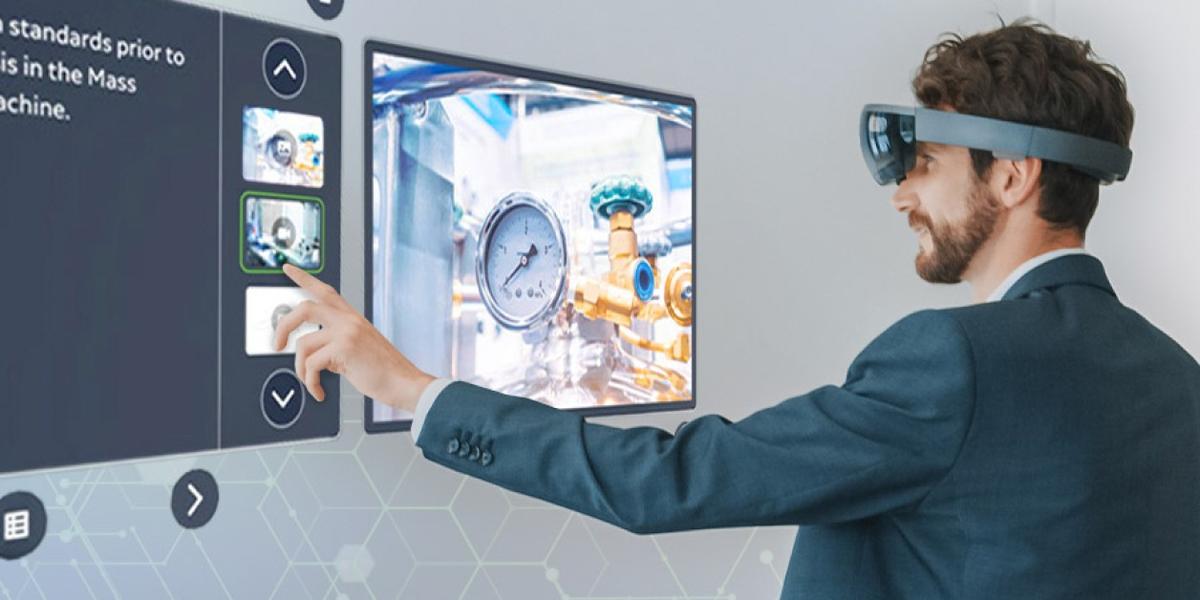
Augmented Reality (AR) is a technology that overlays digital content—such as images, animations, text, 3D models, and interactive information—onto the real world. Unlike Virtual Reality (VR), which creates a completely virtual environment, AR enhances a user's view of their physical surroundings by adding computer-generated elements in real time.
Today, AR is used in gaming, education, healthcare, retail, manufacturing, navigation, and entertainment. Smartphones, tablets, and AR-enabled smart glasses have made this technology increasingly accessible to businesses and consumers.
What Is Augmented Reality (AR)?

Augmented Reality is a technology that combines digital information with the physical environment, allowing users to interact with both simultaneously.
How Augmented Reality Works
AR devices use cameras, sensors, GPS, depth sensors, and computer vision to understand the surrounding environment. Software then places digital objects into the real-world view, adjusting their position and scale as users move. Artificial Intelligence (AI) and machine learning often improve object recognition, tracking, and interaction.
Why Augmented Reality Matters
AR bridges the gap between the digital and physical worlds, creating immersive experiences that improve learning, visualization, productivity, collaboration, and customer engagement.
Key Components of Augmented Reality
Several technologies work together to enable AR experiences.
Camera
Captures the user's surroundings for object detection and tracking.
Sensors
Accelerometers, gyroscopes, GPS, and depth sensors help determine device position and movement.
Computer Vision
Computer vision enables AR systems to recognize objects, surfaces, and environments.
AR Software
Specialized software renders and positions digital objects within the real-world scene.
Display Device
AR experiences can be viewed through smartphones, tablets, head-mounted displays, or smart glasses.
Types of Augmented Reality
Different AR technologies serve different purposes.
Marker-Based AR
Uses printed markers or QR codes to trigger digital content when recognized by a camera.
Markerless AR
Places digital objects using GPS, motion sensors, and environmental tracking without requiring physical markers.
Projection-Based AR
Projects digital images directly onto physical surfaces for interactive experiences.
Superimposition AR
Replaces or enhances parts of a real-world object with digital content.
Common Applications of Augmented Reality
AR is transforming many industries.
Gaming
Interactive games combine digital characters and objects with real-world environments.
Education
Students explore 3D models, virtual laboratories, and interactive learning materials.
Healthcare
Doctors use AR for medical training, surgical planning, diagnostics, and patient education.
Retail
Customers can virtually try on clothing, eyewear, cosmetics, and furniture before making purchases.
Manufacturing
Technicians receive step-by-step visual instructions for equipment maintenance, assembly, and quality inspection.
Navigation
AR provides real-time navigation directions overlaid onto streets and buildings.
Real Estate
Property buyers can explore virtual home layouts and building information during property tours.
Benefits of Augmented Reality
AR offers numerous advantages.
Improved Learning
Interactive visual experiences help users understand complex concepts more effectively.
Better Customer Experience
Businesses provide engaging shopping and product visualization experiences.
Increased Productivity
Workers receive real-time guidance that reduces errors and improves efficiency.
Enhanced Collaboration
Remote teams can share visual information and interact with digital models.
Better Decision-Making
AR enables users to visualize products, designs, and data before implementation.
Challenges of Augmented Reality
Despite its benefits, AR presents several challenges.
Hardware Costs
Advanced AR headsets and smart glasses can be expensive.
Battery Consumption
AR applications often require significant processing power, reducing device battery life.
Privacy Concerns
AR devices equipped with cameras and sensors may raise privacy and data protection issues.
Content Development
Creating realistic, interactive AR experiences requires specialized skills and software.
Augmented Reality vs. Virtual Reality
Although closely related, AR and VR provide different experiences.
Augmented Reality (AR)
- Enhances the real world with digital content.
- Users remain aware of their physical surroundings.
- Commonly uses smartphones, tablets, or smart glasses.
Virtual Reality (VR)
- Creates a fully immersive digital environment.
- Users are separated from the physical world.
- Typically requires dedicated VR headsets.
Best Practices for Using AR
Organizations should follow these recommendations.
Focus on User Experience
Design intuitive and responsive AR interactions that provide real value.
Optimize Performance
Ensure smooth graphics, accurate tracking, and fast rendering across supported devices.
Protect User Privacy
Handle camera data and user information responsibly while complying with privacy regulations.
Test Across Devices
Verify compatibility with different smartphones, tablets, and AR hardware.
Provide Practical Value
Use AR to solve real-world problems rather than adding unnecessary visual effects.
Future of Augmented Reality
Augmented Reality continues to evolve through Artificial Intelligence, 5G networks, edge computing, spatial computing, and lightweight smart glasses. AI-powered AR systems are becoming better at recognizing objects, translating languages in real time, and delivering personalized information. As hardware becomes smaller, faster, and more affordable, AR is expected to play an increasingly important role in healthcare, education, manufacturing, retail, navigation, and workplace collaboration.
Conclusion
Augmented Reality is transforming how people interact with digital information by blending virtual content with the real world. From gaming and education to healthcare and industrial applications, AR enhances productivity, learning, and customer experiences through immersive and interactive technology. As advances in AI, cloud computing, and wearable devices continue, Augmented Reality is poised to become an integral part of everyday life and the future of digital innovation.
 What Is Augmented Reality (AR)? Complete Guide Explained FAQs
POST A COMMENT (0)
All Comments (0)
Replies (0)