





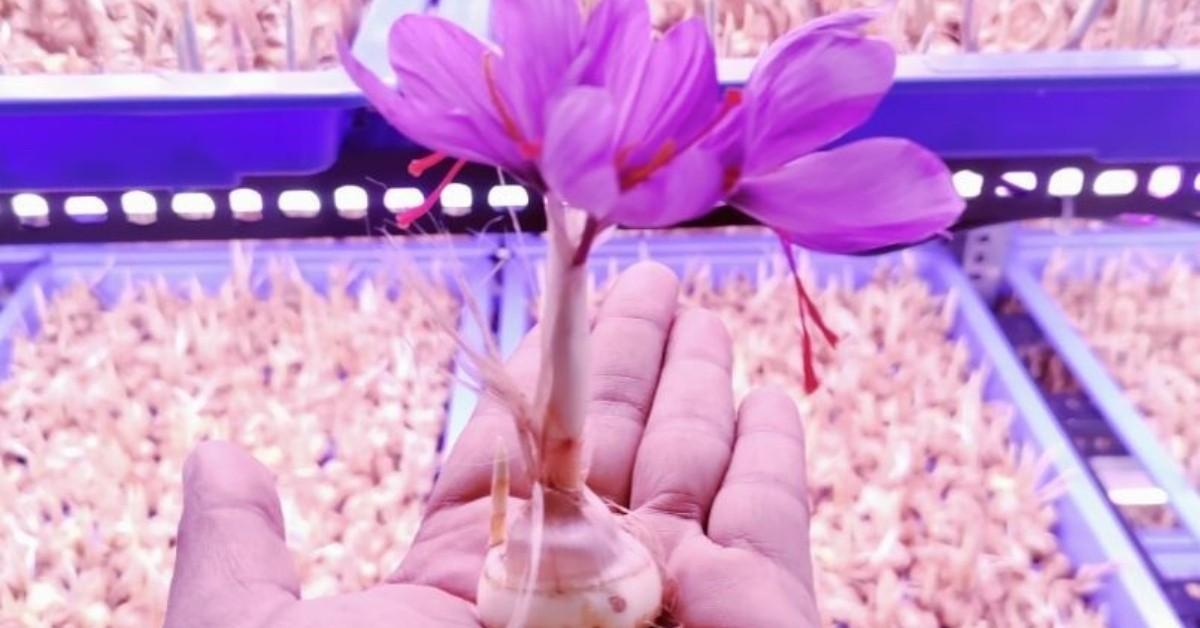
In the world of agriculture, there are innovators who break barriers, challenge conventional methods, and achieve the seemingly impossible. Seshadri, an engineer turned agricultural entrepreneur, is one such trailblazer. His story is not just about farming but about using cutting-edge technology to introduce an exotic crop to a region where it was never grown before.
The Challenge: Growing Kashmiri Saffron in Kerala
Saffron is a delicate and valuable spice, traditionally grown in the cold, high-altitude regions of Kashmir. Known for its distinctive flavor, vibrant color, and numerous health benefits, saffron is one of the most expensive spices in the world. However, its cultivation requires specific climatic conditions—cool temperatures, dry weather, and well-drained soil.
In 2020, Seshadri, who was working as an engineer in Kerala, set out on a mission to grow Kashmiri saffron in a region that didn’t share the same weather and topography as the traditional saffron-growing areas of India. His mission was inspired by two factors: the growing demand for saffron in the spice and health markets and the opportunity to diversify Kerala’s agricultural offerings.
After extensive research and experimentation, Seshadri discovered a potential solution in aeroponic farming, a soil-free growing method that uses air and mist to grow plants without the need for traditional soil cultivation. This method would allow him to bypass Kerala’s humid and tropical climate, offering a controlled environment for the saffron to thrive.
What is Aeroponic Farming?
Aeroponics is an advanced farming technique where plants grow in an air or mist environment without the use of soil. Nutrient-rich water is sprayed onto the plant roots, which ensures they receive the essential nutrients they need to grow. This method is particularly beneficial for high-value crops like saffron, as it saves space, reduces the use of water, and offers precise control over the growing environment.
The key advantage of aeroponic farming is that it reduces the risks associated with traditional soil-based farming, such as pests, diseases, and waterlogging. Additionally, it enables farmers to grow crops in areas that are not suitable for conventional farming.
Breaking New Ground: Seshadri's Success Story
Seshadri’s leap into saffron farming began with a small experiment on his terrace. Using aeroponic techniques, he carefully recreated the ideal growing conditions for saffron, ensuring that the plants received the right amount of nutrients, water, and light. Initially, he faced several challenges, including fine-tuning the misting systems and adjusting the growing conditions to match saffron’s specific needs.
However, after months of trial and error, Seshadri’s efforts began to pay off. His saffron plants started to bloom. He was able to harvest his first batch of Kashmiri saffron within a year of starting his aeroponic experiment. The flowers that bloomed on the plants were of high quality, with the same vibrant red stigmas that make Kashmiri saffron so sought after.
Seshadri’s first saffron harvest brought him significant financial success. Within a year, he earned a staggering Rs 12 lakh from his saffron crop. His unique approach to farming quickly gained attention, and the demand for his saffron grew rapidly, not just in Kerala but across the country.
Sharing Knowledge: Training 100 Others
Recognizing the potential of his innovative farming method, Seshadri decided to share his success with others. He began conducting workshops and training sessions for aspiring farmers, especially those in regions where traditional saffron farming wasn’t feasible.
In less than a year, Seshadri has trained over 100 individuals in his aeroponic farming methods. Many of these trainees have now begun their own saffron cultivation projects, not only in Kerala but also in other parts of India. The aeroponic method has proven to be a game-changer for those with limited access to arable land, providing them with a sustainable and profitable alternative to traditional farming.
Sustainability and the Future of Saffron Farming
Seshadri’s success has also brought attention to the broader issue of sustainability in farming. Traditional saffron farming is labor-intensive and requires vast areas of land. By using aeroponics, Seshadri has demonstrated that high-value crops like saffron can be grown in a more efficient, space-saving manner, with significantly less water usage.
As climate change continues to affect global agricultural practices, sustainable farming methods like aeroponics will play an important role in ensuring food security and economic stability. Seshadri’s story is a testament to the power of innovation and technology in reshaping the future of farming.
Looking Ahead: Expanding the Reach of Aeroponic Saffron
Seshadri’s journey doesn’t end with just his personal success. He aims to make aeroponic saffron farming a mainstream practice across India. His future plans include scaling his model and making it accessible to farmers in both urban and rural settings. He envisions a network of saffron farmers across the country, united by the principles of sustainability and profitability, growing high-quality saffron through innovative methods.
His work has already inspired others to rethink the possibilities of farming in non-traditional environments, and with more research and development, aeroponic farming could revolutionize the way we grow crops.
Conclusion
Seshadri’s story is a shining example of how passion, innovation, and perseverance can transform an idea into reality. From a terrace in Kerala to earning Rs 12 lakh in a year, his success in growing Kashmiri saffron through aeroponics not only promises a brighter future for him but also for many other farmers in India. With his knowledge-sharing efforts, Seshadri is not just cultivating saffron; he is cultivating a new era of farming in India—one that is sustainable, profitable, and innovative.
 Related News
POST A COMMENT (0)
All Comments (0)
Replies (0)