





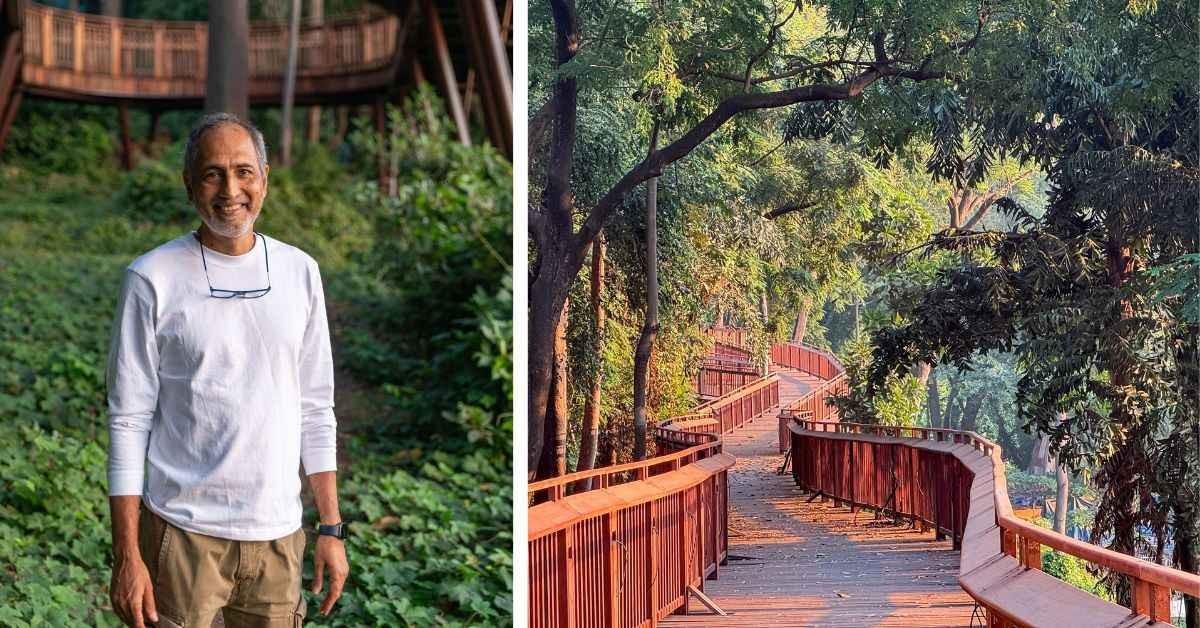
A Behind-The-Scenes Walk With the Architect Who
Designed Mumbai’s Malabar Nature Trail
Hidden amidst the concrete pulse of South Mumbai lies a rare pocket of green—the Malabar Nature Trail, a lush, meandering walkway that reconnects city dwellers with nature. But behind its quiet elegance is a story of thoughtful design and deep ecological sensitivity. Rahul Kadri, principal architect at IMK Architects, takes us behind the scenes on a guided walk to explore the intent and imagination that shaped this rare urban forest escape.
A Trail Born from Urban Yearning
The Malabar Hill area is steeped in colonial history, old bungalows, and bustling traffic—but nestled within it is a fragment of the original Malabar Forest, teeming with biodiversity. The need for urban citizens to reconnect with nature—without having to leave the city—became the seed for this project.
The Brihanmumbai Municipal Corporation (BMC), along with architects and ecologists, envisioned a natural refuge for morning walkers, families, and nature lovers. The result? A 900-metre elevated trail that winds gently through the forest, offering intimate views of flora, birds, and sky.
Rahul Kadri’s Design Philosophy: "Let Nature Lead"
For Rahul Kadri, the approach was simple yet radical: Don’t design over nature—design with it. The trail does not impose itself on the landscape; it curves and bends with the natural topography, avoiding old trees, respecting roots, and preserving the existing ecosystem.
Built primarily using recyclable and natural materials, including steel mesh and local stone, the trail is elevated just enough to allow the forest floor below to breathe, minimizing human disruption.
Kadri explains:
“We didn’t want to romanticize nature. We wanted to let people experience it, as it is—untamed, raw, and healing. Architecture here had to be invisible, almost.”
A Forest in the City: Biodiversity and the Microbiome
One of the hidden gems of the trail is its living microbiome. The Malabar Forest still shelters dozens of native plant species, birds like hornbills and drongos, butterflies, and small mammals. Instead of manicured gardens, the trail highlights this wild biodiversity, with signage explaining ecological processes and natural behavior.
QR codes placed along the route allow visitors to learn more about the forest life through audio guides, blending technology with conservation education.
Blending Aesthetics With Functionality
Despite its understated appearance, the Malabar Nature Trail is a technically complex project. Ensuring safety, accessibility, and weather resistance in a monsoon-prone city was a challenge. Special anti-slip surfaces were installed, and ramp access was made available for senior citizens and wheelchair users.
Kadri emphasized designing spots for “pause”—small decks where visitors can sit, observe, and absorb the sounds and stillness of the forest.
At dusk, solar-powered lights dimly illuminate the walkway, guiding late walkers without disturbing nocturnal wildlife.
The Bigger Vision: A Network of Urban Forests
Kadri sees this project not just as a standalone trail, but as a template for future urban planning.
“Every city has forgotten green corners. We need to rewild them—not with concrete parks but with preserved ecosystems that serve both humans and biodiversity.”
With urban anxiety rising and green spaces shrinking, the Malabar Nature Trail is a gentle, green revolution—an invitation to slow down, breathe, and listen to the rustle of the city’s forgotten forests.
Conclusion: Where Architecture Meets Ecology
The Malabar Nature Trail is more than a walkway—it's a philosophy of co-existence. Thanks to Rahul Kadri’s vision and respect for the land, Mumbai now boasts an oasis where city and nature don’t collide, but collaborate. As more cities look to green their urban fabric, this quiet trail offers a lesson: the best designs are those that don’t disturb, but disappear into the forest.
 Related News
POST A COMMENT (0)
All Comments (0)
Replies (0)