





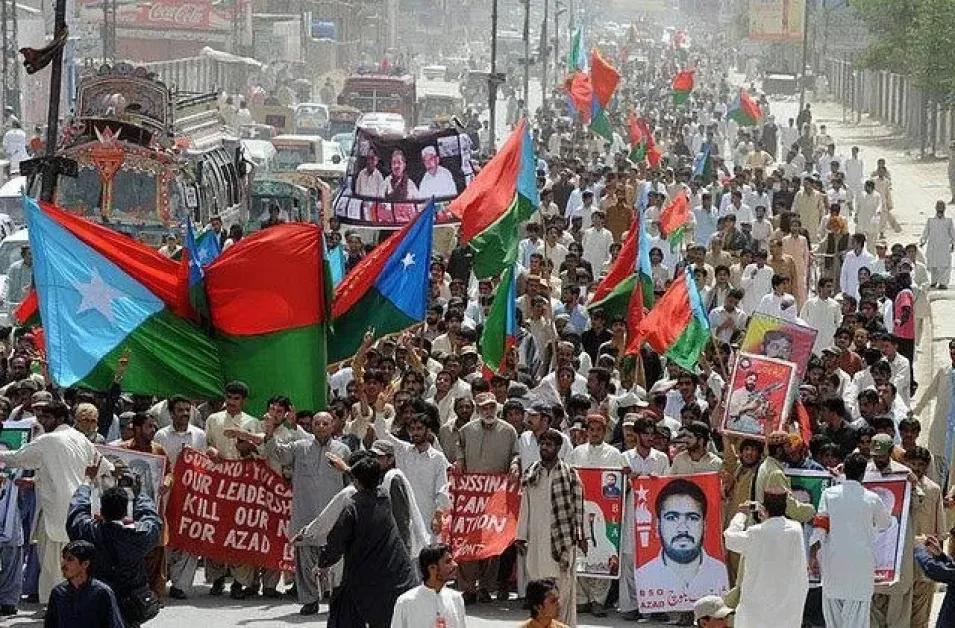
The Baloch Independence Movement: A Struggle Born from Marginalization and Resistance
The Baloch Independence Movement is one of the most enduring and contentious separatist struggles in South Asia. Rooted in historical grievances, ethnic identity, and claims of injustice, this movement continues to shape the political landscape of Pakistan’s largest yet least developed province—Balochistan. While the Pakistani state regards the movement as a security threat, many Baloch nationalists see it as a legitimate fight for freedom and self-determination.
Historical Grievances and the Accession Dispute
The roots of the movement can be traced back to 1948, when the princely state of Kalat was forcibly acceded to Pakistan. For many Baloch leaders, this merger occurred without popular consent, sparking immediate resentment. The first armed rebellion, led by Prince Abdul Karim, took place the same year and set the tone for repeated cycles of resistance.
Since then, the Baloch have expressed a deep sense of betrayal, accusing successive Pakistani governments of breaking promises of autonomy, suppressing dissent, and treating the region as a colony rather than a partner in the federation.
Resource Exploitation Without Local Benefit
Balochistan is rich in natural resources, including natural gas, coal, gold, copper, and other minerals. However, despite contributing significantly to Pakistan’s economy, the region remains one of the poorest and most underdeveloped.
Nationalists argue that Islamabad reaps the rewards of Balochistan’s wealth while the local population lacks basic infrastructure, healthcare, and education. The Sui gas fields, for example, power industries and homes across Pakistan, but many in Dera Bugti—the very district where the gas is extracted—live without reliable energy supply.
Demands for Autonomy or Independence
The Baloch nationalist movement is not monolithic. While some factions, such as the Balochistan National Party (BNP), call for greater provincial autonomy within a federal structure, others—especially militant groups like the Baloch Liberation Army (BLA) and Baloch Republican Army (BRA)—demand complete independence.
Their objectives center on:
-
Control over natural resources
-
Cultural and linguistic preservation
-
Representation in political decision-making
-
Accountability for alleged human rights abuses
State Response: Military and Development
The Pakistani state’s response has been two-pronged—military suppression and development promises. The region has witnessed multiple military operations, enforced disappearances, and allegations of extrajudicial killings, which human rights organizations have frequently condemned.
At the same time, the government has introduced initiatives such as the China-Pakistan Economic Corridor (CPEC), which includes infrastructure development in Balochistan. However, locals remain skeptical, viewing these projects as land grabs that serve foreign and elite interests rather than local empowerment.
Human Rights and International Attention
The Baloch struggle has increasingly gained international visibility. Diaspora groups have raised the issue at platforms like the United Nations, and protests are held across Europe and North America calling for an end to human rights violations in the province.
Despite this, global powers have largely avoided direct involvement, prioritizing strategic alliances with Pakistan over supporting separatist causes.
The Road Ahead: Autonomy, Justice, or Conflict?
The future of the Baloch nationalist movement remains uncertain. What is clear, however, is that military solutions alone have failed to quell the unrest. A lasting resolution may only come through inclusive dialogue, economic justice, and recognition of Baloch identity and rights.
As long as Balochistan’s people feel excluded from Pakistan’s political and economic core, the calls for freedom, justice, and recognition will continue to echo through the mountains and deserts of this proud land.
Disclaimer: This article is based on public sources and reports. Our aim is not to hurt the sovereignty of any nation but to present information under the values of free and fair journalism.
 Related News
POST A COMMENT (0)
All Comments (0)
Replies (0)