





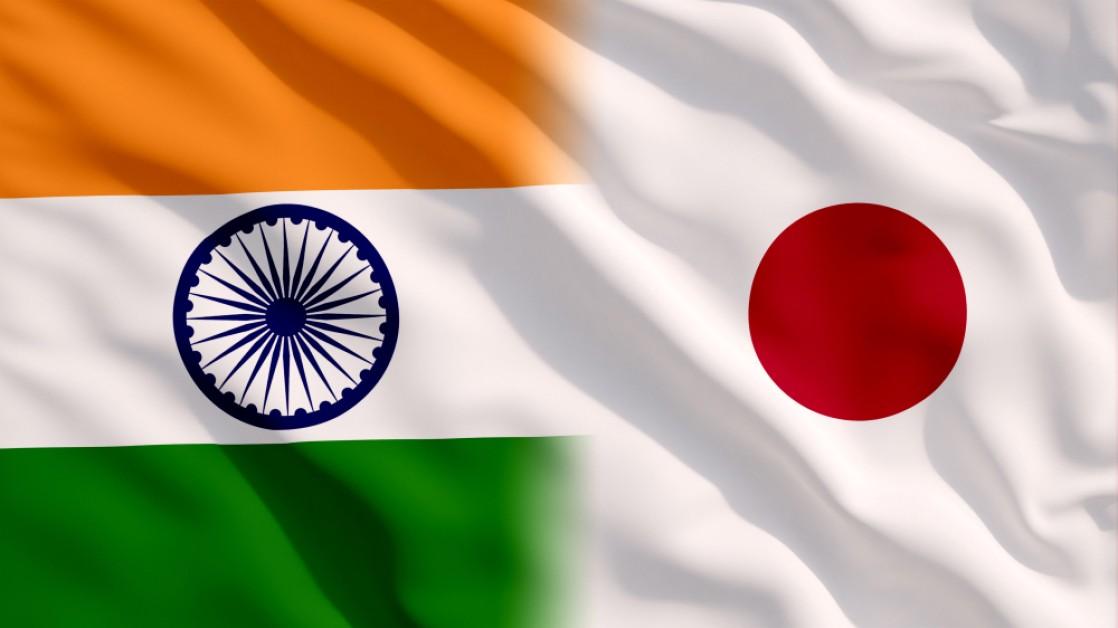
Japan and India Strengthen Strategic Trade & Investment Partnership
Anchored by a JPY 10 trillion investment pledge and deepening cooperation in supply chains, semiconductors, and clean energy, the two economies are building one of the Indo-Pacific's most consequential partnerships — even as trade gaps and strategic differences persist.
By Naina, 1st July 2026
Japan and India are strengthening their strategic trade and investment partnership, deepening economic ties that both governments see as central to the Indo-Pacific's future. Built on a decades-old special strategic and global partnership, the relationship has gained fresh momentum through an ambitious investment target, expanded cooperation on supply chains and technology, and a shared push for economic security. As the world's fifth and fourth largest economies, Japan and India are leveraging their complementary strengths, Japanese capital and technology alongside India's market and talent, to build resilient supply chains and counter over-dependence on any single country. The partnership spans trade, investment, semiconductors, critical minerals, clean energy, and defence, marking one of Asia's most significant bilateral alignments.
The deepening ties reflect both economic logic and strategic calculation. Japan is seeking to diversify its investments and supply chains beyond China, while India wants Japanese capital, technology, and standards to power its manufacturing ambitions. A landmark vision adopted in 2025 set out goals for the next decade, headlined by a large private-investment target. Yet the partnership also faces real challenges, from a lopsided trade balance to differing strategic outlooks. Here is how Japan and India are strengthening their partnership, where the opportunities lie, and what obstacles remain on the path to fuller economic convergence.
The Partnership Framework
The relationship rests on a robust institutional foundation. India and Japan share what they call a special strategic and global partnership, underpinned by a comprehensive economic partnership agreement in force since 2011 that covers goods, services, investment, and the movement of professionals. In 2025, the two countries adopted a joint vision for the next decade, laying out eight broad lines of cooperation spanning economic partnership, economic security, technology, health, and people-to-people ties. Regular high-level dialogues, joint committees, and ministerial meetings sustain the momentum. This dense framework of agreements and mechanisms gives the partnership durability, providing the scaffolding on which expanding trade, investment, and strategic cooperation are being built.
The Investment Target
At the heart of the economic partnership is a bold investment goal. Building on an earlier target, the two governments set a new objective of around 10 trillion yen, roughly $68 billion, in Japanese private investment into India over the next decade, announced at a 2025 summit. Japan is already among India's largest sources of foreign direct investment, with cumulative inflows of around $45 billion, and a major Japanese survey has ranked India as a top medium-term investment destination. The target signals Japanese confidence in India's growth and its intent to make the country a central hub for investment, manufacturing, and business expansion across South Asia and beyond.
The Capital and Infrastructure Engine
Japanese capital has long powered India's development. Japan is India's largest bilateral donor, with cumulative development assistance since the late 1950s exceeding $52 billion across roughly 100 ongoing projects in power, transport, and other sectors. The flagship is the Mumbai-Ahmedabad high-speed rail project, which brings Japanese bullet-train technology to India on highly concessional financing. Recent loan agreements fund urban transport, health, and agriculture projects, while landmark private deals, including a multi-billion-dollar Japanese investment in an Indian financial firm, deepen the ties. This blend of concessional finance, technical expertise, and world-class standards makes Japan an indispensable partner in India's infrastructure modernisation.
The Economic Security Push
Supply-chain resilience is a growing priority. The two countries have launched an economic security initiative aimed at building resilient supply chains in strategic sectors, including semiconductors, critical minerals, clean energy, telecommunications, and pharmaceuticals. A dedicated cooperation framework on mineral resources supports joint exploration, mining, and processing of critical minerals vital for clean technology and electronics. These efforts reflect a shared goal of reducing dependence on any single country for key goods and materials, a concern sharpened by recent global disruptions. By pooling Japan's technology and India's resources and market, the partnership seeks to create more secure, diversified supply chains that serve both economies and the wider region.
The Technology Partnership
Technology has become a defining pillar. The two countries have renewed a digital partnership focused on semiconductors, artificial intelligence, digital public infrastructure, research, and startups, and held an inaugural strategic dialogue on AI. Cooperation extends to emerging technologies where Japan's advanced capabilities complement India's software strength, talent, and scale. Collaboration on semiconductors is particularly significant as both nations seek secure chip supply chains, while joint work on AI and digital infrastructure aligns India's digital successes with Japanese expertise. This technology partnership positions the two countries to co-develop capabilities in fields that will shape economic competitiveness and security in the decades ahead.
The China Factor
The partnership is shaped in part by China. Japanese foreign investment into India has exceeded that into China for three consecutive years, reflecting a broader diversification of Japanese capital and supply chains away from over-reliance on its giant neighbour. For both Tokyo and New Delhi, deepening ties offer a hedge against economic and strategic risks associated with China. Yet the two partners approach the issue differently: Japan, a formal treaty ally of the United States, integrates its regional strategy closely with Western security architecture, while India maintains a multi-aligned foreign policy, participating in Western-led groupings alongside memberships that Japan views more warily. This divergence adds nuance to their alignment.
The Divergences
Significant gaps remain. Bilateral trade, though substantial, is modest relative to the two economies' size and is marked by an imbalance that leaves India with a persistent deficit, prompting calls to modernise their economic partnership agreement. Analysts note a gap between governments' geopolitical ambitions and private firms' commercial caution, with Japanese companies guided primarily by market returns rather than strategic goals. Occasional trade irritants, such as a recent restriction on certain Indian agricultural exports over compliance concerns, illustrate the frictions. Bridging these divergences, through trade reform, deeper business incentives, and reconciling differing strategic outlooks, is essential to translating high-level ambition into sustained economic convergence.
The Strategic Significance
The partnership carries weight beyond bilateral economics. As two of the world's largest economies and leading democracies, Japan and India are central to shaping a free, open, and stable Indo-Pacific. Their cooperation on supply chains, technology, and infrastructure contributes to regional resilience and offers an alternative model of development finance and connectivity. Both countries also envisage extending their collaboration to third countries in South Asia and Africa, amplifying their combined influence. In an era of geopolitical realignment and supply-chain reordering, a strong Japan-India partnership is increasingly seen as a stabilising force and a cornerstone of the emerging economic and security architecture of the wider region.
The Road Ahead
Japan and India are steadily deepening a partnership that blends economic opportunity with strategic purpose. The ambitious investment target, expanding cooperation on supply chains and technology, and robust institutional ties all point to a relationship on an upward trajectory. Realising its full potential, however, will require addressing the trade imbalance, modernising economic agreements, energising private-sector engagement, and managing differing strategic outlooks. If both sides succeed, the partnership could become one of the most consequential in the Indo-Pacific, driving growth, resilience, and stability for both nations and the region. The foundations are strong; the coming decade will test how far the two economies can converge.
Frequently Asked Questions
What is the Japan-India investment target?
The two governments set a target of around 10 trillion yen, roughly $68 billion, in Japanese private investment into India over the next decade, announced at a 2025 summit, building on an earlier target and reflecting Japan's confidence in India's growth.
What sectors does the partnership cover?
It spans trade, investment, and infrastructure, plus economic security in semiconductors, critical minerals, clean energy, telecommunications, and pharmaceuticals, alongside technology cooperation in AI, digital infrastructure, and startups, and defence.
Why is Japan investing more in India?
Japan is diversifying its investments and supply chains beyond China, and Japanese FDI into India has exceeded that into China for three consecutive years. India offers a large, growing market, talent, and a hedge against over-dependence on any single country.
What challenges does the partnership face?
A trade imbalance leaving India with a deficit, modest bilateral trade relative to potential, a gap between governments' ambitions and private firms' commercial caution, the need to modernise their trade agreement, and differing strategic outlooks.
Why is the partnership strategically important?
As two of the world's largest economies and leading democracies, Japan and India are central to a free and open Indo-Pacific. Their cooperation strengthens regional supply-chain resilience, technology, and infrastructure, and can extend to third countries.
 Related News
POST A COMMENT (0)
All Comments (0)
Replies (0)