





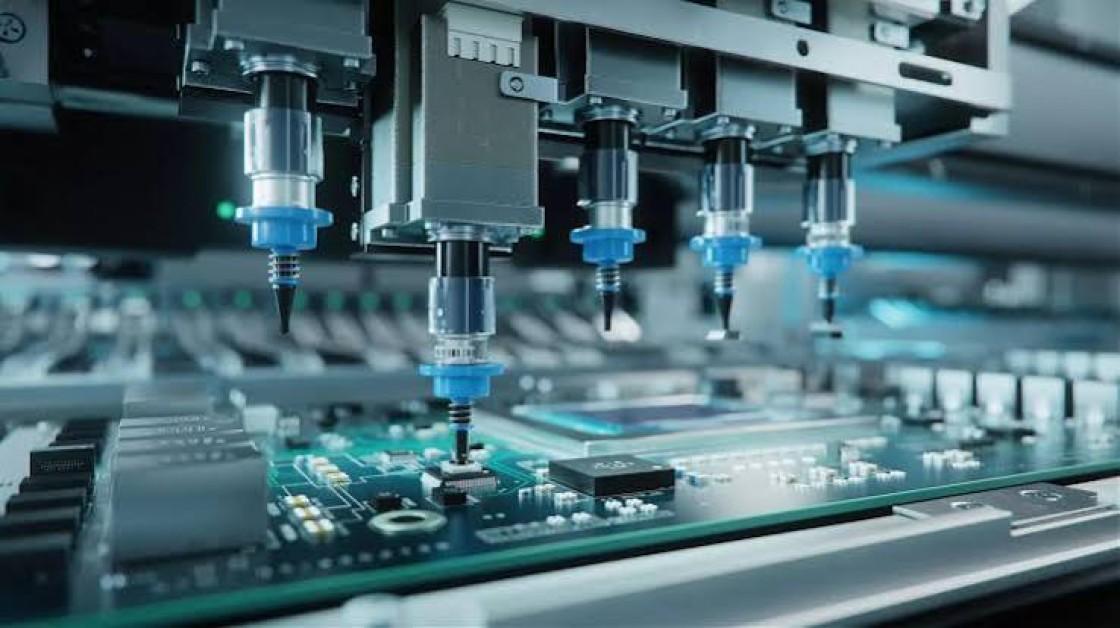
India's Electronics Manufacturing Sector Continues Strong Growth Under PLI
Powered by the production-linked incentive scheme, India's electronics output has grown sixfold in a decade to around $125 billion — with smartphones leading a record export surge and a new push to deepen component localisation.
By Naina,8th July 2026
India's electronics manufacturing sector continues to record strong growth, driven largely by the government's production-linked incentive (PLI) scheme, which has transformed the country into a major global electronics producer. The sector has expanded roughly sixfold over the past decade to around $125 billion, with electronics emerging as one of India's largest and fastest-growing export categories. Smartphones have led this surge, making India the world's second-largest producer of mobile phones and a significant exporter, with the country now accounting for a substantial share of global production for some leading brands. The PLI scheme, by offering incentives tied to incremental production and sales, has attracted major global and domestic manufacturers, scaling up output and exports. Here is a detailed look at the continued growth of India's electronics manufacturing sector under the PLI scheme, its drivers, and the road ahead.
The strong performance reflects the success of a policy push aimed at reducing import dependence, boosting domestic manufacturing, and integrating India into global electronics supply chains. Aided by the global shift to diversify manufacturing away from a single dominant hub, India has attracted significant investment across mobile phones, electronics components, and related products. While the sector's growth has been impressive, it has been driven substantially by assembly, prompting a renewed focus on deepening component manufacturing and value addition. Here is an analysis of the scheme's impact, the sectors leading growth, the export story, the localisation push, and the challenges that remain as India seeks to become a genuine global electronics manufacturing hub.
The PLI Impact
The production-linked incentive scheme has been transformative. Covering multiple strategic sectors with a large outlay, the scheme offers financial incentives to manufacturers based on incremental production and sales, encouraging both global and domestic companies to expand their operations in India. For electronics, and mobile phones in particular, the scheme has been a resounding success, attracting leading global smartphone brands and their contract manufacturers to establish and scale up production in the country. By tying incentives to output, the scheme has locked in sustained manufacturing activity, driving up production volumes and exports. Electronics and pharmaceuticals have together accounted for the bulk of incentive disbursements. This policy has been central to shifting India's electronics profile from a domestic-focused, import-reliant model toward a manufacturing and export-oriented one.
The Growth Story
The sector's growth has been remarkable. India's electronics production has expanded roughly sixfold over the past decade to around $125 billion, reflecting a sustained scaling-up of manufacturing across mobile phones, consumer electronics, and other products. This growth has made electronics one of the most dynamic parts of the manufacturing economy, contributing significantly to output, exports, and employment. The expansion has been powered by rising domestic demand, supportive policy, and the influx of global manufacturers, with production capacity growing rapidly across the country. The sector's trajectory reflects a broader ambition to make India a global electronics manufacturing powerhouse, with the government targeting substantial further growth in the coming years, building on the strong foundation the PLI scheme has helped establish.
The Smartphone Surge
Smartphones are the standout success story. Mobile phones form the largest and fastest-growing segment of India's electronics manufacturing, making the country the world's second-largest producer of smartphones. India now accounts for a substantial share of global production for some leading international brands, which have shifted significant manufacturing to the country, aided by the PLI scheme and supply-chain diversification. This has transformed India from a nation that largely imported smartphones to one that produces the vast majority of the phones sold domestically and exports a growing volume. Mobile phone exports have surged, becoming a major driver of the sector's overall export growth. The smartphone manufacturing boom exemplifies the success of the PLI scheme in attracting investment, building capacity, and integrating India into global electronics supply chains.
The Export Boom
Electronics exports have grown dramatically. Electronics has risen to become one of India's largest export categories, with export values jumping several-fold over the past decade to nearly $39 billion in a recent year. Smartphones have led this surge, but a range of other electronics products have also contributed. This export growth reflects the country's expanding manufacturing capacity and its increasing competitiveness in global markets, supported by trade agreements opening new destinations. For India, growing electronics exports help reduce the trade deficit, earn foreign exchange, and strengthen the country's position in global value chains. The transformation of electronics from a modest export category into a major one underscores the impact of the PLI scheme and the broader manufacturing push in reorienting the sector toward global markets.
The Localisation Push
A key focus is deepening domestic value addition. While the sector's growth has been substantial, much of it has been driven by the assembly of products using imported components, leaving domestic value addition relatively low. Recognising this, the government has launched a dedicated components manufacturing scheme, with a significantly enhanced budget, to localise the production of the parts and materials that domestic electronics require, from printed circuit boards to other critical inputs. This initiative aims to raise domestic value addition substantially over the coming years, reducing import dependence and building a deeper, more resilient manufacturing ecosystem. Complemented by the push into semiconductor manufacturing, this localisation drive represents the next phase of India's electronics ambitions, moving beyond assembly toward genuine, end-to-end manufacturing capability.
The Investment Wave
The sector has attracted substantial investment. The PLI scheme and related initiatives have drawn significant capital from both global and domestic companies, spanning mobile phone assembly, components, and increasingly semiconductors. Global manufacturers have expanded their footprint, while domestic firms have scaled up, supported by the global strategy of diversifying supply chains. State governments have added their own incentives to attract electronics manufacturing, creating clusters across several states. This investment has built manufacturing capacity, created jobs, and brought technology and expertise into the country. The continued flow of investment into the sector reflects strong confidence in India's electronics manufacturing potential and is expanding the country's production base across the electronics value chain, from finished products toward components and chips.
The Challenges
Significant challenges remain despite the strong growth. The sector's continued reliance on imported components, particularly from a single dominant supplier, keeps domestic value addition relatively low and poses supply-chain and strategic vulnerabilities. Building competitiveness in component and semiconductor manufacturing, which are more capital-intensive and technologically demanding than assembly, is a formidable task. India also faces cost disadvantages compared with established manufacturing hubs, along with structural issues around logistics, and the need to scale up research and skilled talent. Sustaining incentives and ensuring their effective disbursement is important. Addressing these challenges is essential to converting the sector's impressive assembly-led growth into a deeper, more self-reliant manufacturing base capable of competing globally across the entire electronics value chain.
The Road Ahead
India's electronics manufacturing sector is on a strong growth trajectory under the PLI scheme, having transformed the country into a major global producer and exporter, particularly of smartphones. The coming years will focus on sustaining this momentum while deepening the sector's foundations, through component localisation, semiconductor manufacturing, and higher value addition. Success will depend on reducing import dependence, improving competitiveness, and building a complete manufacturing ecosystem. If these efforts succeed, India could evolve from an assembly hub into a genuine global electronics manufacturing powerhouse, capturing a larger share of the value chain and reinforcing its position in global supply chains. The strong growth achieved so far provides a solid foundation, but the next phase of building depth and self-reliance will determine the sector's ultimate success. This is analysis, not investment advice.
 PLI Powers India's Electronics Manufacturing Boom. FAQs
POST A COMMENT (0)
All Comments (0)
Replies (0)