





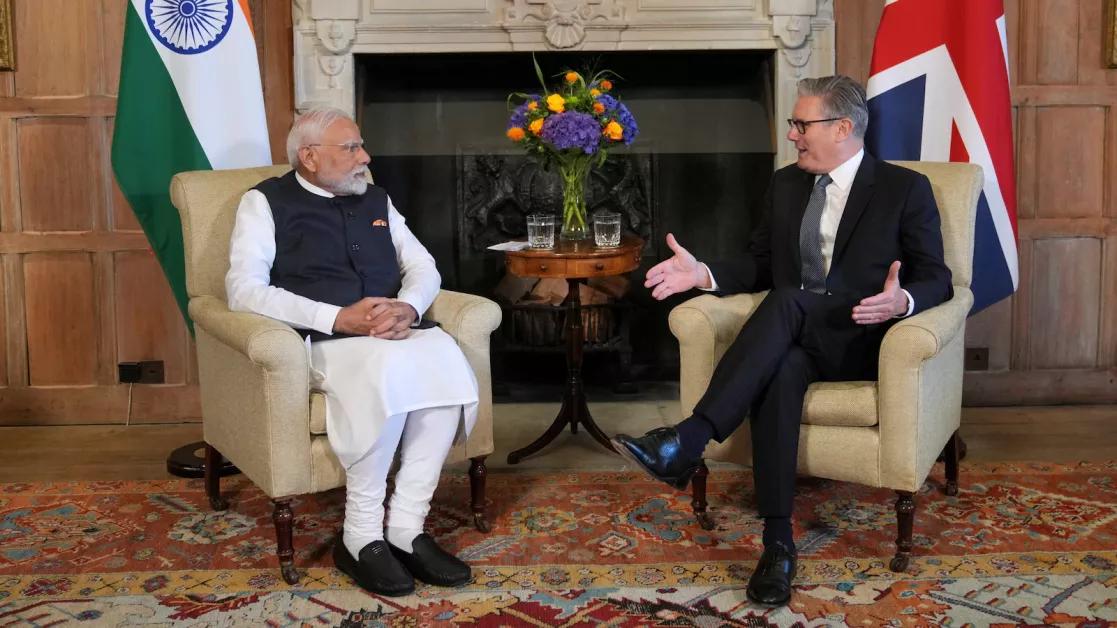
India–UK Free Trade Agreement Rollout Scheduled for 15 July: Policy Impact on Industry
Taking effect on 15 July with duty-free access for 99% of Indian exports, the India–UK CETA reshapes tariffs, opens the British market for textiles, leather and engineering goods, and hands consumers cheaper Scotch and cars — while raising the compliance bar.
By Naina, 8th July 2026
The India–United Kingdom Free Trade Agreement is scheduled to roll out on 15 July 2026, ushering in significant policy changes for industry across both countries. Formally the Comprehensive Economic and Trade Agreement (CETA), the pact provides duty-free access for around 99 percent of India's exports to the UK, covering nearly the entire export basket, while lowering Indian tariffs on a range of British goods. With the rules of origin recently notified and the implementation date confirmed, businesses are preparing for the wide-ranging impact on tariffs, market access, and compliance. The agreement is expected to boost Indian exports in labour-intensive and manufacturing sectors, while giving Indian consumers and industry access to cheaper British products. Here is a detailed look at the India–UK FTA rollout and its policy impact across industry.
The agreement marks a landmark in the trade relationship between the two countries, whose bilateral trade has grown to over $25 billion, with India running a surplus. For Indian industry, the deal represents a major opportunity to expand exports to a large developed market, particularly for sectors that have long faced tariff barriers. At the same time, it introduces new dynamics, including tariff reductions on imports and compliance requirements around rules of origin. As the rollout approaches, understanding the policy implications across sectors is essential for businesses seeking to capitalise on the opportunities and navigate the changes. Here is an analysis of the agreement's key provisions, the sectors affected, the compliance requirements, and the broader impact on industry.
The Rollout
The agreement takes effect on a confirmed date. The India–UK Comprehensive Economic and Trade Agreement, signed in 2025 after years of negotiation, is scheduled to come into force on 15 July 2026, following the government's notification of the rules of origin that determine which products qualify for preferential treatment. The rollout marks the culmination of a lengthy process and the beginning of implementation, when the tariff reductions and market-access provisions become operational. Businesses on both sides have been preparing for this date, ensuring their supply chains, documentation, and compliance processes are ready. The confirmed timeline provides certainty for industry, allowing companies to plan their export and import strategies around the new tariff regime and to begin capturing the benefits from day one of the agreement.
The Export Boost
Indian exporters stand to gain substantially. The agreement provides duty-free access for around 99 percent of India's exports to the UK, covering nearly the entire export basket and removing tariffs that previously ranged up to significant levels. This is particularly transformative for labour-intensive sectors that form the backbone of Indian manufacturing and employment, including textiles and apparel, leather, footwear, gems and jewellery, and marine products, which now gain a competitive edge in the British market. Fast-growing sectors like engineering goods, auto components, and organic chemicals also benefit from improved access. The removal of tariffs positions Indian manufacturers to capture larger shares of the UK market, boost exports, and support job creation across these industries, representing a significant policy win for Indian industry.
The Import Impact
The agreement also lowers tariffs on British goods. In return for access to the UK market, India has agreed to reduce or eliminate tariffs on a range of British products over phased periods. This includes iconic goods such as Scotch whisky and other spirits, where high duties will be gradually cut, as well as automobiles, subject to quotas and phased reductions, and various other products. For Indian consumers, this could mean greater access to and lower prices on certain British goods over time. For domestic industry, particularly in sensitive sectors like automobiles and alcohol, the tariff reductions are structured with extended phase-in periods and safeguards to allow time to adjust. This balance aims to open the Indian market gradually while protecting domestic producers from sudden competitive pressure during the transition.
The Sector Winners
Several sectors emerge as clear beneficiaries. Textiles and apparel, one of India's largest employment-generating industries, stand to gain significantly from duty-free access, improving competitiveness against rivals from other countries. Leather and footwear, gems and jewellery, and marine products similarly benefit from tariff removal. Engineering goods and auto components gain from improved access to a substantial market. The pharmaceutical sector benefits from regulatory cooperation and market access. On the services side, the agreement offers gains for information technology, professional services, and the mobility of skilled workers, along with provisions easing the movement of professionals. These sector-specific benefits make the agreement broadly advantageous for Indian industry, spanning traditional labour-intensive sectors and higher-value manufacturing and services.
The Compliance Requirements
The rollout brings important compliance obligations. To claim the preferential tariffs, exporters must meet the rules of origin, which determine whether a product qualifies as genuinely originating in India through criteria such as wholly obtained status, sufficient value addition, or specified processing. Exporters must obtain certificates of origin, calculate and document value content, maintain records, and be prepared for customs verification. For sectors reliant on imported inputs, meeting the origin requirements can be complex, requiring careful attention to sourcing and documentation. Businesses, particularly smaller firms, will need to understand and comply with these rules to benefit from the agreement. Getting compliance right is essential, as failure to meet the criteria could result in denied tariff benefits, making preparation a key priority as the agreement takes effect.
The Services and Mobility
Beyond goods, the agreement addresses services and mobility. The pact includes provisions to improve access for Indian service providers in areas such as information technology, consulting, and professional services, reinforcing India's strengths in these high-value sectors. It also includes commitments on the mobility of professionals, easing the movement of skilled Indian workers to the UK for certain roles, and provisions addressing social security contributions that can reduce costs for professionals working temporarily across borders. These services and mobility provisions are significant for India's large services sector and its skilled workforce, complementing the goods-related benefits. For an economy where services are a major export strength, these aspects of the agreement carry substantial long-term value for industry and professionals.
The Broader Impact
The agreement carries wider strategic significance for industry. It forms part of India's broader strategy of expanding its network of trade agreements to diversify export markets, reduce dependence on any single partner, and integrate more deeply into global supply chains, particularly amid global trade uncertainties. For industry, the deal enhances India's attractiveness as a manufacturing and export base, potentially drawing investment as companies seek to serve the UK market from India. It also sets a template for other trade agreements under negotiation or implementation. Certain developed-market requirements, including sustainability and environmental standards, may pose challenges for some exporters over time. Overall, the agreement strengthens the policy framework supporting India's export-oriented industrial growth and its integration into global trade.
The Road Ahead
As the India–UK Free Trade Agreement takes effect, its success will depend on how effectively industry capitalises on the opportunities and navigates the compliance requirements. The immediate focus will be on exporters meeting the rules of origin to claim benefits, and on both sides implementing the tariff schedules smoothly. Over time, the agreement is expected to boost bilateral trade significantly, benefiting exporters, consumers, and industry across sectors. Businesses will need to adapt their strategies to the new tariff regime, while the government supports awareness and compliance efforts. As one of India's most significant trade agreements with a developed economy, its rollout marks an important step in the country's trade expansion, with the policy impact on industry set to unfold across sectors in the months and years ahead.
 India-UK CETA Takes Effect July 15: What It Means. FAQs
POST A COMMENT (0)
All Comments (0)
Replies (0)