





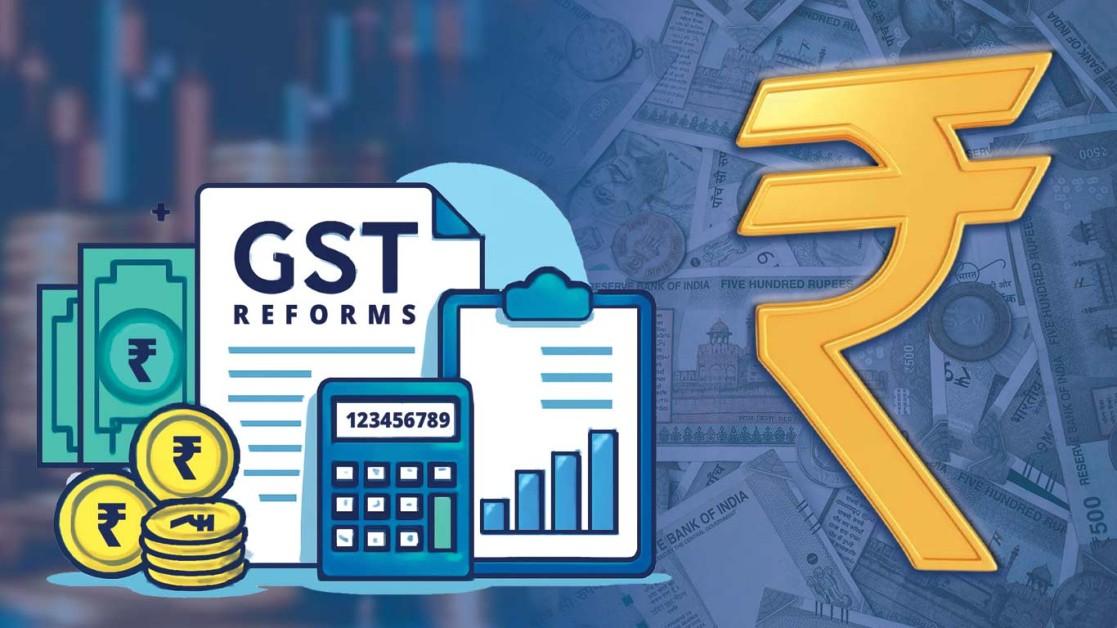
GST Reforms 2025: A Landmark in India’s Economic Journey
Introduction, Vision & GST Council Highlights
Introduction – A Turning Point for India’s Taxation System
In the evolving story of India’s economy, tax reforms have always played a pivotal role. From the days of complex indirect tax regimes that varied across states, to the revolutionary introduction of the Goods and Services Tax (GST) in 2017, India has consistently sought to create a fairer, more transparent, and more business-friendly tax environment. The year 2025 marks yet another milestone in this journey, with the 56th GST Council Meeting ushering in sweeping changes that promise relief for citizens, empowerment for small businesses, and fresh opportunities for industry.
The announcements made during this council meeting were not mere adjustments in rates or procedural tweaks. They represented a vision for simplification, fairness, and inclusivity. The reforms touched upon every major segment of the Indian economy – healthcare, agriculture, MSMEs, household consumption, and manufacturing. They also introduced structural improvements such as the operationalization of the GST Appellate Tribunal (GSTAT), which will bring long-awaited dispute resolution mechanisms to taxpayers.
From lowering GST on essential food items to granting exemptions in health and life insurance, the reforms carry a human touch, ensuring that the tax system works not only for the government’s revenue collection but also for the welfare of its citizens.
At Nex News Network, we recognize the magnitude of these reforms. As a platform committed to blending journalism with technology, we extend our sincere thanks to the Government of India for enacting measures that reflect both economic pragmatism and citizen-centric governance. This report delves deep into the announcements, exploring their context, sector-wise impact, and the road ahead.
Vision Behind GST Reforms 2025 – Policy with a Human Face
The foundation for these reforms was laid months earlier, during Prime Minister Narendra Modi’s address from the Red Fort on Independence Day 2024. In his speech, he promised to make the tax system simpler, fairer, and more humane, particularly for India’s middle class and small entrepreneurs. The idea was clear: taxation should not feel like a burden but should serve as an enabler of growth.
The 2025 GST reforms reflect this vision in multiple ways:
-
Simplification of rates: By introducing a two-tier system that reduces complexity for businesses, the government has taken a step toward creating a “one nation, one simple tax” model.
-
Relief for households: Everyday necessities, from food to healthcare, are now taxed at lower rates or completely exempted, easing the financial strain on ordinary families.
-
Empowerment of MSMEs: Special attention has been given to micro, small, and medium enterprises, with measures designed to reduce compliance costs and encourage growth.
-
Focus on trust: By introducing blockchain-inspired verification systems and technology-driven dispute resolution, the government is building confidence in the GST framework.
The 56th GST Council Meeting – Key Highlights
Held on September 3, 2025, the 56th GST Council Meeting was one of the most significant gatherings since the introduction of GST itself. Chaired by Union Finance Minister Nirmala Sitharaman, the meeting brought together finance ministers from states and union territories, tax experts, and senior bureaucrats.
The decisions announced were comprehensive, covering rate rationalization, exemptions, compliance improvements, and institutional reforms.
Headline Outcomes:
-
Rate Rationalization: GST rates slashed on essential food items, inverted duty structures corrected in textiles/footwear, and major relief for healthcare.
-
Relief for Citizens: Life and health insurance policies exempted from GST; household essentials like cooking oil and packaged foods saw tax cuts.
-
Support for Agriculture: Inputs, fertilizers, and farm equipment brought under lower slabs.
-
MSME Benefits: Filing simplified, registration thresholds revised upwards.
-
Operationalization of GSTAT: Dedicated appellate tribunal for tax disputes.
-
Technology-driven improvements: AI and blockchain integration announced for transparency.
Sectoral Breakdowns: Healthcare, Agriculture, MSMEs, Households
Healthcare – Relief for Families, Support for Hospitals
-
Exemption on health & life insurance premiums – no GST.
-
Life-saving drugs – cut to 5%.
-
Hospital services and diagnostics – reduced to 5%.
Impact: Families save thousands annually; hospitals lower operating costs; insurance penetration expands.
Agriculture – Empowering Farmers
-
Fertilizers cut from 12% to 5%.
-
Farm equipment like tractors/irrigation systems cut from 18% to 12%.
-
Seeds/pesticides partly exempt.
Impact: Input costs reduced; better margins for farmers; food inflation stabilized.
MSMEs – Breathing Space for Growth
-
Simplified filing and registration threshold raised to ₹60 lakh.
-
Inverted duty correction in textiles & footwear.
Impact: Compliance costs drop, small firms focus on expansion, exporters gain liquidity.
Households – Relief for Citizens
-
Food staples like rice, pulses, edible oil cut to 5%.
-
Daily essentials like detergents, sanitary products reduced.
-
Insurance premiums exempt.
Impact: Monthly grocery bills shrink; insurance affordable; more disposable income for families.
Simplified Two-Tier Tax System & Exemptions
Two-Tier GST Model
-
5% (Essentials) – Food staples, medicines, insurance, household basics.
-
12% (Standard) – Most goods/services.
Luxury & sin goods retain cess.
Why it matters:
-
Simplifies compliance, reduces disputes, and aligns with global practice.
Sector-Specific Exemptions & Reductions
-
Healthcare: Insurance exempt, drugs @5%, diagnostics @5%.
-
Food & Agriculture: Staples @5%, fertilizers @5%, tractors @12%.
-
Labour-intensive: Textiles & footwear rationalized, artisans exempt.
-
Household goods: Detergents & sanitary products @5%, LPG @5%, stationery exempt.
-
MSMEs: Simplified returns, higher exemption thresholds, faster refunds.
Impact Tables
Healthcare Relief
| Category | Earlier GST | New GST | Impact |
|---|---|---|---|
| Insurance Premiums | 18% | 0% | Affordable coverage |
| Life-saving Drugs | 12% | 5% | Cheaper treatment |
| Diagnostics | 18% | 5% | Reduced patient costs |
Agriculture Relief
| Category | Earlier GST | New GST | Impact |
|---|---|---|---|
| Fertilizers | 12% | 5% | Lower input costs |
| Farm Equipment | 18% | 12% | Affordable mechanization |
GSTAT & Human Stories
The Launch of GSTAT – A Long-Awaited Institution
Since GST’s introduction in 2017, one of the biggest challenges faced by taxpayers was the resolution of disputes. With multiple rates, classification disagreements, and frequent compliance audits, small businesses and even large corporations often found themselves locked in legal battles. Until 2025, disputes had to be escalated to state high courts or the Supreme Court—an expensive, time-consuming process.
The 56th GST Council Meeting marked a watershed moment by officially operationalizing the GST Appellate Tribunal (GSTAT).
Key Features of GSTAT:
-
Dedicated benches in every state.
-
Faster resolution of disputes.
-
Inclusion of sector experts & judicial members.
-
Digital-first approach with e-filing & virtual hearings.
Why it matters:
-
Businesses save time & money.
-
Citizens gain confidence in fairness.
-
Government boosts credibility of GST.
Human Stories – Real Lives, Real Impact
Ramesh the Farmer (Madhya Pradesh): Cheaper fertilizer (12% → 5%) improves his crop margins.
Asha the Homemaker (Lucknow): Grocery bill drops ₹800/month thanks to lower GST on food.
Meera the Insurance Agent (Pune): Easier to sell health insurance after GST removal.
Arjun the Manufacturer (Agra): Workshop exempted from GST under new ₹60 lakh threshold.
Kavita the Hospital Admin (Chennai): Lower equipment costs reduce patient bills.
These stories show how reforms connect policy with people.
Nex News Perspective – Policy with a Human Face
At Nex News, we see GSTAT + rate reforms as a dual victory:
-
Institutions strengthened.
-
Citizens’ everyday burdens reduced.
We thank the Government of India for enacting changes that combine systemic efficiency and human relief.
Reactions from Across India
Farmers – Relief for Rural India
-
“Fertilizer costs always worried us. Now margins are better.” – Wheat farmer, Haryana.
-
“Cheaper dairy products mean more demand for us.” – Dairy farmer, Bihar.
Citizens – Household Relief
-
“Our grocery bill dropped ₹700.” – Homemaker, Delhi.
-
“Insurance without GST is a huge help.” – IT worker, Bengaluru.
Traders – Simplification
-
“No need to pay accountant for complex returns.” – Shopkeeper, Jaipur.
-
“Textile inverted duty problem finally solved.” – Trader, Surat.
MSMEs – Breathing Room
-
“Raising threshold to ₹60 lakh frees many from GST.” – Auto parts unit, Pune.
-
“Handicrafts exemption boosts exports.” – Startup founder, Kochi.
Industry Leaders – Stability & Confidence
-
FICCI President: “Exactly what industry needed for ease of business.”
-
Healthcare Executive: “Proof of citizen-first governance.”
Economists – Caution
-
Revenue risks must be monitored.
-
Clear definitions of “essential” vs. “standard” are critical.
Nex News Reporting from Ground
From bazaars in Kanpur to hospitals in Chennai, one theme echoed: “We feel heard.”
Reforms are being seen not just as economic policy but as democratic responsiveness.
Nex News Perspective, Thanks & Global Comparisons
Editorial Perspective
Nex News identifies 3 key outcomes:
-
Human-centered taxation – citizens’ welfare prioritized.
-
Trust via transparency – GSTAT builds faith.
-
Future-ready framework – AI & blockchain integration.
Thanks to the Government
-
To the Prime Minister, for people-first vision.
-
To the Finance Minister & GST Council, for balancing relief with pragmatism.
-
To State Governments, for consensus.
We recognize the courage it takes to align fiscal policy with public needs.
Global Comparisons
Australia: Flat 10% GST = simple but regressive. India’s two-tier is more balanced.
EU: Multiple rates cause complexity. India simplified closer to Germany’s model.
Singapore: Gradual hikes hurt poor. India exempts essentials = more equitable.
Canada: Dual GST-HST system creates inconsistencies. India avoided that by unifying.
Brazil: Struggles with fragmented taxes. India ahead with GSTAT + tech adoption.
Lessons for India
-
Simplicity must not erode fairness.
-
Tech adoption is the backbone of compliance.
-
Centralized dispute resolution prevents fragmentation.
Human Touch – Global Lens
In Canada, families pay GST on milk/bread; in India, essentials exempt.
India’s reforms reflect citizen-first priorities globally admired.
Expert Opinions, Challenges Ahead & Roadmap
Expert Opinions
Economists:
-
“The two-tier system is historic, but revenue implications must be watched carefully.” – Dr. Raghav Menon.
-
“Exempting essentials is socially sensitive, but definitions must remain crystal clear.” – Prof. Shalini Deshpande.
Industry Experts:
-
“Insurance exemptions will expand coverage, but insurers must keep base prices stable.” – Anurag Gupta.
-
“Rate cuts on equipment must translate into lower hospital bills for patients.” – Ritika Malhotra.
Tax Professionals:
-
“Single-page filing for MSMEs is a masterstroke, but training is critical.” – CA Neeraj Bansal.
-
“GSTAT’s success will depend on staffing and independence.” – Adv. Kavita Sinha.
Challenges Ahead
-
Revenue Implications: Lower rates may reduce collections; compliance must rise to compensate.
-
Defining “Essential” vs. “Standard”: Grey areas in classification could spark new disputes.
-
Capacity of GSTAT: Risk of backlog if not staffed and funded properly.
-
Digital Divide: Small traders in rural areas may struggle with digital compliance.
-
Macro Stability: Inflationary shocks outside GST could dilute relief.
Roadmap for the Future
-
Monitor Revenue & Compliance: Use AI for invoice-matching; expand e-invoicing.
-
Empower GSTAT: Regional benches, judicial independence, digital hearings.
-
MSME Training: Nationwide workshops, digital guides in vernacular languages.
-
Long-Term Harmonization: Gradually move to a flat GST once revenue stabilizes.
-
Global Engagement: Share India’s GST model with developing nations like Brazil and South Africa.
Human Voices of Caution
-
“We need clear guidance for simplified filing.” – Rajesh, shopkeeper, Indore.
-
“Groceries are cheaper, but school fees and transport remain high.” – Fatima, homemaker, Hyderabad.
-
“Refund timelines must really improve.” – Karan, MSME owner, Ludhiana.
Nex News Role
Nex News Network pledges to:
-
Track ground-level implementation.
-
Report delays in GSTAT cases.
-
Highlight citizen experiences.
Economic Outlook & Conclusion
Economic Outlook
For Citizens:
-
Lower household costs, higher disposable income, greater trust in government.
For Businesses:
-
MSMEs free from compliance burdens, industries gain stability, exporters benefit from refunds.
For Government:
-
Revenue stable via compliance, stronger credibility of GST, global recognition as a model system.
Long-Term Benefits
Economic: Broader tax base, more entrepreneurship, investment magnet.
Social: Affordable healthcare, reduced education costs, rural empowerment.
Governance: Less litigation, faster dispute resolution, tech-enabled transparency.
Human Stories – A Year Later
-
Punjab farmer: Fertilizer savings improve yield.
-
Bihar trader: No GST filing frees time to expand shop.
-
Chennai family: Insurance premiums affordable.
-
Bengaluru startup: Growth with faster refunds.
Nex News Closing Perspective
We thank the Government of India for balancing citizen relief with fiscal pragmatism.
At the same time, we commit to watchdog journalism: ensuring that these reforms deliver not just promises but results.
The 56th GST Council Meeting of 2025 will be remembered as a watershed moment.
By simplifying slabs, exempting essentials, empowering farmers, easing MSMEs, and launching GSTAT, the government has created a framework of trust, fairness, and inclusivity.
India’s journey toward “One Nation, One Simple Tax” has truly begun. The future of taxation is not burden but empowerment — not confusion but clarity — not fear but trust.
This is the new chapter in India’s economic story.
 Related News
POST A COMMENT (0)
All Comments (0)
Replies (0)