





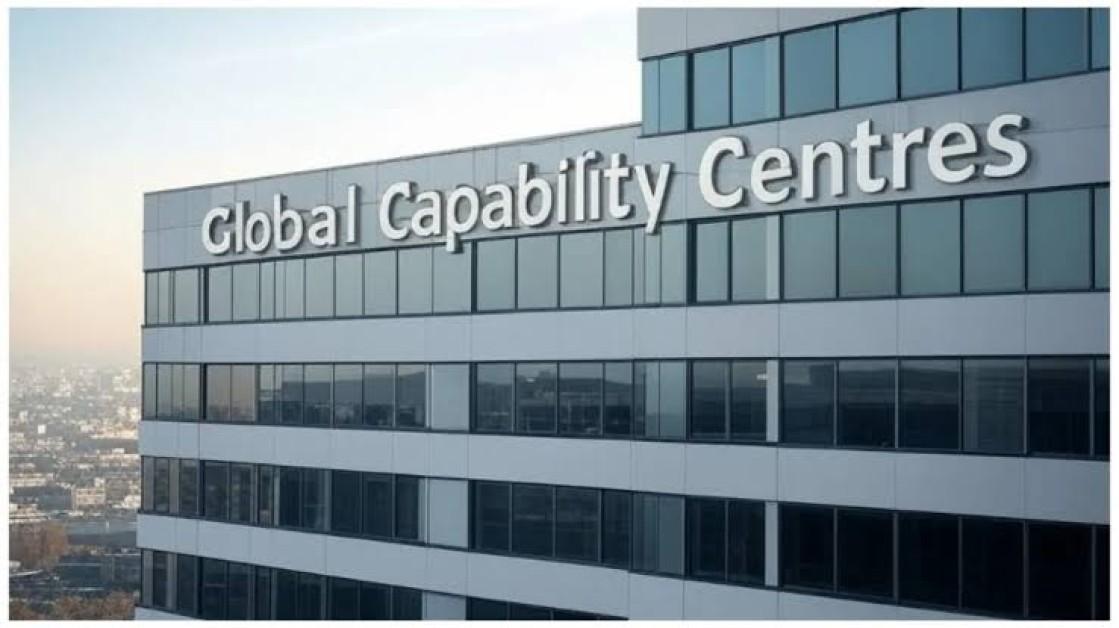
Global Capability Centres (GCC) Expansion in India
India now hosts over 2,000 Global Capability Centres employing more than two million professionals — and as the sector pivots from cost-saving back offices to AI-led innovation hubs, 2026 is the year it became impossible to ignore.
By Naina, 7th July 2026
The expansion of Global Capability Centres (GCCs) in India has become one of the most significant shifts in the global services industry, cementing the country's position as the world's leading destination for such units. India now hosts over 2,000 GCCs, employing more than two million professionals and generating revenues that have crossed $70 billion, with the ecosystem projected to grow substantially by the end of the decade. Once cost-saving back offices for multinationals, these centres have evolved into strategic hubs running core engineering, research, artificial intelligence, and global decision-making for their parent companies. Driven by deep talent, cost advantages, and supportive policy, the sector is expanding rapidly, adding new centres and hundreds of thousands of high-value jobs, and reshaping India's role in global business.
A Global Capability Centre is a wholly owned offshore unit established by a multinational to deliver core business functions back to the parent organisation, distinct from traditional outsourcing to third-party vendors. What began in the late 1990s as a cost-arbitrage play has transformed into a sophisticated ecosystem often described as India's shift from the 'world's back office' to the 'world's technology brain'. In 2026, this transition has accelerated, with artificial intelligence, engineering, and product leadership increasingly anchored in India. Here is a detailed look at the expansion of Global Capability Centres in India, its scale, drivers, the strategic and technological shift under way, the geography of growth, and the challenges the sector faces.
The Scale
The scale of India's GCC ecosystem is remarkable. The country now hosts well over 2,000 Global Capability Centres, spread across thousands of delivery sites, employing more than two million professionals and generating annual revenues that have crossed $70 billion, making it the largest GCC hub in the world. New centres are being added at a steady pace of around 100 to 120 each year, with hundreds established over the past five years. Industry projections suggest the ecosystem could grow to over 2,500 centres employing nearly 2.8 to 2.9 million professionals and generating around $105 billion in revenue by 2030, potentially contributing close to 2 percent of India's economic output. This trajectory underscores the sector's growing strategic and economic importance.
The Strategic Shift
The nature of GCC work has transformed fundamentally. What started as cost-reduction centres handling back-office and support functions have become business-critical hubs. More than half of GCC activity in India now spans advanced digital and engineering functions, including cloud infrastructure, semiconductor design, analytics, and enterprise software development. A growing number of centres now own global product roadmaps and revenue-linked functions, embedding India teams directly in core decision-making. This reflects a strategic shift by multinationals toward directly owning talent and intellectual property rather than relying solely on outsourcing. The staff are product engineers, AI researchers, data scientists, and finance specialists doing the same high-value work as headquarters teams, marking India's evolution from a support base to a strategic capability core.
The AI Pivot
Artificial intelligence is at the heart of the expansion. The year 2026 is seen as a pivotal moment, with the sector transitioning decisively from cost optimisation to strategic, AI-led operations. A large majority of new GCCs launched this year prioritise artificial intelligence and machine learning as their core mandate, a complete reversal from the infrastructure-support focus of the previous decade, and scores of specialised AI centres of excellence have been established. India's centres are also deeply involved in advanced engineering, contributing to cutting-edge semiconductor and chip design, with the country accounting for a significant share of the world's chip design workforce. Engineering research and development centres are growing faster than the broader ecosystem, reflecting the rising sophistication of the work handled from India.
The Sector Spread
GCC expansion has spread well beyond technology and finance. While information technology and banking, financial services, and insurance remain core, the sector has diversified significantly. Healthcare and biotechnology have achieved substantial market share, while automotive and industrial engineering, consumer and retail technology, and media and gaming have all grown. Newer industries, including electric mobility, climate technology, and digital health, are setting up dedicated centres, broadening demand further. Global companies across sectors, from quick-service restaurants to investment management, have established major centres in India, some describing them as their largest outside their home markets. A large share of GCC demand comes from firms headquartered in the United States, underscoring India's central role in global corporate operations across a widening range of industries.
The Hub Map
India's GCC footprint is concentrated but expanding geographically. Six primary hubs anchor the ecosystem: Bengaluru, which leads with the largest share of centres and workforce, followed by Hyderabad, Chennai, Pune, Mumbai, and the National Capital Region, each specialising in distinct functions. This concentration has made GCCs a dominant force in commercial real estate, accounting for a large and growing share of office leasing in top cities, with centres committing to large campuses and long-term leases that signal durable commitment. Increasingly, however, expansion is reaching tier-2 cities such as Coimbatore, Jaipur, Mysuru, and others, often through smaller, specialised centres. State governments have introduced dedicated policies with incentives to attract GCCs beyond the major metros, making tier-2 locations a strategic rather than purely cost-driven choice.
The Employment Engine
GCCs have become a powerful engine of high-value employment. Employing over two million professionals, the sector is expected to add several hundred thousand new jobs in the current period alone, with headcount projected to keep rising strongly through the decade. Crucially, these are high-skill, well-paid roles spanning software engineering, data science, AI, cybersecurity, finance, design, and many other functions, and GCCs typically pay more than traditional outsourcing and have seen salaries rise faster than the broader technology sector. GCC hiring growth has consistently outpaced that of large IT services companies, accounting for a substantial share of incremental white-collar technology hiring. This makes the sector one of the most important formal employment engines in India's urban economy, attracting top talent.
The Policy and Cost Edge
India's appeal rests on a strong cost and policy foundation. Even after rising salaries and compliance costs, the country continues to offer a significant cost advantage, often in the range of 30 to 50 percent, compared with developed markets for equivalent engineering and digital roles, alongside a deep pool of millions of technical graduates. Recent policy measures have strengthened this edge, including an expanded safe-harbour threshold that reduces tax disputes, extended tax incentives for cloud and data-centre services, streamlined approvals, and benefits within special economic zones. State governments have added their own incentives, from rental reimbursements to salary subsidies, to attract centres. This combination of cost competitiveness, talent depth, and supportive policy underpins India's position as the world's preferred GCC destination.
The Challenges
Significant challenges accompany the rapid expansion. The most pressing is talent scarcity, particularly for artificial intelligence and senior leadership roles, with a large share of critical positions taking considerable time to fill and only a small fraction of engineering graduates adequately trained for advanced AI work. Rising salaries and attrition add cost pressures, while intense competition for prime office space and skilled talent is intensifying. As centres move up the value chain into complex, strategic work, execution and building the right capabilities become harder. Tier-2 expansion faces questions around infrastructure and talent depth. The sector also remains exposed to global economic uncertainty and shifts in corporate technology spending. Navigating these challenges will be crucial to sustaining the expansion's momentum and quality.
The Road Ahead
The expansion of Global Capability Centres is set to remain one of India's most powerful structural growth stories. As multinationals continue to shift complex, high-value work to India, the sector is poised to grow further in scale, sophistication, and strategic importance, potentially reaching new milestones in centres, employment, and revenue by 2030. Its evolution into an AI-led, innovation-driven ecosystem, spreading into tier-2 cities and diversifying across industries, positions India ever more centrally within global value chains. Realising this potential will depend on addressing talent gaps, sustaining cost competitiveness, and successfully moving up the value chain. If these challenges are met, GCCs will continue to transform India's role in the global economy, cementing its status as the world's capability core for years to come.
 GCC Expansion in India: The World's Capability Hub FAQs
POST A COMMENT (0)
All Comments (0)
Replies (0)