





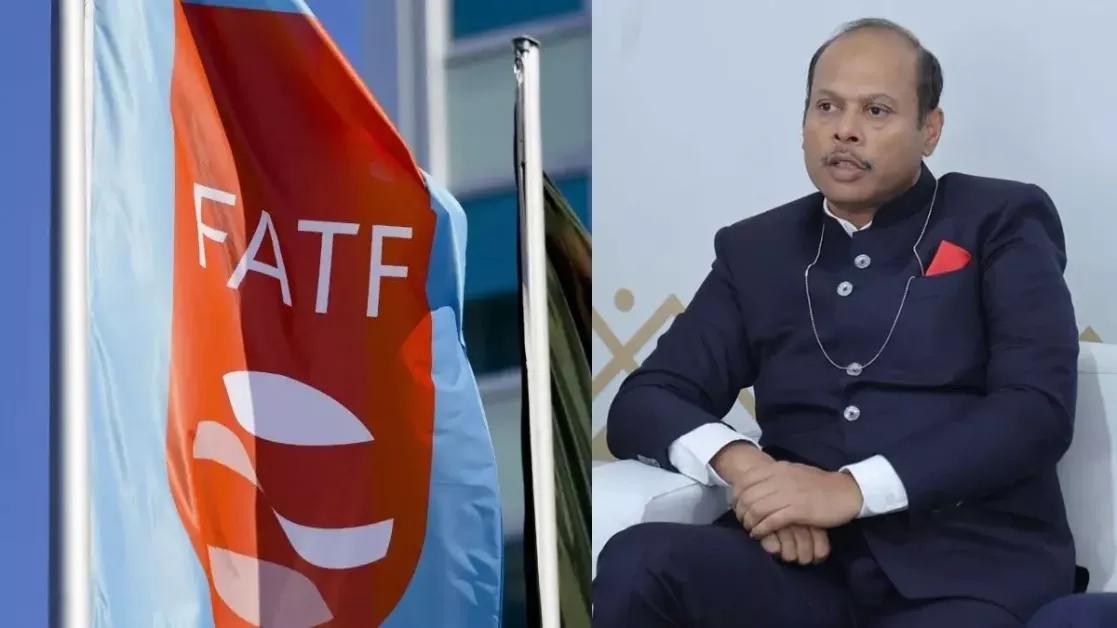
India Set to Take FATF Vice-Presidency Role and Strengthen Global Financial Cooperation
Vivek Aggarwal will become the first Indian to hold the FATF Vice-Presidency, giving New Delhi a seat at the table where global anti-money laundering rules are written.
By Naina, 24th June 2026
India is set to take the FATF Vice-Presidency for the first time, marking a notable step up in its role within the global financial system. Vivek Aggarwal, a senior Indian civil servant and former head of the country's FATF delegation, was elected at the Financial Action Task Force plenary in Paris on 19 June 2026, for a term running from July 2026 to June 2027. The Paris-based watchdog sets the global standards for fighting money laundering, terror financing, and proliferation financing. For New Delhi, the appointment is both a recognition of its compliance record and a chance to help shape the rules that govern global finance.
The government called the elevation a landmark, and it does place an Indian official at the leadership table of a body whose decisions ripple across more than 200 jurisdictions. But the role's influence is subtler than its title suggests. A vice-president steers work and builds consensus rather than wielding enforcement power. The real value lies in proximity, a louder voice in debates that increasingly touch India's own priorities, from digital assets to terror financing. Here is what the move means.
The Appointment
The FATF plenary, meeting in Paris from 17 to 19 June, selected Vivek Aggarwal as the body's incoming vice-president. A 1994-batch Indian Administrative Service officer and currently Secretary in the Ministry of Culture, Aggarwal previously headed India's delegation to the FATF, giving him deep familiarity with its workings. He succeeds Giles Thomson of the United Kingdom, who moves up to the FATF Presidency for a two-year term. On his appointment, Aggarwal framed it as recognition of the strength of India's anti-money laundering and counter-terror financing framework, and pledged to help keep the international financial system safe and resilient.
What the FATF Is
The Financial Action Task Force was created by the G7 in Paris in 1989 to combat drug-related money laundering. It later widened its mandate to terrorist financing after the 2001 attacks and to proliferation financing in 2012. Today it brings together 40 members and nine regional bodies, applying a common rulebook, the FATF Recommendations, across more than 200 jurisdictions. Its influence flows largely from two lists: a grey list for countries under increased monitoring and a blacklist, formally the call-for-action list, which as of 2026 names Iran, North Korea, and Myanmar.
Why the Lists Matter
Neither FATF list carries formal sanctions, yet both shape the cost of doing business. When a country lands on the grey or blacklist, banks tighten compliance checks, investors turn cautious, and borrowing costs tend to rise. That indirect power is what gives the FATF its weight in global finance. Membership and good standing, by contrast, signal that a jurisdiction meets international norms, which is why India treats its own clean assessments as an economic asset as much as a regulatory one.
India's Journey Within the FATF
India's relationship with the body has deepened over two decades. It joined as an observer in 2006 and became the 34th member in 2010, then steadily aligned its laws and enforcement with FATF standards. The vice-presidency is the culmination of that effort, reflecting the credibility India has built within the global network. Officials also see it as a stepping stone, strengthening the country's prospects of eventually holding the FATF Presidency, which would place it at the very centre of global standard-setting.
The Limits of the Role
It is important to be precise about what the seat does and does not offer. The vice-president assists the president in steering the organisation's work but runs no enforcement machinery and cannot place any country on a FATF list alone. Decisions on grey-listing or blacklisting emerge from technical reviews and consensus among member states. So while the role gives India a stronger voice in the room, it does not let New Delhi dictate outcomes. The gain is influence and access, not unilateral power.
The Agenda India Will Help Shape
Where the position may matter most is the issues now on the FATF's table. The June plenary discussed stablecoins, unhosted wallets, virtual assets, and decentralised finance, alongside payment transparency and terror financing through social media. The incoming UK presidency has set priorities around combating large-scale fraud, strengthening risk-based supervision, and improving information-sharing between governments and the private sector. As one of the world's largest real-time payments markets and a country expanding its own digital-asset rules, India brings practical experience and a direct stake in these debates.
The Wider Diplomatic Context
The appointment also lands amid India's broader push on terror financing. After the 2025 Pahalgam attack, Indian officials signalled they would seek renewed scrutiny of cross-border financing within the FATF framework. The vice-presidency does not change the institution's consensus-based rules, but it does give India a more central platform to press its concerns. For a country that spent years adapting to FATF standards, having a hand in writing the next generation of them carries clear diplomatic value.
The Plenary's Other Outcomes
The Paris meeting produced more than a new vice-president. The FATF removed Algeria and Namibia from its grey list following successful reviews, adopted mutual-evaluation reports for Canada and Türkiye, and updated a key recommendation to ensure sanctions do not block humanitarian aid, in line with United Nations resolutions. It also welcomed a network of central banks from developing economies as an observer, reflecting a growing emphasis on financial inclusion. The breadth of the agenda underscores the kind of work India will now help guide.
The Road Ahead
India's move into the FATF Vice-Presidency strengthens its hand in global financial cooperation at a moment when the rules of finance are being rewritten for the digital age. The role is influential rather than decisive, and its value will show in how effectively India uses its seat to shape standards on crypto, fraud, and terror financing. Used well, the position could advance both India's interests and the integrity of the wider system, and lay the groundwork for a future bid to lead the body outright. For now, it confirms India's arrival at the top table of global financial governance.
Frequently Asked Questions
What is the FATF?
The Financial Action Task Force is a Paris-based intergovernmental body, created by the G7 in 1989, that sets global standards to combat money laundering, terrorist financing, and proliferation financing across more than 200 jurisdictions.
Who is taking the FATF Vice-Presidency for India?
Vivek Aggarwal, a 1994-batch Indian Administrative Service officer and currently Secretary in the Ministry of Culture, who previously headed India's FATF delegation. His term runs from July 2026 to June 2027.
Is this the first time India holds the role?
Yes. It is the first time India will hold the FATF Vice-Presidency since joining the body as a member in 2010, after first becoming an observer in 2006.
What powers does the FATF Vice-President have?
The vice-president assists the president in steering the organisation's work but holds no enforcement power and cannot place a country on a FATF list alone. Such decisions are made through technical reviews and consensus among members.
Why does the appointment matter for India?
It gives India a stronger voice in shaping global financial standards on issues such as digital assets, fraud, and terror financing, boosts its credibility, and improves its prospects of one day holding the FATF Presidency.
 Related News
POST A COMMENT (0)
All Comments (0)
Replies (0)