





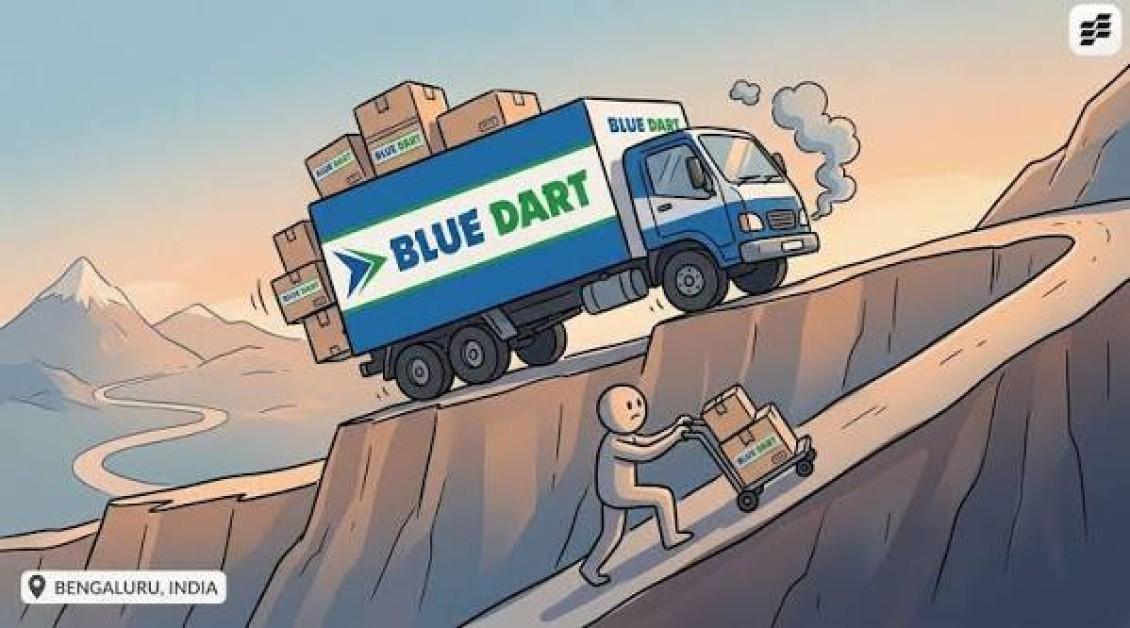
Blue Dart to Raise Domestic Prices by 9–12%
Blue Dart's General Price Increase will take effect from January 1, 2027.
The company has set the overall increase within a range of 9% to 12%, rather than applying a single uniform percentage across every shipment.
As a result, the impact on customers will depend on factors such as the service selected, shipment characteristics and individual shipping profiles.
Businesses using Blue Dart for regular domestic distribution will therefore need to assess their specific rate structures to determine the precise effect of the revision on logistics expenditure.
New Customers Get Temporary Exemption

Blue Dart has provided an exemption for customers signing up during a specified period before the new rates take effect.
Customers who onboard between October 1 and December 31, 2026, will not be immediately affected by the General Price Increase.
Their existing pricing will remain unchanged until the applicable period under the company's announcement.
The measure gives newly acquired customers greater short-term price visibility while Blue Dart transitions its broader domestic customer base to the revised tariff structure.
Why Blue Dart Is Revising Prices
Express logistics businesses operate networks that require continuous spending across aircraft, vehicles, sorting facilities, technology, manpower and last-mile delivery infrastructure.
Changes in fuel expenses, aviation costs, transportation charges, employee costs and general inflation can influence the economics of moving parcels across a nationwide network.
At the same time, logistics companies are investing in automation, digital tracking, sorting capacity and service infrastructure to handle growing shipment volumes and rising expectations for faster deliveries.
Periodic price revisions allow operators to balance these costs while maintaining network capacity and service standards.
Businesses Could See Higher Logistics Costs in 2027
The price increase will be particularly relevant for businesses that rely heavily on express delivery for domestic distribution.
E-commerce companies, direct-to-consumer brands, retailers, manufacturers, pharmaceutical businesses, financial-services companies and SMEs are among the customer groups that regularly use express logistics services.
For companies handling large shipment volumes, even a moderate increase in per-package delivery costs can have a noticeable effect on overall fulfilment expenditure.
Businesses may consequently review shipping contracts, packaging efficiency, delivery speeds and logistics partners as they prepare their 2027 operating budgets.
E-Commerce Makes Logistics Pricing Increasingly Important
India's growing e-commerce and digital-commerce ecosystem has made logistics costs an increasingly important part of the economics of online retail.
For many sellers, delivery expenses represent a significant component of the total cost of fulfilling an order.
Companies must decide whether higher logistics costs can be absorbed internally, offset through operational efficiencies or reflected in customer-facing delivery charges.
The effect can vary considerably between large companies with negotiated logistics contracts and smaller businesses shipping lower volumes.
Blue Dart Operates an Extensive Domestic Network
Blue Dart is one of India's established express air and integrated transportation and distribution companies.
Its network serves thousands of locations across the country and connects businesses with domestic as well as international markets through its association with DHL Group.
The company's infrastructure includes aviation capacity, ground transportation, sorting facilities and technology systems designed to support time-sensitive deliveries.
Maintaining such an integrated network requires continued capital and operational investment as shipment volumes and service expectations evolve.
Technology Investment Remains Central to Express Delivery
Technology has become an increasingly important component of logistics operations.
Express-delivery companies use digital systems for shipment tracking, route optimisation, sorting, customer communication, payment processing and delivery management.
Automation can improve the speed and accuracy of parcel handling, while data analytics can help companies optimise transportation routes and network capacity.
Investments in these areas can improve long-term productivity but also contribute to near-term operating expenditure, making pricing strategy an important part of maintaining service quality and network investment.
Price Revision Comes Ahead of 2027 Business Planning
The January 1 implementation date gives corporate customers time to incorporate the revised rates into their logistics budgets for 2027.
Large-volume customers typically evaluate shipping costs alongside inventory management, warehousing, fulfilment and last-mile delivery expenses.
The variation in Blue Dart's increase — between 9% and 12% — means the financial impact will not be identical for every customer.
Companies with substantial shipment volumes may therefore need to examine their specific service mix and negotiated arrangements before estimating the effect on annual logistics expenditure.
Logistics Sector Balances Growth With Cost Pressures
India's express logistics market continues to benefit from structural growth in e-commerce, organised retail, manufacturing and business-to-business distribution.
However, the sector remains sensitive to fuel prices, transportation expenses, wages, aviation costs and infrastructure requirements.
Operators must balance growing shipment demand with the need to maintain delivery speeds and service reliability across large geographic networks.
Blue Dart's latest General Price Increase illustrates how logistics providers periodically recalibrate tariffs as operating conditions and investment requirements change.
Conclusion
Blue Dart's decision to increase domestic prices by 9% to 12% from January 1, 2027, will raise shipping costs for customers across different parts of its domestic portfolio, although the precise increase will depend on individual products and shipping profiles.
The revision comes as the company continues to operate and invest in a large express-logistics network while managing transportation, manpower, technology and infrastructure costs.
For businesses dependent on express delivery, the announcement provides an early signal to review logistics budgets and fulfilment strategies ahead of the new calendar year.
 Blue Dart Announces 9–12% Price Increase From January 1, 2027 FAQs
POST A COMMENT (0)
All Comments (0)
Replies (0)