





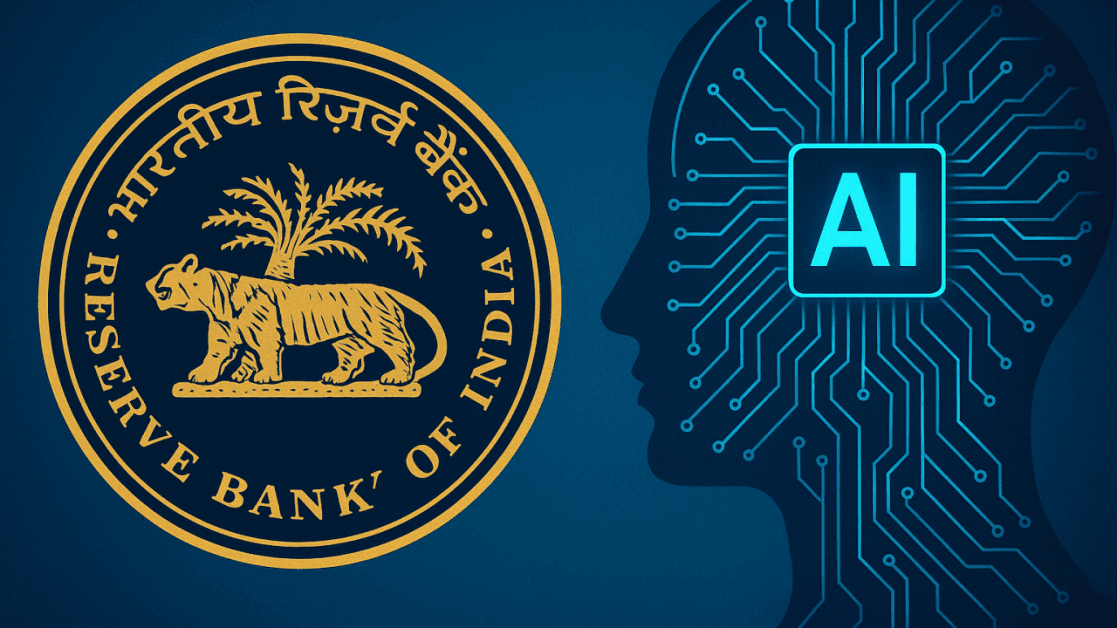
How Artificial Intelligence is Reshaping India's Banking, Insurance and Enterprise Sectors
From real-time fraud detection to automated claims and conversational payments, AI is rewiring India's financial sector — even as the RBI and IRDAI race to write the rules.
By Naina, 29th June 2026
Artificial intelligence is reshaping India's banking, insurance, and enterprise sectors, moving from pilots and chatbots toward core functions like fraud detection, underwriting, and risk management. Banks are deploying AI to catch payment fraud in real time and streamline regulatory checks, insurers are automating claims and detecting fraudulent applications, and enterprises across industries are embedding AI into operations and customer service. As adoption deepens, regulators including the Reserve Bank of India and the insurance authority IRDAI are racing to build governance frameworks. The result is a financial sector being rewired for speed and efficiency, alongside an urgent push to manage the risks that come with it.
The transformation reflects both opportunity and caution. India's data-rich, digitally connected financial system is fertile ground for AI, which can analyse vast volumes of structured and unstructured information to make faster, smarter decisions. Globally, AI is projected to save the banking industry hundreds of billions of dollars. Yet the technology raises hard questions about bias, liability, and explainability, especially in decisions that affect people's loans, claims, and money. Here is how AI is changing each sector and how India is trying to govern it.
The Banking Transformation
Banking has been a pioneer of AI adoption in India. The technology now spans all three layers of a bank: the front office for conversational, AI-powered customer service, the middle office for fraud prevention and regulatory checks, and the back office for underwriting and processing. Lenders use AI to detect payment fraud and strengthen anti-money-laundering and know-your-customer compliance. A planned move to bring AI-powered conversational payments to the UPI network could add a new security layer to digital transactions. Major banks have deployed AI, machine learning, and analytics to expand products and improve service, building modern data platforms to support it.
The Fraud and Risk Frontier
Fraud detection has emerged as AI's most valuable application in finance. Traditional rule-based systems struggle to catch sophisticated, evolving fraud, whereas AI models analyse many signals at once to flag suspicious activity in real time, cutting losses and building trust. The same capability strengthens credit underwriting, where AI assesses risk using far more data than manual reviews, and compliance monitoring, where it automates anti-money-laundering and regulatory checks. As digital payments scale rapidly, real-time AI-driven fraud and risk management has become a strategic priority for banks, non-bank lenders, and payment providers alike.
The Insurance Overhaul
Insurance is undergoing its own AI shift, though it started later. Much current use centres on customer service and chatbots, but the frontier is moving into core functions: claims processing, fraud detection, and underwriting, where automated decisions carry real consequences. AI can speed up claims, spot fraudulent applications, and price risk more accurately. Recognising the stakes, the insurance regulator has moved decisively, forming a working group in June 2026 to design the sector's first formal AI governance framework within three months, with explicit attention to claims and fraud, the functions where scrutiny is expected to land first.
The Enterprise Spread
Beyond financial services, AI is spreading across India's broader enterprise landscape. Companies in retail, manufacturing, healthcare, and logistics are embedding AI into operations, customer engagement, and decision-making, with a majority of large Indian enterprises now using the technology in some form. Global capability centres based in India are going AI-native, applying it to finance, operations, and cybersecurity for multinational parents. This enterprise-wide adoption both drives demand for AI services and normalises the technology across the economy, making financial services one part of a much wider transformation in how Indian organisations work.
The Regulatory Response
With adoption accelerating, regulators are stepping in. The Reserve Bank has introduced a framework for the responsible and ethical use of AI in finance, emphasising transparency, explainability, bias checks, human oversight of critical decisions, and robust documentation. The insurance regulator is building its own governance framework focused on auditable, ethical AI. Overarching these is the Digital Personal Data Protection Act, which makes data privacy central to any AI deployment. Regulators have favoured sandbox approaches to test innovations safely, but recent moves suggest they are prepared to turn guidance into binding obligation quickly.
The Talent and Data Challenge
Realising AI's promise depends on people and data. Industry experts consistently flag a shortage of AI skills and expertise as a leading constraint, a gap sharpened as regulators demand in-house capability to demonstrate compliance with governance and audit requirements. Global demand for AI talent in insurance alone has surged. Equally important is data: AI's effectiveness hinges on the quality, availability, and literacy around data within institutions. Uneven digital literacy and connectivity, with adoption concentrated in urban areas, also shape how widely and equitably AI-driven financial services can reach India's population.
The Risks
The transformation carries real risks. Automated decisions in lending, claims, and fraud can embed bias or produce errors, raising the thorny question of who is liable when an AI system gets it wrong, a concern regulators are now addressing through audit frameworks. The opacity of complex models makes explainability a regulatory priority, especially for decisions affecting customers. There are also competition concerns, as large technology firms with vast data and AI capabilities could dominate financial services, and inclusion risks if AI-driven services bypass less-connected populations. Managing these risks is as important as capturing the benefits.
The Road Ahead
AI is steadily rewiring India's banking, insurance, and enterprise sectors, shifting from experimental tools to core decision-making engines for fraud, risk, claims, and service. The opportunity is substantial, from cost savings and efficiency to better customer experiences and stronger fraud defences. But the pace of adoption is now running alongside a fast-evolving regulatory response designed to ensure AI is transparent, fair, and accountable. The winners will be the institutions that pair innovation with strong governance and talent, deploying AI responsibly enough to earn trust. How India balances this transformation with its safeguards will shape the future of its financial sector. This is analysis, not investment advice.
Frequently Asked Questions
How is AI being used in Indian banking?
Banks use AI across customer service, fraud detection, anti-money-laundering and know-your-customer checks, and underwriting. AI catches payment fraud in real time, and AI-powered conversational payments are planned for the UPI network to add security.
How is AI transforming insurance in India?
Insurers are moving from chatbots toward core functions like claims processing, fraud detection, and underwriting. The regulator, IRDAI, formed a working group in June 2026 to create the sector's first formal AI governance framework within three months.
What is the RBI's FREE-AI framework?
It is the Reserve Bank's framework for the responsible and ethical use of AI in financial services, emphasising transparency, explainability, bias checks, human oversight of critical decisions, and strong documentation and governance.
Why is fraud detection AI's biggest use case?
Traditional rule-based systems struggle with sophisticated fraud, while AI analyses many signals simultaneously to flag suspicious activity in real time, reducing losses and building customer trust as digital payments scale rapidly.
What are the main risks of AI in finance?
Bias and errors in automated decisions, unclear liability when AI makes mistakes, lack of explainability, potential dominance by large tech firms, financial exclusion of less-connected groups, and a shortage of AI skills and quality data.
 Related News
POST A COMMENT (0)
All Comments (0)
Replies (0)