





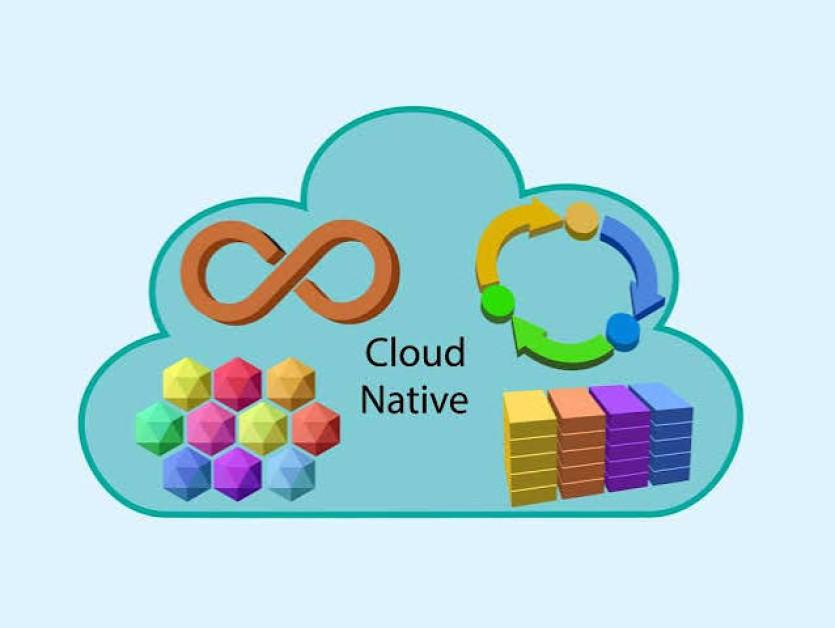
What Is Cloud Native? Principles, Architecture, Benefits and Applications
Cloud native is an approach to designing, building, deploying, and managing software applications specifically for cloud environments. Instead of simply moving traditional applications to the cloud, cloud-native applications are built to fully leverage cloud technologies such as containers, microservices, automation, orchestration, and continuous delivery.
Cloud-native development enables organizations to build highly scalable, resilient, and flexible applications that can adapt quickly to changing business needs.
What Is Cloud Native?

Cloud native is a software development methodology that creates applications optimized to run efficiently in public, private, hybrid, or multi-cloud environments.
How Cloud-Native Applications Work
Cloud-native applications are typically built as a collection of small, independent microservices packaged in containers. These containers are deployed and managed using orchestration platforms such as Kubernetes. Automated pipelines continuously build, test, and deploy updates, while cloud infrastructure dynamically allocates computing resources based on demand.
Why Cloud Native Matters
Cloud-native technologies allow organizations to innovate faster, improve application reliability, reduce operational overhead, and respond quickly to changing customer requirements.
Core Principles of Cloud Native
Cloud-native development follows several important principles.
Microservices Architecture
Applications are divided into independent services that can be developed, deployed, and scaled separately.
Containerization
Applications are packaged with their dependencies into lightweight containers that run consistently across environments.
Dynamic Orchestration
Container orchestration platforms automatically deploy, scale, monitor, and recover application workloads.
Automation
Development, testing, deployment, monitoring, and infrastructure management are automated whenever possible.
Continuous Delivery
Frequent software updates are delivered quickly and reliably through automated deployment pipelines.
Key Components of a Cloud-Native Architecture
Several technologies work together to create cloud-native systems.
Containers
Containers provide portable, isolated environments for running applications.
Kubernetes
Kubernetes automates container deployment, scaling, networking, and lifecycle management.
Microservices
Independent application components communicate through APIs.
APIs
Application Programming Interfaces enable communication between services.
DevOps
Development and operations teams collaborate using automation and continuous integration/continuous delivery (CI/CD) practices.
Cloud Infrastructure
Public, private, or hybrid cloud platforms provide scalable computing, storage, networking, and managed services.
Common Applications of Cloud Native
Cloud-native technologies support many modern workloads.
E-Commerce Platforms
Retail businesses rapidly scale online stores during periods of high demand.
Financial Services
Banks deploy secure, scalable digital banking applications and payment systems.
Streaming Services
Media platforms deliver video, music, and live content to millions of users.
Healthcare
Healthcare providers build secure telemedicine platforms and digital patient services.
Artificial Intelligence
AI applications use cloud-native infrastructure for scalable model training and inference.
Internet of Things (IoT)
Cloud-native platforms process and analyze data generated by millions of connected devices.
Benefits of Cloud Native
Cloud-native development offers many advantages.
Scalability
Applications automatically adjust computing resources based on workload demands.
High Availability
Distributed architectures improve resilience and reduce downtime.
Faster Innovation
Development teams release new features more frequently.
Improved Resource Efficiency
Containers maximize hardware utilization while reducing overhead.
Better Portability
Applications can run across different cloud providers and environments with minimal changes.
Cloud Native vs. Traditional Applications
These approaches differ significantly.
Cloud Native
- Designed specifically for cloud environments.
- Uses containers, microservices, and automation.
- Supports rapid scaling and continuous deployment.
- Highly resilient and modular.
Traditional Applications
- Often built as large, monolithic systems.
- Frequently designed for on-premises infrastructure.
- Typically require more manual deployment and scaling.
- May be harder to update and modernize.
Challenges of Cloud Native
Despite its advantages, cloud-native development introduces several complexities.
Architectural Complexity
Managing many independent services requires careful planning.
Security
Organizations must secure containers, APIs, cloud infrastructure, and software supply chains.
Observability
Monitoring distributed applications requires advanced logging, metrics, and tracing tools.
Skills Requirements
Teams need expertise in containers, Kubernetes, DevOps, cloud platforms, and automation.
Best Practices for Cloud-Native Development
Organizations should follow these recommendations.
Design for Microservices
Break applications into loosely coupled, independently deployable services.
Automate Everything
Implement CI/CD pipelines, infrastructure as code, automated testing, and monitoring.
Secure Every Layer
Protect containers, APIs, identities, and cloud resources using modern security practices.
Monitor Continuously
Track application performance, reliability, resource usage, and security events.
Build for Resilience
Design systems that can tolerate failures and recover automatically.
Future of Cloud Native
Cloud-native development continues to evolve through Artificial Intelligence, serverless computing, edge computing, service meshes, platform engineering, and GitOps. AI-powered operations platforms are increasingly automating deployment decisions, performance optimization, incident detection, and resource management. As organizations continue their digital transformation journeys, cloud-native architecture is expected to remain the preferred approach for building scalable, resilient, and modern software systems.
Conclusion
Cloud native has transformed modern software development by enabling organizations to build applications specifically optimized for cloud environments. Through containers, microservices, Kubernetes, automation, and continuous delivery, cloud-native applications provide greater scalability, resilience, portability, and development speed than traditional architectures. As cloud computing continues to evolve, cloud-native principles will remain central to the future of enterprise software and digital innovation.
 What Is Cloud Native? Complete Guide Explained in Detail FAQs
POST A COMMENT (0)
All Comments (0)
Replies (0)