





What Is a Hybrid Cloud? How It Works, Benefits and Business Applications
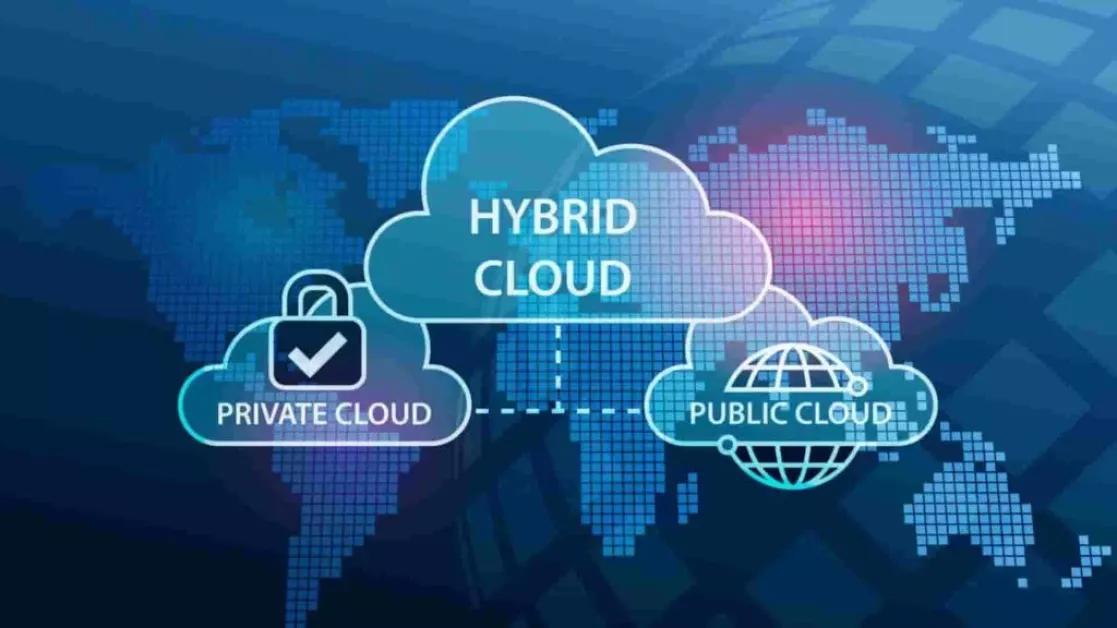
A hybrid cloud is a cloud computing environment that combines private cloud infrastructure, public cloud services, and, in many cases, on-premises data centers into a single integrated system. This approach allows organizations to run workloads where they make the most sense while enabling data and applications to move between environments when appropriate.
Hybrid cloud has become a popular strategy for organizations seeking the flexibility of public cloud services while maintaining greater control over sensitive data, business-critical applications, or regulatory requirements.
What Is a Hybrid Cloud?

A hybrid cloud is an IT architecture that integrates private cloud resources with public cloud services, allowing them to operate together as a unified computing environment.
How a Hybrid Cloud Works
Organizations connect private infrastructure and public cloud platforms using secure networking technologies. Applications and data can remain in a private environment, run in the public cloud, or move between the two depending on business requirements. Centralized management tools help monitor workloads, automate resource allocation, and maintain consistent security policies across environments.
Why Hybrid Cloud Matters
Hybrid cloud provides organizations with greater flexibility, improved scalability, stronger business continuity, and better control over where data and applications are hosted.
Key Components of a Hybrid Cloud
Several technologies work together to create a hybrid cloud.
Private Cloud
Dedicated infrastructure used by a single organization for greater control, security, and customization.
Public Cloud
Cloud services provided over the internet by third-party providers, offering scalable computing, storage, and networking resources.
On-Premises Infrastructure
Many hybrid environments continue to use existing local servers and data centers alongside cloud resources.
Secure Connectivity
Virtual private networks (VPNs), dedicated network connections, and encrypted communication securely connect different environments.
Centralized Management
Cloud management platforms help monitor workloads, automate operations, and enforce consistent policies.
Common Hybrid Cloud Use Cases
Hybrid cloud supports many business scenarios.
Data Protection
Sensitive information remains in private environments while less sensitive workloads use public cloud services.
Disaster Recovery
Organizations replicate data and applications across multiple environments to improve resilience.
Cloud Bursting
Applications temporarily use additional public cloud resources during periods of unusually high demand.
Application Modernization
Legacy applications remain on-premises while newer cloud-native applications run in the public cloud.
Development and Testing
Development environments often use public cloud infrastructure while production systems remain private or hybrid.
Regulatory Compliance
Organizations can store regulated data in private infrastructure while benefiting from public cloud scalability.
Benefits of Hybrid Cloud
Hybrid cloud provides numerous advantages.
Greater Flexibility
Organizations choose the most appropriate environment for each application or workload.
Improved Scalability
Public cloud resources can be added quickly when demand increases.
Better Cost Optimization
Businesses can balance capital investment with pay-as-you-go cloud services.
Enhanced Security
Sensitive workloads remain under tighter organizational control while leveraging cloud innovation where appropriate.
Business Continuity
Hybrid architectures improve resilience through distributed infrastructure and disaster recovery capabilities.
Hybrid Cloud vs. Multi-Cloud
These terms are related but different.
Hybrid Cloud
Combines private cloud infrastructure with one or more public cloud environments, often integrating on-premises systems.
Multi-Cloud
Uses services from multiple public cloud providers, regardless of whether a private cloud is involved.
An organization can use both strategies simultaneously—for example, operating a hybrid cloud that includes multiple public cloud providers.
Challenges of Hybrid Cloud
Despite its benefits, hybrid cloud introduces several complexities.
Integration
Connecting applications, databases, and networks across different environments requires careful planning.
Security Management
Organizations must maintain consistent security policies across multiple platforms.
Operational Complexity
Managing diverse infrastructure increases administrative responsibilities.
Data Movement
Transferring large datasets between environments may affect performance and incur additional costs.
Skills Requirements
IT teams need expertise in cloud architecture, networking, security, and automation.
Best Practices for Hybrid Cloud
Organizations should follow these recommendations.
Develop a Cloud Strategy
Define business objectives and determine which workloads belong in each environment.
Secure Every Environment
Use encryption, identity management, Multi-Factor Authentication (MFA), and network segmentation consistently.
Automate Operations
Implement automation for deployment, monitoring, scaling, and policy enforcement.
Monitor Performance
Track workloads, costs, availability, and resource utilization across all environments.
Plan for Disaster Recovery
Maintain tested backup and recovery procedures across private and public cloud resources.
Future of Hybrid Cloud
Hybrid cloud continues to evolve through Artificial Intelligence, edge computing, containerization, Kubernetes, automation, and unified cloud management platforms. AI-powered cloud management systems increasingly optimize workload placement, predict resource needs, improve security monitoring, and automate infrastructure operations. As organizations pursue digital transformation while maintaining flexibility and compliance, hybrid cloud is expected to remain a preferred architecture for enterprise IT.
Conclusion
Hybrid cloud combines the strengths of private infrastructure and public cloud services, giving organizations greater flexibility, scalability, security, and operational efficiency. By allowing workloads to run in the most appropriate environment while maintaining centralized management, hybrid cloud helps businesses modernize IT without abandoning existing investments. As cloud technologies continue to advance, hybrid cloud will remain a key strategy for building resilient, secure, and future-ready digital infrastructure.
 What Is a Hybrid Cloud? Complete Guide Explained in Detail FAQs
POST A COMMENT (0)
All Comments (0)
Replies (0)