





What Is a GPU? How It Works, Types, Benefits and Applications
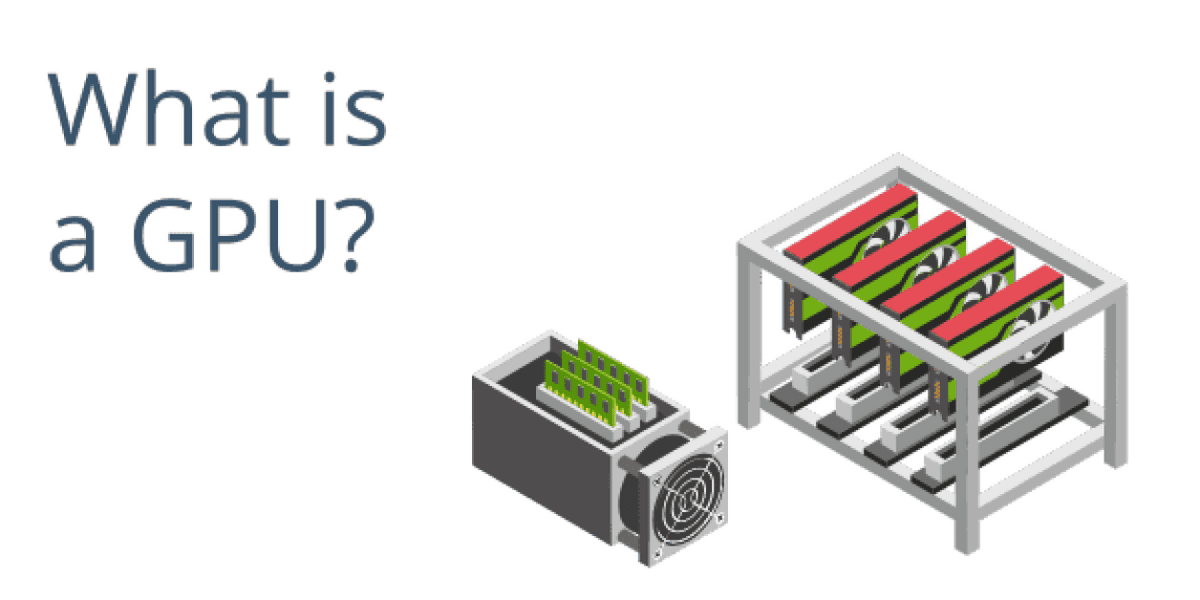
A Graphics Processing Unit (GPU) is a specialized processor designed to perform many calculations simultaneously. Originally developed to render graphics and images for computers and video games, GPUs have evolved into powerful processors that also accelerate Artificial Intelligence (AI), machine learning, scientific computing, video editing, cryptocurrency, and high-performance computing (HPC).
Today, GPUs play a critical role in modern data centers, cloud computing, gaming PCs, workstations, smartphones, and AI infrastructure.
What Is a GPU?

A GPU is a processor optimized for parallel computing, allowing thousands of calculations to be performed at the same time. This makes it highly effective for graphics rendering and workloads that involve processing large amounts of data simultaneously.
How a GPU Works
Unlike a CPU, which is optimized for executing a smaller number of complex tasks sequentially, a GPU contains hundreds or even thousands of smaller processing cores that work together in parallel. These cores rapidly process graphics, mathematical operations, AI models, and other data-intensive tasks before sending results to the display or other computing systems.
Why GPUs Matter
GPUs significantly improve performance for applications that require massive parallel processing, making modern gaming, AI development, scientific simulations, and professional content creation possible.
Key Components of a GPU
Several hardware components work together inside a GPU.
Processing Cores
Thousands of small cores execute calculations simultaneously for high-performance parallel computing.
Graphics Memory (VRAM)
Dedicated high-speed memory stores textures, images, videos, AI models, and graphics data needed during processing.
Memory Controller
Manages communication between GPU cores and graphics memory.
Cooling System
Fans, heat sinks, or liquid cooling systems dissipate heat generated during intensive workloads.
Display Interfaces
Ports such as HDMI, DisplayPort, or USB-C connect the GPU to monitors and other display devices.
Types of GPUs
Different GPUs are designed for different purposes.
Integrated GPU
Built into the CPU or system-on-chip (SoC), integrated GPUs share system memory and are suitable for everyday computing, video playback, and light gaming.
Dedicated (Discrete) GPU
A separate graphics processor with its own VRAM, providing significantly higher performance for gaming, creative workloads, and AI.
Workstation GPU
Designed for professional applications such as engineering, computer-aided design (CAD), scientific visualization, and 3D rendering.
Data Center GPU
Optimized for AI training, cloud computing, machine learning, high-performance computing, and large-scale data processing.
Common Applications of GPUs
GPUs support many industries and workloads.
Gaming
Render realistic graphics, lighting, shadows, and visual effects at high frame rates.
Artificial Intelligence
Accelerate machine learning training, inference, deep learning, and generative AI models.
Video Editing
Speed up video rendering, encoding, decoding, and visual effects processing.
Scientific Research
Support simulations, weather forecasting, molecular modeling, and complex mathematical analysis.
Engineering and Design
Enable 3D modeling, computer-aided design (CAD), architectural visualization, and digital twins.
Cryptocurrency
Some cryptocurrencies have historically used GPUs for mining because of their parallel processing capabilities, although mining methods vary by cryptocurrency.
Benefits of GPUs
GPUs offer several important advantages.
Massive Parallel Processing
Thousands of cores handle many operations simultaneously.
Faster AI Processing
GPUs significantly reduce training time for machine learning and deep learning models.
Improved Graphics
Deliver realistic visual effects and high-resolution gaming experiences.
Accelerated Creative Workflows
Improve performance for animation, rendering, photo editing, and video production.
High-Performance Computing
Support complex scientific and engineering workloads that require enormous computational power.
GPU vs. CPU
Although both are processors, they are optimized for different workloads.
GPU
- Designed for parallel processing.
- Contains hundreds or thousands of processing cores.
- Excels at graphics rendering, AI, and scientific computing.
- Processes many tasks simultaneously.
CPU
- Designed for general-purpose computing.
- Contains fewer but more powerful cores.
- Excels at operating system functions, application logic, and sequential processing.
- Handles a wide variety of computing tasks efficiently.
In most modern systems, CPUs and GPUs work together, with each handling the workloads it is best suited for.
Challenges of GPUs
Despite their capabilities, GPUs have several considerations.
High Power Consumption
Powerful GPUs may require substantial electricity under heavy workloads.
Heat Generation
Intensive processing generates significant heat, requiring effective cooling solutions.
Cost
High-performance gaming and AI GPUs can be expensive.
Software Compatibility
Applications must be optimized to fully utilize GPU acceleration.
Best Practices for Using GPUs
Users and organizations should follow these recommendations.
Choose the Right GPU
Select hardware based on gaming, AI, professional design, or scientific computing requirements.
Keep Drivers Updated
Install the latest graphics drivers for improved performance, compatibility, and security.
Maintain Cooling
Ensure proper airflow and clean cooling systems regularly.
Monitor Performance
Track temperature, memory usage, and processing workloads to maintain system stability.
Match Hardware Requirements
Pair the GPU with an appropriate CPU, memory, storage, and power supply to avoid performance bottlenecks.
Future of GPU Technology
GPU technology continues to evolve through Artificial Intelligence, chiplet architectures, high-bandwidth memory, cloud computing, and advanced semiconductor manufacturing. Modern GPUs increasingly include dedicated AI acceleration hardware for generative AI, computer vision, robotics, and autonomous systems. As AI adoption expands across industries, GPUs are expected to remain one of the most important technologies powering data centers, cloud platforms, scientific research, gaming, and next-generation computing.
Conclusion
The Graphics Processing Unit has evolved far beyond graphics rendering to become one of the most important processors in modern computing. By delivering massive parallel processing capabilities, GPUs accelerate gaming, Artificial Intelligence, scientific research, video production, engineering, and cloud computing. As digital workloads become increasingly data-intensive, GPUs will continue to play a central role in driving innovation across virtually every technology sector.
 What Is a GPU? Complete Guide Explained in Details FAQs
POST A COMMENT (0)
All Comments (0)
Replies (0)