





What Is a Content Delivery Network (CDN)? How It Works, Benefits and Applications
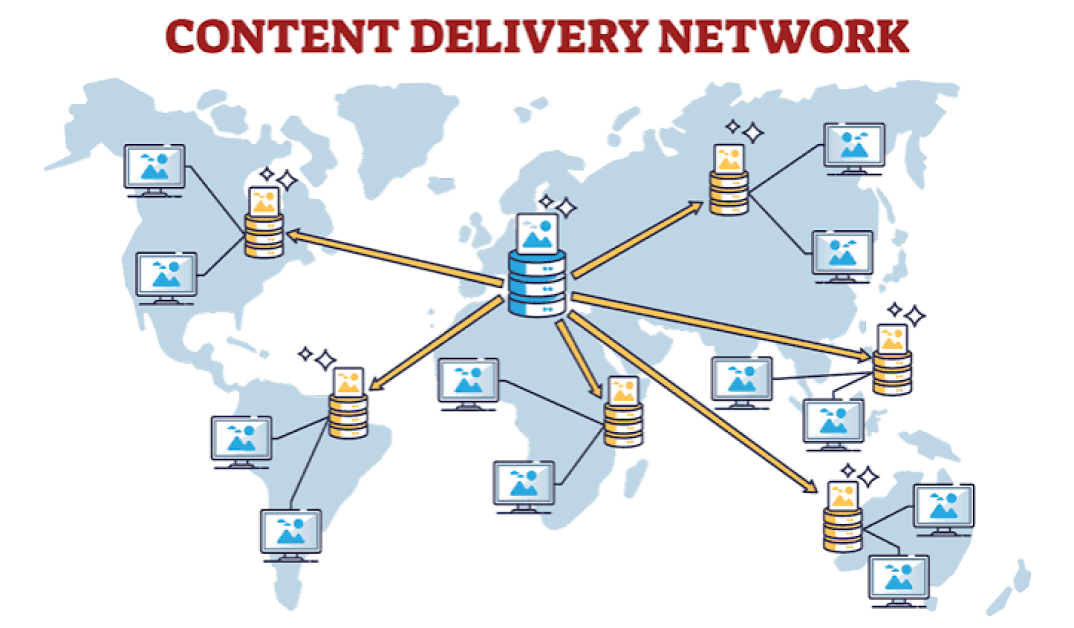
A Content Delivery Network (CDN) is a globally distributed network of servers that delivers website content, images, videos, software, and other digital assets to users from locations that are geographically closer to them. Instead of sending every request to a single origin server, a CDN serves cached content from nearby edge servers, reducing loading times, improving reliability, and enhancing the overall user experience.
Today, CDNs power many of the world's largest websites, streaming platforms, e-commerce stores, cloud applications, online gaming services, and news portals.
What Is a Content Delivery Network (CDN)?

A Content Delivery Network (CDN) is a distributed infrastructure of edge servers that stores and delivers copies of website content from locations closer to users, improving speed and reducing network latency.
How a CDN Works
When a user visits a website, the CDN identifies the nearest edge server that has a cached copy of the requested content. Instead of retrieving static files directly from the origin server every time, the CDN serves them from the closest available location. If the requested content is not already cached, the CDN retrieves it from the origin server, stores it temporarily, and delivers it to the user.
Why CDNs Matter
As websites attract visitors from different regions of the world, delivering all content from a single server can increase loading times and place unnecessary strain on the origin infrastructure. CDNs improve performance by distributing content across multiple geographic locations.
Key Components of a CDN
Several technologies work together to improve content delivery.
Edge Servers
Edge servers are strategically located around the world to serve cached content with minimal delay.
Origin Server
The origin server stores the original website files and provides content to CDN edge servers when necessary.
Caching
Frequently requested files such as images, videos, stylesheets, JavaScript, and documents are temporarily stored on edge servers.
Load Balancing
Traffic is distributed across multiple servers to improve performance and reduce congestion.
DNS Routing
The Domain Name System (DNS) directs users to the most appropriate CDN server based on factors such as geographic location and network conditions.
Types of Content Delivered by a CDN
CDNs accelerate many kinds of digital content.
Website Pages
Frequently accessed web pages load faster through cached delivery.
Images
Photos, graphics, and icons are delivered from nearby servers to improve page speed.
Videos
Streaming platforms use CDNs to deliver high-quality video content with reduced buffering.
Software Downloads
Applications, updates, and installation files can be distributed efficiently to users worldwide.
Static Assets
CSS files, JavaScript, fonts, and other static resources are commonly cached by CDNs.
Benefits of Using a CDN
CDNs provide numerous advantages.
Faster Website Performance
Serving content from nearby edge servers reduces latency and improves page loading times.
Better User Experience
Faster websites improve visitor satisfaction and can reduce bounce rates.
Improved Scalability
CDNs help websites handle traffic spikes by distributing requests across many servers.
Higher Availability
Multiple edge locations improve resilience if one server or region experiences issues.
Reduced Bandwidth Usage
Cached content decreases the number of requests sent to the origin server, lowering bandwidth consumption.
Security Features of a CDN
Modern CDNs provide several security capabilities.
DDoS Protection
Many CDNs help absorb and filter malicious traffic generated during Distributed Denial-of-Service (DDoS) attacks.
Web Application Firewall (WAF)
Some CDN services include a WAF to help block common web-based attacks.
HTTPS Support
CDNs support secure encrypted connections using SSL/TLS certificates.
Bot Management
Advanced CDNs can identify and mitigate unwanted automated traffic while allowing legitimate users and approved bots.
Traffic Monitoring
CDNs provide analytics and monitoring to help identify performance issues and suspicious activity.
Common Applications of CDNs
CDNs are used across many industries.
E-Commerce
Online stores use CDNs to deliver product images, catalogs, and shopping experiences quickly.
Media and Streaming
Streaming services distribute videos, music, and live broadcasts to global audiences.
Online Gaming
Game developers use CDNs to deliver game updates, downloadable content, and multimedia assets efficiently.
News Websites
News organizations improve page speed and handle high traffic during breaking news events.
Cloud Applications
Software-as-a-Service (SaaS) platforms use CDNs to improve application performance for users worldwide.
Challenges of Using a CDN
Although CDNs provide many benefits, they also present some considerations.
Dynamic Content
Frequently changing or personalized content may not benefit from caching as much as static resources.
Cache Management
Organizations must configure cache rules carefully to ensure users receive current content when needed.
Service Costs
Large-scale CDN usage may increase operational costs depending on traffic volume and service features.
Configuration Complexity
Proper integration with websites, applications, and security settings requires planning and ongoing management.
Best Practices for CDN Implementation
Organizations should follow these recommendations.
Cache Static Content
Store images, videos, stylesheets, and JavaScript files on edge servers to maximize performance gains.
Enable HTTPS
Use encrypted connections to protect data transmitted between users and CDN servers.
Monitor Performance
Regularly review CDN analytics to optimize cache efficiency, latency, and content delivery.
Configure Cache Policies
Define appropriate cache expiration rules based on how frequently content changes.
Combine CDN with Security Tools
Use CDNs alongside Web Application Firewalls (WAFs), DDoS protection, and continuous monitoring to strengthen website security.
Future of Content Delivery Networks
Content Delivery Networks continue to evolve through Artificial Intelligence, edge computing, 5G, serverless edge functions, and intelligent traffic routing. AI-powered CDNs can optimize caching strategies, detect anomalies, and route traffic dynamically for improved performance. As video streaming, cloud gaming, AI applications, and global web services continue to grow, CDNs will remain a critical part of the internet's infrastructure.
Conclusion
A Content Delivery Network (CDN) is an essential technology for improving website performance, scalability, reliability, and security. By delivering content from geographically distributed edge servers, CDNs reduce latency, accelerate page loading, and help websites serve users around the world more efficiently. Whether supporting e-commerce platforms, streaming services, enterprise applications, or news websites, CDNs play a vital role in today's digital ecosystem.
 What Is a Content Delivery Network (CDN)? Complete Guide FAQs
POST A COMMENT (0)
All Comments (0)
Replies (0)