





What Is a CPU? How It Works, Components and Why It Matters
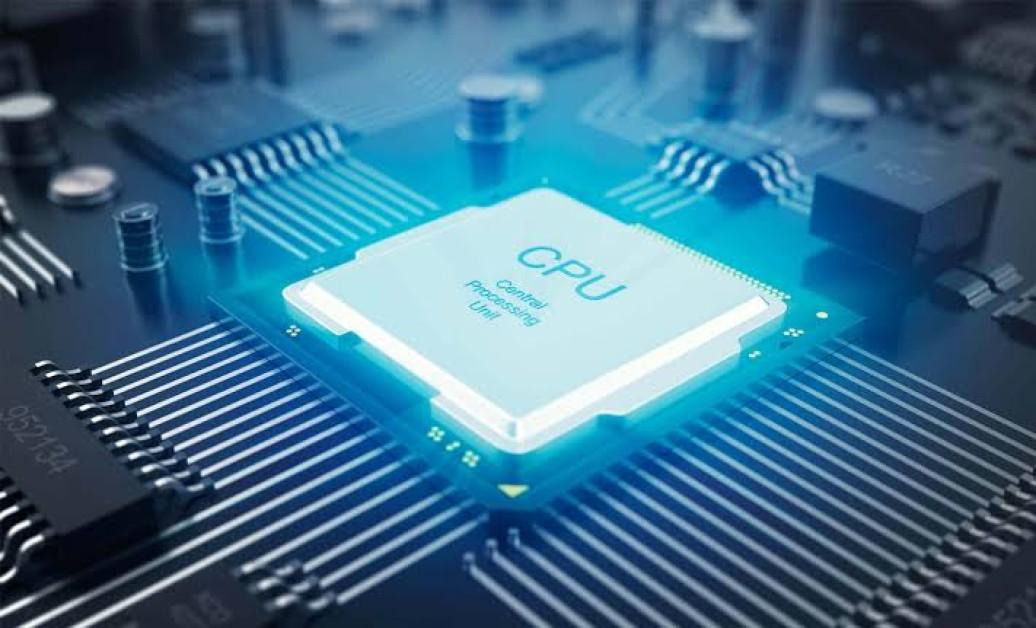
A Central Processing Unit (CPU) is the primary processor of a computer, responsible for executing instructions, performing calculations, and coordinating the activities of hardware and software. Often referred to as the "brain of the computer," the CPU processes billions of instructions every second, enabling everything from opening applications and browsing the internet to running games and Artificial Intelligence (AI) workloads.
Every desktop computer, laptop, smartphone, tablet, server, and many smart devices contain one or more processors that power their daily operations.
What Is a CPU?

A CPU is an electronic processor that interprets and executes program instructions while managing communication between a computer's memory, storage, and input/output devices.
How a CPU Works
When you launch a program or perform an action, instructions are loaded into memory (RAM). The CPU repeatedly performs a cycle known as fetch, decode, and execute:
- Fetch: Retrieves an instruction from memory.
- Decode: Determines what the instruction means.
- Execute: Performs the required operation and stores the result.
This process occurs millions or billions of times every second, allowing computers to perform complex tasks rapidly.
Why CPUs Matter
Without a CPU, a computer cannot process instructions or run software. The processor determines much of a device's overall performance, responsiveness, and ability to handle multiple tasks simultaneously.
Key Components of a CPU
A modern CPU consists of several important parts.
Arithmetic Logic Unit (ALU)
Performs mathematical calculations and logical operations.
Control Unit (CU)
Directs the flow of instructions between the CPU, memory, and other hardware components.
Registers
Small, ultra-fast storage locations that temporarily hold data and instructions currently being processed.
Cache Memory
High-speed memory located inside or near the CPU that stores frequently accessed data, reducing the need to retrieve information from slower system memory.
Cores
Modern processors contain multiple processing cores, allowing several tasks to run simultaneously.
Important CPU Specifications
Several specifications help determine processor performance.
Clock Speed
Measured in gigahertz (GHz), clock speed indicates how many processing cycles a CPU performs each second. Higher clock speeds generally improve performance, although architecture also plays a significant role.
Number of Cores
More CPU cores allow better multitasking and improved performance in applications optimized for parallel processing.
Threads
Many processors support simultaneous multithreading, enabling each core to handle multiple instruction threads more efficiently.
Cache Size
Larger cache memory can improve performance by reducing access to slower system memory.
Thermal Design Power (TDP)
TDP estimates the amount of heat a processor generates under typical workloads, influencing cooling requirements and power consumption.
Types of CPUs
Different processors are designed for different devices and workloads.
Desktop CPUs
Optimized for personal computers, offering a balance of performance and power efficiency.
Laptop CPUs
Designed to deliver strong performance while minimizing energy consumption to extend battery life.
Server CPUs
Built for enterprise workloads, supporting large memory capacities, many cores, and continuous operation.
Mobile Processors
Integrated into smartphones and tablets, focusing on power efficiency and compact design.
Embedded Processors
Used in vehicles, industrial systems, medical devices, household appliances, and Internet of Things (IoT) devices.
Common Applications of CPUs
CPUs power nearly every aspect of modern computing.
Personal Computing
Run operating systems, office software, web browsers, and multimedia applications.
Gaming
Handle game logic, physics calculations, artificial intelligence, and communication with graphics processors.
Business Applications
Process enterprise software, databases, accounting systems, and productivity tools.
Artificial Intelligence
Support machine learning, inference tasks, and AI-assisted computing, often working alongside Graphics Processing Units (GPUs).
Cloud Computing
Power virtual machines, cloud services, web applications, and enterprise infrastructure.
Benefits of Modern CPUs
Modern processors offer many advantages.
Faster Performance
Advanced architectures execute more instructions in less time.
Improved Multitasking
Multiple cores allow users to run several applications simultaneously.
Better Energy Efficiency
Modern processors deliver higher performance while reducing power consumption.
Enhanced Security
Many CPUs include hardware-based security features that help protect sensitive information.
AI Acceleration
Some modern processors include dedicated hardware to improve AI and machine learning performance.
Challenges of CPU Technology
Despite continuous improvements, CPUs face several challenges.
Heat Generation
High-performance processors require effective cooling systems.
Power Consumption
Powerful CPUs may consume significant electricity under heavy workloads.
Performance Limits
Increasing clock speeds indefinitely is difficult because of heat and physical design constraints.
Software Optimization
Applications must be designed to fully utilize multiple cores and modern processor features.
CPU vs. GPU
Although both process data, they serve different purposes.
CPU
- Designed for general-purpose computing.
- Handles a wide variety of tasks and operating system functions.
- Optimized for sequential and complex instruction processing.
GPU
- Designed for highly parallel processing.
- Excels at graphics rendering, scientific computing, and many AI workloads.
- Contains hundreds or thousands of smaller processing cores for handling many operations simultaneously.
Many modern systems use both CPUs and GPUs together to maximize performance.
Best Practices for Maintaining CPU Performance
Users should follow these recommendations.
Keep Software Updated
Install operating system and driver updates to improve performance and security.
Maintain Proper Cooling
Ensure adequate airflow and clean dust from cooling systems regularly.
Monitor CPU Usage
Identify applications consuming excessive processing resources.
Avoid Overheating
Use appropriate cooling solutions during demanding workloads.
Choose the Right Processor
Select a CPU based on intended use, such as gaming, content creation, business applications, or servers.
Future of CPU Technology
CPU technology continues to advance through smaller semiconductor manufacturing processes, Artificial Intelligence acceleration, chiplet architectures, energy-efficient designs, and tighter integration with GPUs and specialized processors. Modern CPUs increasingly include dedicated AI engines capable of accelerating machine learning tasks directly on devices, while improvements in multi-core architectures continue to enhance performance for cloud computing, gaming, scientific research, and enterprise applications.
Conclusion
The Central Processing Unit is the core component that enables computers and smart devices to execute instructions, process information, and run applications efficiently. From personal computers and smartphones to cloud data centers and AI systems, CPUs remain fundamental to modern computing. As processor technology continues to evolve, CPUs will deliver greater performance, improved energy efficiency, and enhanced capabilities for the next generation of digital innovation.
 What Is a CPU? Complete Guide Explained in Details FAQs
POST A COMMENT (0)
All Comments (0)
Replies (0)