





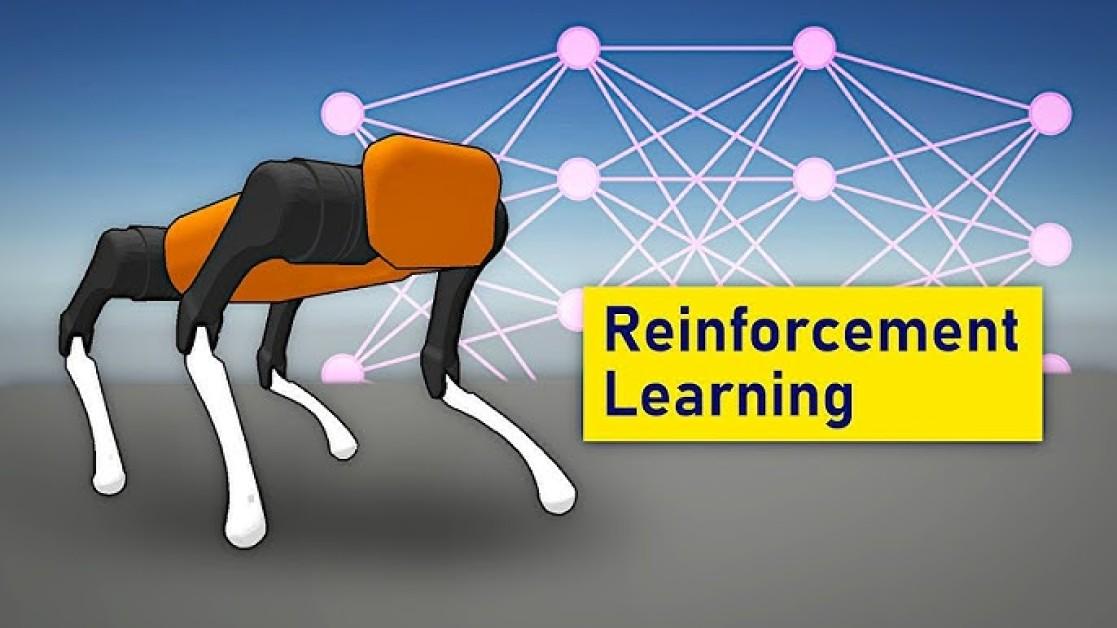
Reinforcement Learning Explained: How It Works, Applications and Benefits
Reinforcement Learning (RL) is a branch of Machine Learning in which an intelligent system learns by interacting with its environment and receiving rewards or penalties based on its actions. Instead of learning from labeled datasets, Reinforcement Learning improves through trial and error, continuously refining its decisions to maximize long-term rewards. This learning approach powers many advanced AI applications, including robotics, autonomous vehicles, game-playing systems, industrial automation, and resource optimization. As Artificial Intelligence continues to evolve, Reinforcement Learning has become a key technology for solving complex decision-making problems.
What Is Reinforcement Learning?
Reinforcement Learning is a Machine Learning technique where an AI agent learns the best actions to take by interacting with an environment. Every action produces feedback in the form of rewards or penalties, helping the agent gradually identify the most effective strategy.
How Reinforcement Learning Works
A Reinforcement Learning model consists of an agent, an environment, actions, rewards, and a learning policy. The agent performs actions within the environment, receives feedback, and continuously updates its decision-making strategy to maximize cumulative rewards over time.
Why Reinforcement Learning Matters
Unlike traditional Machine Learning methods, Reinforcement Learning allows AI systems to make sequential decisions in dynamic environments. This makes it highly effective for applications where outcomes depend on a series of actions rather than a single prediction.
Key Components of Reinforcement Learning
Several core elements work together to enable Reinforcement Learning systems to improve their performance.
Agent and Environment
The agent is the AI system making decisions, while the environment represents the situation in which those decisions are made. The interaction between the two forms the basis of learning.
Reward Function
The reward function provides feedback after every action. Positive rewards encourage desirable behavior, while penalties discourage poor decisions, enabling the model to learn optimal strategies.
Policy and Value Function
A policy determines how the agent chooses actions, while the value function estimates the long-term benefit of particular actions or states, helping optimize future decisions.
Applications of Reinforcement Learning
Reinforcement Learning is increasingly used across industries that require intelligent decision-making and continuous optimization.
Robotics
Robots use Reinforcement Learning to improve movement, object handling, navigation, and task execution through repeated interactions with their environments.
Autonomous Vehicles
Self-driving systems apply Reinforcement Learning to make driving decisions, avoid obstacles, optimize routes, and improve vehicle control under changing road conditions.
Gaming
Reinforcement Learning has enabled AI systems to master complex games by learning winning strategies through millions of simulated interactions.
Industrial Automation
Manufacturers use Reinforcement Learning to optimize production processes, energy consumption, warehouse operations, and supply chain efficiency.
Benefits of Reinforcement Learning
Reinforcement Learning offers several advantages for organizations developing intelligent AI systems.
Continuous Learning
AI agents continuously improve their performance through experience, enabling better decision-making without requiring manually labeled datasets.
Better Decision-Making
Reinforcement Learning is highly effective for solving complex sequential problems where each decision influences future outcomes.
Adaptability
RL models can adapt to changing environments, making them suitable for dynamic applications such as robotics, finance, logistics, and autonomous systems.
Challenges of Reinforcement Learning
Despite its potential, Reinforcement Learning presents several implementation challenges.
High Computational Requirements
Training Reinforcement Learning models often requires extensive computing resources and millions of interactions before achieving reliable performance.
Long Training Time
Complex environments may require significant time for AI agents to learn effective strategies, especially when rewards are delayed or difficult to define.
Safety and Reliability
In real-world applications, poorly trained agents may make incorrect decisions. Careful testing, monitoring, and validation are essential before deployment.
Future of Reinforcement Learning
Reinforcement Learning is expected to play an increasingly important role in the future of Artificial Intelligence. Advances in computing power, simulation environments, and deep learning techniques are expanding its capabilities across robotics, autonomous transportation, finance, healthcare, industrial automation, and scientific research. As organizations seek more adaptive and autonomous AI systems, Reinforcement Learning is likely to become a core technology for intelligent decision-making.
Conclusion
Reinforcement Learning represents one of the most advanced approaches within Machine Learning, enabling AI systems to learn through experience and improve their performance over time. Its ability to solve complex decision-making problems makes it valuable across industries ranging from robotics and autonomous vehicles to manufacturing and finance. As AI technology continues to advance, Reinforcement Learning is expected to drive the next generation of intelligent, adaptive, and autonomous systems.
 Reinforcement Learning Explained: Uses & Benefits | NEX NEWS FAQs
POST A COMMENT (0)
All Comments (0)
Replies (0)