





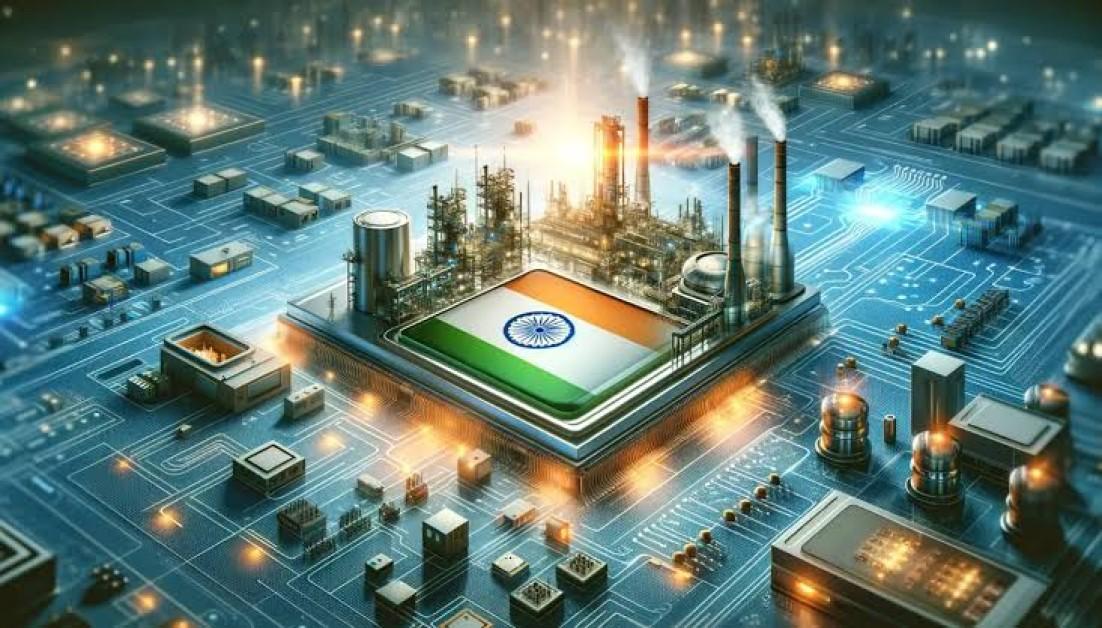
Electronics & Semiconductor Manufacturing in India
From a $125 billion electronics base to its first wafer fab at Dholera, operational packaging plants, and a 2nm design tape-out, India's chip ambitions are moving from policy to production — one mature-node chip at a time.
By Naina, 7th July 2026
Electronics and semiconductor manufacturing has become a strategic priority for India, as the country moves from assembling devices to building the chips that power them. Having grown its electronics sector roughly sixfold over the past decade to around $125 billion, India is now channelling major investment and policy support into semiconductors, the foundational technology behind all modern electronics. Under a dedicated national mission, the country is establishing its first wafer fabrication plants, packaging and testing facilities, and design capabilities, with several projects already operational and its first commercial chip fab under construction. Driven by government incentives, global supply-chain shifts, and rising demand, India is positioning itself as an emerging hub in the global electronics and semiconductor value chain, though significant challenges remain on the path to self-reliance.
The push comes at a pivotal moment for global chip supply chains, which are being reshaped by geopolitical tensions and a drive for resilience beyond concentrated hubs like Taiwan. India, with its deep engineering talent, large market, and non-aligned positioning, has attracted global chipmakers and packaging firms, backed by substantial state subsidies. In 2026, the country's semiconductor ambition has moved decisively from policy documents to construction sites and operational facilities, marking a genuine inflection point. Here is a detailed look at India's electronics and semiconductor manufacturing landscape, spanning the electronics base, the semiconductor mission, the fabs and packaging plants being built, the design strength, the strategic drivers, and the challenges that lie ahead.
The Electronics Base
India's electronics manufacturing provides the foundation. The sector has grown roughly sixfold over the past decade to around $125 billion, becoming a major export category and making India the world's second-largest smartphone exporter, largely through the assembly of finished products. Government initiatives, chiefly production-linked incentives, have driven this growth, and a components manufacturing scheme, whose budget was significantly raised, now targets the parts and materials that domestic electronics require. This large electronics base creates demand for semiconductors and supports the ecosystem needed for chip manufacturing. However, much of the value in components and chips has historically been imported, and building domestic semiconductor capability is central to deepening India's electronics manufacturing beyond assembly.
The Semiconductor Mission
A dedicated national mission anchors the chip push. Launched in late 2021 with an incentive framework of ₹76,000 crore, the India Semiconductor Mission offers fiscal support of up to 50 percent of project cost for wafer fabrication plants, compound semiconductor units, assembly and testing facilities, and chip design projects. A second phase, introduced in the latest budget with a substantial fresh allocation, shifts the focus from simply attracting factories toward building the entire supporting ecosystem, including domestic manufacturing equipment, specialty materials and chemicals, design intellectual property, supply chains, and research. To date, the mission has approved over a dozen projects across several states, with cumulative investment commitments running to around ₹1.6 lakh crore, reflecting a decisive move from policy intent to physical execution across the country.
The First Fab
India's first commercial wafer fab is taking shape. In Dholera, Gujarat, Tata Electronics is building the country's first modern semiconductor fabrication facility in partnership with Taiwan's Powerchip Semiconductor Manufacturing Corporation, at an investment of around ₹91,000 crore. The plant is designed for a capacity of tens of thousands of wafers per month, producing chips in the mature-to-advanced range that powers automobiles, industrial equipment, display drivers, and connected devices, rather than the cutting-edge nodes used in advanced processors. Construction has reached around half completion, with trial production targeted for late 2026 and full commercial output ramping through the following years. The company has secured critical lithography equipment from the Dutch firm ASML, the world's leading supplier, underscoring the seriousness of the effort to build genuine manufacturing capability.
The Packaging Push
Chip packaging is where India is furthest along. Assembly, testing, marking, and packaging facilities, which form the first scalable layer of a semiconductor ecosystem, are already operational. Micron Technology's packaging plant in Sanand, Gujarat, the first operational facility of the current mission, is assembling and testing memory chips for global markets. Several other packaging and testing units, developed by firms including Tata, Kaynes Semicon, CG Power, and an HCL–Foxconn venture across states such as Gujarat, Assam, and Uttar Pradesh, are coming online or under construction, with some already shipping India's first commercially produced chips. These facilities are creating semiconductor clusters across western, northern, and eastern India, building manufacturing discipline and confidence, and giving the country an immediate foothold in global chip supply chains ahead of full fabrication.
The Design Strength
Chip design is India's established strength. The country already hosts a significant share of the world's semiconductor design workforce, with global chipmakers running major design centres in India for decades. This capability was underscored when Qualcomm, a leading global chip company, completed the design of an extremely advanced chip entirely from its Indian engineering centres, validating the country's ability to work at the cutting edge of design even as its manufacturing focuses on mature nodes. A design-linked incentive scheme supports the development of domestic chips and intellectual property. Since design accounts for a large share of a chip's value, India's strength in this area is a critical asset, complementing its emerging manufacturing capabilities and positioning it across multiple layers of the semiconductor value chain.
The Strategic Drivers
Powerful strategic forces are accelerating the push. Global efforts to diversify semiconductor supply chains away from concentrated locations, amid geopolitical tensions and export controls, have prompted chipmakers to build design and packaging capacity outside traditional hubs, and India offers English-speaking engineering talent, a favourable geopolitical position, and generous subsidies. Concerns over the vulnerability of existing supply routes and manufacturing hubs have reinforced the case for resilience and diversification. Meanwhile, surging global demand for memory and other chips has raised the strategic value of domestic capacity. India's focus on mature-node chips aligns with its own largest sources of demand, in automobiles, phones, and industrial equipment, making its manufacturing build-out both strategically timed and commercially grounded in real market needs.
The Ecosystem Build-Out
Building a full ecosystem is the next frontier. Recognising that fabs and packaging plants depend on a wider network of suppliers, the second phase of the semiconductor mission emphasises developing domestic capabilities in manufacturing equipment, specialty gases and chemicals, substrates, and advanced materials, areas where India currently relies heavily on imports. The expanded components manufacturing scheme complements this by strengthening the upstream supply chain. State governments have added their own incentive packages, including capital subsidies, land support, and utility benefits, to reinforce emerging clusters. The semiconductor sector is projected to generate large numbers of skilled jobs, with a substantial employment multiplier across suppliers and services. This ecosystem approach is essential to building lasting, self-sustaining capability rather than isolated facilities.
The Challenges
Formidable challenges remain on the path ahead. India does not yet have a cutting-edge, sub-7-nanometre fabrication plant, beginning instead with mature nodes, which cover most of the market by volume but not the most advanced chips. Building fabs is among the most technically demanding and capital-intensive industrial undertakings, requiring ultra-clean environments, precise processes, and long lead times, with little tolerance for error. India remains dependent on imported equipment, materials, and specialty inputs, and faces a shortage of experienced manufacturing talent for tasks like yield management, prompting recruitment from abroad. Execution risks and delays could affect timelines, and the country competes with established global giants. Overcoming these challenges will determine how far India's semiconductor ambitions ultimately advance.
The Road Ahead
India's electronics and semiconductor manufacturing sector stands at a genuine turning point, having moved from ambition to operational reality. With packaging plants running, its first fab under construction, strong design capabilities, and a comprehensive policy framework, the country is building a meaningful position in the global chip value chain, starting with the mature nodes its economy most needs. The coming years will be decisive, as the first fab reaches production, the supporting ecosystem develops, and India works to deepen domestic capability and reduce import dependence. If execution keeps pace with ambition, electronics and semiconductor manufacturing could become a cornerstone of India's economy and a pillar of its technological and strategic autonomy, integrating it ever more deeply into resilient global supply chains. This is analysis, not investment advice.
 Electronics & Semiconductor Manufacturing in India FAQs
POST A COMMENT (0)
All Comments (0)
Replies (0)