





How Encryption Works: A Beginner's Guide to Protecting Digital Data
Encryption is a cybersecurity technique that protects digital information by converting readable data into an unreadable format. Only authorized users with the correct cryptographic key can convert the encrypted information back into its original form.
Encryption protects everything from online banking and e-commerce transactions to messaging apps, cloud storage, healthcare records, and government communications. It is one of the most important technologies for maintaining privacy, confidentiality, and digital security.
What Is Encryption?

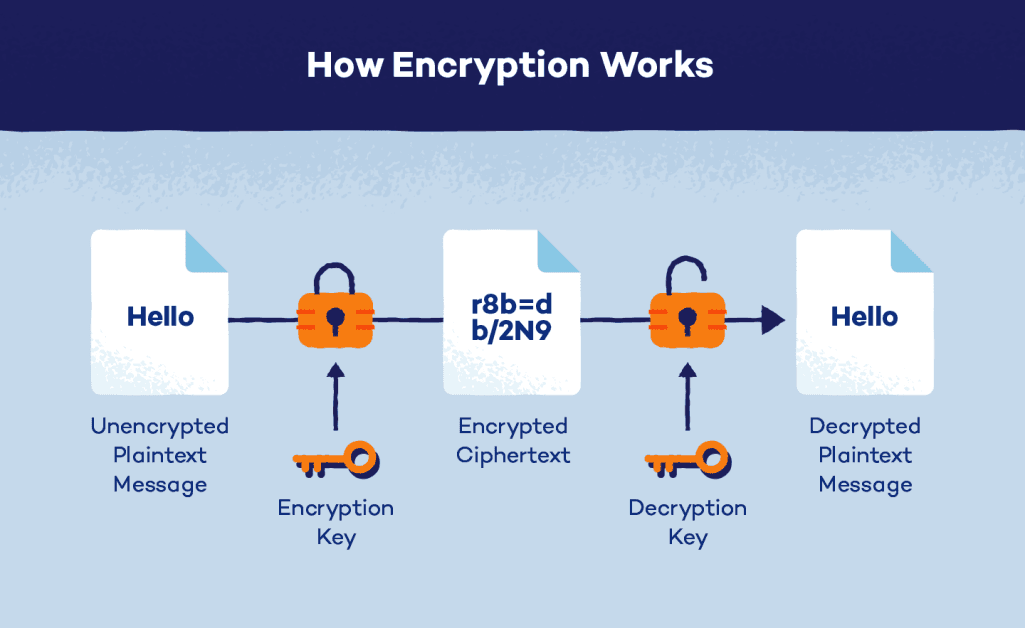
Encryption is the process of transforming readable information, known as plaintext, into an unreadable format called ciphertext using a mathematical algorithm and one or more cryptographic keys.
Without the correct key, encrypted data appears as meaningless characters, making it extremely difficult for unauthorized users to understand the information.
How Encryption Works
Encryption follows a series of steps to protect data.
Step 1: Original Data Is Created
A user creates or sends information such as a message, password, financial transaction, or file.
Step 2: An Encryption Algorithm Is Applied
An encryption algorithm uses a cryptographic key to convert the readable plaintext into encrypted ciphertext.
Step 3: The Data Is Transmitted or Stored
The encrypted information travels across the internet or is stored on a device or cloud server. Even if attackers intercept the data, they cannot easily read it without the correct decryption key.
Step 4: The Data Is Decrypted
When the authorized recipient receives the encrypted information, the appropriate key is used to decrypt the ciphertext and restore the original plaintext.
This process usually happens automatically within milliseconds when using secure applications and websites.
Key Components of Encryption
Several elements work together to protect information.
Plaintext
The original readable information before encryption.
Ciphertext
The encrypted version of the data that cannot be understood without decryption.
Encryption Algorithm
A mathematical method used to transform plaintext into ciphertext.
Cryptographic Key
A secret value used during both encryption and decryption. The strength and protection of the key are critical to overall security.
Decryption
The process of converting ciphertext back into readable plaintext using the correct key.
Types of Encryption
Modern encryption generally uses two main approaches.
Symmetric Encryption
Symmetric encryption uses the same key for both encryption and decryption.
Advantages:
- Very fast
- Efficient for encrypting large amounts of data
- Commonly used for storage encryption and secure communications
Challenge:
- Both parties must securely share the same secret key.
Asymmetric Encryption
Asymmetric encryption uses two different keys:
- Public Key: Used to encrypt data.
- Private Key: Used to decrypt data.
Because the private key remains secret, asymmetric encryption enables secure communication without first sharing a secret key.
It is widely used for secure websites, digital certificates, email encryption, and online authentication.
Where Encryption Is Used
Encryption protects countless digital services.
Secure Websites
HTTPS encrypts communication between web browsers and websites.
Online Banking
Financial institutions protect transactions and customer information.
Messaging Apps
Many messaging services use end-to-end encryption so that only the sender and intended recipient can read messages.
Cloud Storage
Cloud providers encrypt files while they are stored and often while they are transmitted.
Mobile Devices
Smartphones encrypt stored information to protect personal data if a device is lost or stolen.
Business Systems
Organizations encrypt customer records, financial data, intellectual property, and confidential communications.
Benefits of Encryption
Encryption provides several important advantages.
Protects Privacy
Personal and business information remains confidential.
Prevents Unauthorized Access
Attackers cannot easily read intercepted data without the appropriate key.
Supports Regulatory Compliance
Encryption helps organizations meet many legal and industry data protection requirements.
Secures Online Transactions
Sensitive information such as payment details and login credentials is protected during transmission.
Builds Trust
Users gain confidence that their personal information is being handled securely.
Challenges of Encryption
Despite its effectiveness, encryption presents several considerations.
Key Management
Protecting and managing encryption keys is essential. Lost keys may make encrypted data permanently inaccessible.
Performance Overhead
Encryption and decryption require computing resources, although modern hardware minimizes this impact.
Complexity
Implementing strong encryption correctly requires careful planning and expertise.
Evolving Threats
Advances in computing, including research into quantum computing, continue to drive the development of stronger cryptographic techniques.
Symmetric vs. Asymmetric Encryption
Although both protect data, they serve different purposes.
Symmetric Encryption
- Uses one shared secret key.
- Faster and more efficient.
- Ideal for encrypting large amounts of data.
Asymmetric Encryption
- Uses a public key and a private key.
- Slower but more flexible for secure communication and authentication.
- Commonly used to exchange encryption keys and verify identities.
Many secure internet protocols combine both approaches to achieve strong security and high performance.
Best Practices for Using Encryption
Organizations and individuals should follow these recommendations.
Use Strong Encryption Standards
Adopt modern, widely accepted cryptographic algorithms and avoid outdated methods.
Protect Encryption Keys
Store keys securely using dedicated key management systems or secure hardware where appropriate.
Enable Encryption Everywhere
Protect data while it is stored (data at rest) and while it is being transmitted (data in transit).
Keep Software Updated
Regular updates help address newly discovered security vulnerabilities.
Combine Encryption with Other Security Measures
Use Multi-Factor Authentication (MFA), access controls, firewalls, and regular security monitoring alongside encryption.
Future of Encryption
Encryption continues to evolve through quantum-resistant cryptography, confidential computing, hardware security modules, homomorphic encryption, and Artificial Intelligence-assisted cybersecurity. Researchers are developing post-quantum cryptography to protect data against future quantum computers, while advances in secure hardware and cloud security continue to strengthen encryption for governments, businesses, and consumers. As digital communication and connected devices continue to expand, encryption will remain one of the most essential technologies for protecting information.
Conclusion
Encryption is one of the foundations of modern cybersecurity, protecting sensitive information by transforming readable data into secure ciphertext that only authorized users can access. From secure websites and online banking to cloud computing and messaging applications, encryption safeguards billions of digital interactions every day. As cyber threats continue to evolve, strong encryption will remain critical for maintaining privacy, security, and trust across the digital world.
 How Encryption Works: Complete Guide Explained in Detail FAQs
POST A COMMENT (0)
All Comments (0)
Replies (0)