





By Naina, 27th May 2026
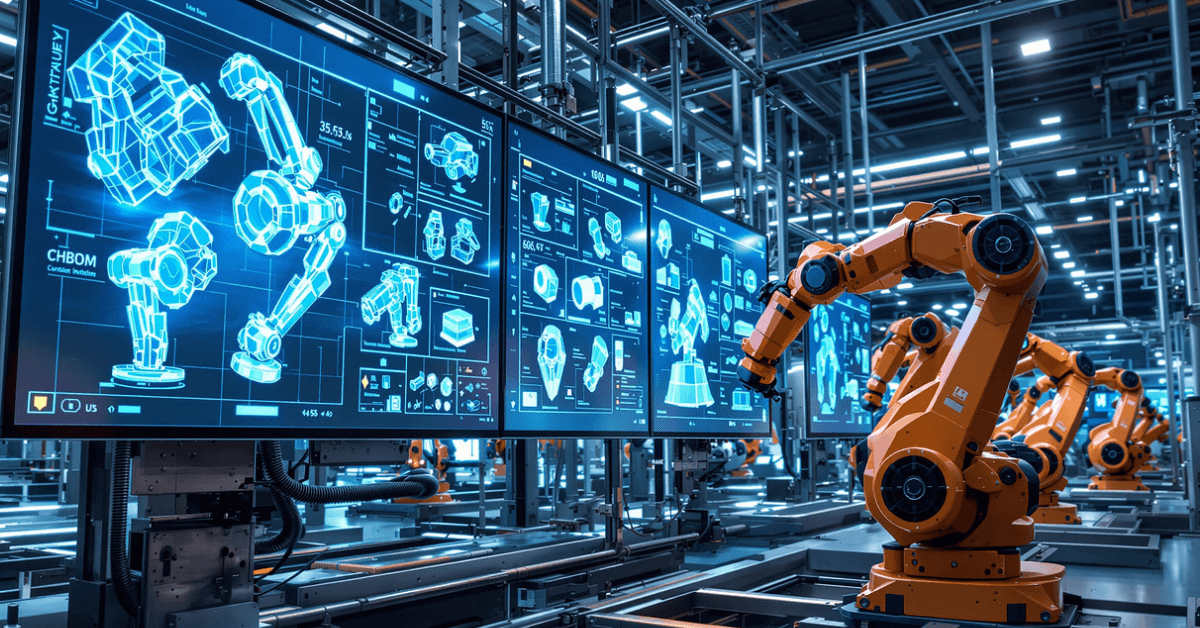
Digital twins have crossed the threshold from emerging technology category to structural feature of modern industrial operations. The concept, which entered industry vocabulary more than a decade ago and progressed slowly through pilot deployments and conceptual demonstrations through most of the 2010s, has reached the operational maturity at which it is now reshaping how manufacturing, energy, infrastructure, healthcare and transportation organisations design, build and run their physical operations. According to multiple research firms, the global digital twin market reached approximately 28.9 billion US dollars in 2025 and is projected to grow to approximately 39.75 billion in 2026, representing a compound annual growth rate of 37.6 percent. Other research firms place the 2025 valuation at approximately 36.19 billion dollars, growing to approximately 180.28 billion dollars by 2030. The digital twin technology in manufacturing market alone reached 16.45 billion US dollars in 2024 and is expected to reach 713.61 billion dollars by 2032, growing at a 60.2 percent compound annual rate. Patent filings for digital twin technology have risen approximately 600 percent since 2017. The category has moved from pilot-stage experimentation to production-scale deployment across virtually every major industrial sector.
What sits beneath these aggregate figures is one of the most consequential structural transformations in industrial operations in modern history. The fundamental proposition of digital twin technology is straightforward: a dynamic virtual replica of a physical asset, process or system, synchronised in real time through Internet of Things sensors and bidirectional data flows, can be used to simulate, monitor, analyse and optimise the physical system at scales and speeds that were previously impossible. The cumulative effect of this capability, deployed across manufacturing facilities, power plants, supply chains, transportation networks, infrastructure assets and the broader range of industrial operations, has produced measurable improvements in operational efficiency, capital productivity, maintenance costs, energy consumption and the broader performance metrics that determine industrial competitiveness.
The implications extend through every dimension of industrial activity. The decisions being made now, in the operational planning of major manufacturers, in the technology investments of energy utilities, in the infrastructure planning of governments and in the broader strategic positioning of industries undergoing digital transformation, will define the architecture of industrial operations for the next generation.
The Three Categories of Digital Twins
The digital twin landscape has matured into three recognisable categories, each addressing different operational challenges and producing different categories of business value. Product digital twins create virtual replicas of individual products, allowing manufacturers to understand and predict the performance characteristics of physical equivalents across the full product lifecycle. The integration of design data, manufacturing data, in-service operational data and end-of-life data into a unified product digital twin allows manufacturers to optimise product design, predict maintenance requirements, support warranty and service operations and continuously improve product performance based on real-world usage data.
Process digital twins create virtual replicas of manufacturing or operational processes. The simulation of production lines, chemical processes, assembly operations and the broader range of industrial processes allows operators to optimise throughput, identify bottlenecks, predict quality issues and run virtual experiments at zero physical risk before committing to operational changes. Process digital twins have produced particularly significant value in industries where production changeovers are expensive, where quality variation has significant cost implications and where the broader complexity of operations makes traditional optimisation approaches difficult.
System digital twins create virtual replicas of entire systems, facilities or networks. The integration of multiple product and process digital twins into a unified system digital twin allows operators to understand and optimise the behaviour of complex operational environments. System digital twins now account for approximately 40.9 percent of global digital twin revenue, reflecting both the higher value created by system-level optimisation and the technological maturity that the category has reached. Major manufacturers, energy companies, transportation networks and infrastructure operators have built system digital twins that integrate thousands of individual sensor inputs into unified operational pictures that earlier generations of industrial monitoring could not approach.
The Technology Stack
The technology stack that supports modern digital twin deployment has matured significantly through the past three years. The foundational layer is Internet of Things sensor infrastructure, which has expanded from the approximately 8 billion connected devices globally in 2020 to over 28 billion devices projected for 2030. The sensors that feed digital twin systems now include temperature, pressure, vibration, flow, acoustic, optical, chemical, electrical and a growing range of additional measurement categories, deployed across industrial assets at densities that would have been operationally infeasible a decade ago.
The connectivity layer has expanded through the integration of 5G networks, low-power wide-area networks, satellite IoT connectivity through Starlink and competitors, and the broader range of communication technologies that allow real-time sensor data to flow from industrial assets to digital twin platforms. The bandwidth, latency and reliability of these connections have improved to the point where bidirectional control of physical assets through digital twin interfaces has become operationally viable, not just observational monitoring.
The simulation and modelling layer combines physics-based modelling, reduced-order modelling, discrete event simulation, computational fluid dynamics, finite element analysis and the broader range of engineering simulation technologies that produce the dynamic virtual representations on which digital twins operate. The integration of artificial intelligence and machine learning has progressively augmented these traditional simulation approaches, with neural-network-based models providing inference at speeds and at computational costs that physics-based models alone could not achieve.
The analytics and intelligence layer applies advanced analytics, machine learning, predictive analytics and increasingly generative AI to the data flowing through digital twin systems. Predictive maintenance, quality prediction, anomaly detection, process optimisation and the broader range of analytical capabilities that digital twins enable have all been transformed by the integration of modern AI capability into the broader digital twin stack.
The Industrial Leaders
The competitive landscape for digital twin technology has consolidated around a small number of major industrial-software providers, with significant participation from cloud platforms, specialised digital twin vendors and increasingly artificial-intelligence infrastructure providers. Siemens has emerged as one of the most consequential players in the broader industrial digital twin ecosystem. On the 6th of January 2026, Siemens unveiled Digital Twin Composer, a software solution that builds industrial metaverse-style environments and is now being used by PepsiCo to digitally transform selected United States manufacturing and warehouse facilities. The deployment has produced faster design cycles, reduced capital expenditure and the identification of up to 90 percent of potential issues before physical build. The Siemens Xcelerator platform, the broader Siemens Industrial Edge ecosystem and the integration with Siemens automation infrastructure has produced one of the most comprehensive industrial digital twin offerings globally.
Dassault Systèmes has built a parallel position around its 3DEXPERIENCE platform and its virtual twin offerings. The March 2026 partnership announcement with NVIDIA at GTC 2026 highlighted the joint push around virtual twins and industrial AI, framing the combination as a new operating architecture for industry. Dassault has positioned virtual twins as the foundation for applying artificial intelligence to design, manufacturing and broader industrial operations. The combination of Dassault's depth in engineering simulation with NVIDIA's compute and AI infrastructure has produced one of the most consequential industrial AI partnerships of the present cycle.
PTC, with its ThingWorx platform, the broader Creo and Windchill engineering software suite and its acquisition-driven expansion across the industrial software stack, has built a comprehensive digital twin offering particularly strong in product digital twins and IoT integration. Ansys, the engineering simulation specialist, has integrated its physics-based simulation capability into broader digital twin offerings, including its partnership with ENGIE Lab CRIGEN on carbon-free energy transition applications. Bentley Systems has built distinctive positioning in infrastructure digital twins, particularly for civil engineering and major infrastructure projects. AVEVA, GE Digital, Rockwell Automation and a long list of additional industrial software providers have built credible offerings across various dimensions of the digital twin stack.
The major cloud platforms have all built significant digital twin capability. Microsoft Azure Digital Twins, Amazon Web Services IoT TwinMaker and Google Cloud's Digital Twin services have provided the foundational cloud infrastructure on which many industrial customers build their digital twin deployments. The integration of these cloud platforms with the major industrial software providers, with specialised digital twin vendors and with the broader IoT and AI infrastructure has produced an architecture that allows industrial customers to assemble customised digital twin solutions from best-in-class components.
NVIDIA has emerged as one of the most consequential players in the broader digital twin ecosystem through its Omniverse platform. The platform, which provides the foundation for collaborative real-time simulation and the broader category of industrial metaverse applications, has been integrated by major automotive, manufacturing, logistics and infrastructure customers globally. The combination of NVIDIA's compute infrastructure, its AI capability and the Omniverse platform's collaborative simulation environment has positioned the company as one of the central infrastructure providers for the next generation of industrial digital twin deployment.
The Manufacturing Transformation
Manufacturing has been the principal application sector for digital twin technology and remains the dominant category by revenue. The deployment patterns across manufacturing have matured significantly through the past three years, with digital twins now operational across automotive, aerospace, electronics, consumer goods, pharmaceuticals, chemicals and a growing range of additional manufacturing sectors. The operational benefits are now well documented. Manufacturing digital twin deployments routinely produce 10 to 30 percent reductions in unplanned downtime, 15 to 25 percent improvements in throughput, 20 to 40 percent reductions in quality defects and significant reductions in energy consumption and material waste.
The automotive industry has been particularly consequential in advancing digital twin deployment. Major automotive manufacturers including BMW, Mercedes-Benz, Volkswagen, Tesla, Toyota, General Motors, Ford, Hyundai and a long list of additional manufacturers have built sophisticated digital twin infrastructure across vehicle design, production operations and increasingly the connected operation of vehicles after sale. The BMW iFactory digital twin deployments, the Mercedes-Benz Digital Production Platform, the Volkswagen Industrial Cloud and the broader range of automotive digital twin programmes have collectively transformed automotive manufacturing operations.
The aerospace industry has built deep digital twin capability anchored on the operational and safety imperatives of aviation. Boeing, Airbus and the major aerospace component suppliers have built product digital twins that follow individual aircraft, engines and components through their full operational lives. The combination of design data, manufacturing data, maintenance records, operational performance data and predictive analytics has produced asset-management capability that earlier generations of aviation maintenance could not approach. The integration of digital twins with the broader Industry 4.0 architecture in aerospace manufacturing has produced operational outcomes that have improved both safety performance and economic efficiency.
The pharmaceutical industry has built specialised process digital twins, particularly for continuous manufacturing operations and for the complex chemical processes that pharmaceutical production involves. The Atos and Siemens partnership on a pharmaceutical Process Digital Twin, integrated with IoT, AI and advanced analytics, has produced significant improvements in manufacturing efficiency and flexibility. The broader industry adoption has accelerated as regulatory authorities have begun to recognise digital twin technology as part of acceptable quality-management frameworks for pharmaceutical manufacturing.
The Energy and Infrastructure Applications
The energy sector has emerged as one of the most consequential digital twin application categories after manufacturing. Power plants, transmission and distribution networks, oil and gas facilities, renewable-energy installations and the broader energy infrastructure have all absorbed significant digital twin deployment. The transition to renewable energy has created particularly significant demand for digital twin capability, with the operational complexity of wind farms, solar installations and grid-scale storage requiring sophisticated monitoring and optimisation infrastructure that earlier generations of energy management did not provide.
The major energy utilities globally have built or are building digital twin infrastructure for their generation fleets, transmission networks and customer-facing operations. Enel, EDF, NextEra, Iberdrola, RWE, Tata Power, Adani Green Energy and a long list of additional utilities have all deployed digital twin technology at meaningful scale. The Ansys partnership with ENGIE Lab CRIGEN on carbon-free energy transition applications illustrates the broader pattern of digital twin deployment supporting the energy transition.
Infrastructure digital twins have emerged as one of the fastest-growing application categories. Smart-city digital twins, transportation network digital twins, water and wastewater system digital twins and the broader range of public-infrastructure applications have all expanded significantly. Singapore's Virtual Singapore, Helsinki's 3D digital twin, the Rotterdam Port digital twin and a growing list of comparable initiatives globally have demonstrated the operational value of city-scale and infrastructure-scale digital twin deployment.
The Indian Digital Twin Ecosystem
India has emerged as one of the most consequential geographies for digital twin development and deployment. The combination of the country's growing manufacturing sector, the expanding renewable-energy infrastructure, the major infrastructure development under the National Infrastructure Pipeline and the broader strategic positioning of the country in the global Industry 4.0 transition has produced significant demand for digital twin capability.
The major Indian manufacturers have begun to deploy digital twin technology at meaningful scale. Tata Motors, Mahindra & Mahindra, Bajaj Auto, Maruti Suzuki, Hyundai India and a long list of additional Indian and India-operating automotive manufacturers have integrated digital twin capability into their manufacturing operations. Larsen and Toubro, BHEL, the Indian Railways modernisation programme, the major Indian power utilities including NTPC, Tata Power and Adani Power, and the broader Indian industrial base have all begun to adopt digital twin technology across their operations.
The Indian IT services sector has built significant capability in digital twin implementation services. Tata Consultancy Services, Infosys, Wipro, HCL Technologies, Tech Mahindra and a growing list of additional Indian IT services providers have built dedicated digital twin practice areas, with significant deployment work for global customers across manufacturing, energy and infrastructure sectors. The Indian Global Capability Centres operated by major multinational manufacturers have similarly built deep digital twin capability, often serving global digital twin programmes from their Indian operational bases.
The Indian smart-cities mission, the broader infrastructure development programme and the rising focus on operational efficiency in Indian industrial operations have produced an environment in which digital twin technology has progressively moved from pilot deployment to operational integration. The continued expansion of Indian manufacturing, the broader trajectory of the country's industrial development and the rising integration of Indian operations into global supply chains have created conditions that are unusually favourable for sustained digital twin sector growth.
The Generative AI Inflection
The integration of generative AI with digital twin technology has emerged as one of the most consequential developments of the past year. The traditional digital twin operated as a sophisticated monitoring and simulation system, with human operators interpreting the data and making decisions about operational responses. The integration of generative AI has begun to transform digital twin systems into more autonomous operational entities, capable of recommending or executing responses to operational conditions without continuous human direction.
The NVIDIA Omniverse platform, integrated with foundation models and specialised industrial AI capability, has produced one of the most consequential examples of this integration. Industrial AI agents operating within digital twin environments can now analyse complex operational conditions, identify potential optimisations, simulate proposed changes and recommend specific actions to human operators. The broader Dassault Systèmes virtual twin platform, integrated with NVIDIA infrastructure, has produced similar capability for industrial customers.
The implications for industrial operations are significant. The traditional bottleneck of operational improvement has been the gap between the volume of data generated by industrial operations and the analytical capacity of human operators to interpret that data and identify improvement opportunities. The integration of generative AI into digital twin systems is progressively closing this gap, with AI-driven analysis identifying optimisation opportunities that human operators alone could not have surfaced. The cumulative effect on industrial productivity, asset utilisation and operational efficiency will continue to develop through the rest of the present decade.
The Risks and the Frictions
Several risks warrant clear recognition. The first is data quality and integration. Digital twins rely on continuous, high-quality data from multiple sources including IoT sensors, operational systems, enterprise resource planning systems, product lifecycle management systems and external data feeds. Many organisations struggle with fragmented data landscapes, inconsistent formats and legacy systems that were not designed for real-time integration. The cost and complexity of building the data infrastructure required for effective digital twin deployment has been one of the principal practical constraints on broader adoption.
The second risk is the cybersecurity dimension. Digital twin systems, by virtue of their integration with critical operational infrastructure, represent attractive targets for cyber attacks. The combination of bidirectional control capability, integration with operational technology systems and the broader connectivity that digital twins require has produced cybersecurity exposure that requires sophisticated defensive infrastructure. The continued evolution of industrial cyber threats, the increasing sophistication of attackers and the broader strategic significance of industrial cyber security in the present geopolitical environment have all elevated this concern.
The third risk is the workforce dimension. The effective operation of digital twin systems requires specialised skills that combine industrial domain expertise, data analytics capability and the broader technical competencies that digital twin platforms demand. The shortage of qualified personnel has been one of the principal constraints on the pace of digital twin deployment, particularly in emerging-market industrial sectors where the supply of qualified candidates has not kept pace with the demand from major employers.
The fourth risk is the return-on-investment question. Despite the operational benefits that digital twin deployments have produced, the upfront capital and operational expenditure required to deploy comprehensive digital twin infrastructure has been significant. Some early deployments have produced disappointing returns, with the complexity of integration, the cost of data infrastructure and the challenge of organisational change management offsetting the operational benefits that the technology has produced. The strategic response, including more focused pilot deployments, the development of phased deployment approaches and the broader maturation of vendor offerings, has begun to address this concern but has not eliminated it.
The Direction of Travel
Digital twins have moved from emerging technology category to structural feature of modern industrial operations. The combination of operational maturity, demonstrable economic value, technological maturation across the broader stack and the integration with artificial intelligence has produced an operating environment in which digital twin deployment has become a competitive imperative rather than a discretionary investment. The companies, the sectors and the economies that have invested most effectively in digital twin capability are positioning themselves for structural advantages over those that have not.
For India specifically, the present moment is particularly consequential. The country's combination of growing manufacturing sector, expanding industrial infrastructure, deep technical talent and the broader strategic positioning in the global Industry 4.0 transition has produced conditions that are unusually favourable for sustained sectoral expansion. The Indian digital twin ecosystem has the potential to be one of the most consequential globally, both for domestic industrial transformation and for the export of digital twin implementation services to international customers.
The longer-term implications extend beyond the immediate operational benefits. The progressive integration of digital twin technology into industrial operations has begun to reshape the fundamental architecture of how physical operations are designed, built and managed. The traditional separation between design and operations is dissolving, with continuous feedback from operational digital twins informing the next generation of product and process design. The boundary between physical and digital operations is becoming increasingly permeable, with the digital twin functioning as the primary interface through which industrial operations are monitored, analysed and increasingly controlled.
The transformation will continue to develop through the rest of the present decade. The market trajectory toward 122 to 384 billion US dollars by the early 2030s, depending on the specific forecast methodology, represents one of the largest single-decade expansions of any industrial technology category in modern history. The deployment will continue to broaden across additional industrial sectors. The technological capability will continue to mature. The integration with artificial intelligence will continue to deepen. The economic value created will continue to expand.
The decisions being made now, in the operational planning of major industrial customers, in the technology investments of governments supporting industrial modernisation, in the strategic positioning of the major industrial software vendors and in the broader institutional architecture of industrial digitalisation, will define the operational landscape of industrial activity for the next generation. Digital twins are no longer an emerging category. They are an operational reality. The transformation has happened. The structural change is real. The implications, for manufacturing competitiveness, for energy efficiency, for infrastructure performance, for industrial safety and for the broader productivity of the global economy, will continue to develop through the rest of the present decade and beyond. The companies, the industries and the economies that have built the institutional capability to deploy digital twins effectively will be the principal beneficiaries. The work of building that capability continues, and the next chapter of industrial transformation is being written, in real time, in the digital twin deployments now underway across every major industrial sector and every major industrial economy globally.
 Related News
POST A COMMENT (0)
All Comments (0)
Replies (0)