





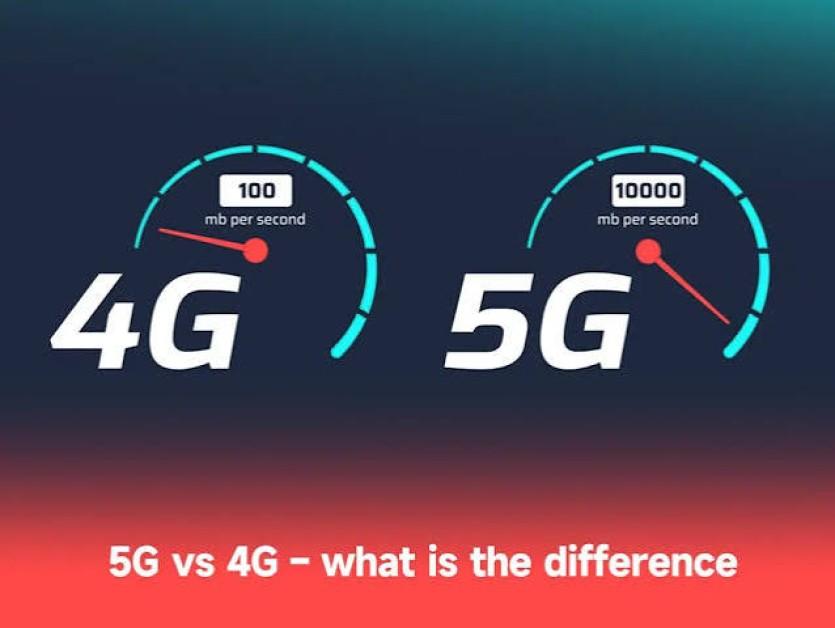
5G vs 4G Explained: Key Differences, Benefits, Speed Comparison, and Future of Mobile Networks
Mobile networks have evolved rapidly over the past few decades, enabling faster internet speeds, better connectivity, and new digital experiences. 4G transformed mobile internet by making HD video streaming, social media, and mobile apps widely accessible. 5G, the fifth generation of mobile network technology, builds on that foundation with higher speeds, lower latency, greater capacity, and support for billions of connected devices.
Understanding the differences between 4G and 5G helps consumers and businesses make informed decisions about smartphones, connectivity, and emerging technologies.
What Is 4G?
4G (Fourth Generation) is a mobile communication standard that succeeded 3G and introduced significantly faster data speeds, improved voice quality through Voice over LTE (VoLTE), and better support for mobile broadband applications.
4G networks power most smartphones worldwide and support services such as video streaming, online gaming, video calls, and mobile banking.
What Is 5G?
5G (Fifth Generation) is the latest generation of mobile network technology designed to deliver faster data speeds, lower latency, higher network capacity, and improved efficiency compared with 4G.
5G enables advanced applications such as smart cities, autonomous vehicles, industrial automation, cloud gaming, augmented reality (AR), virtual reality (VR), and large-scale Internet of Things (IoT) deployments.
5G vs 4G: Key Differences

| Feature | 4G | 5G |
|---|---|---|
| Generation | Fourth Generation | Fifth Generation |
| Typical Speed | Tens to hundreds of Mbps (varies by network conditions) | Hundreds of Mbps to multi-gigabit speeds (depending on spectrum and deployment) |
| Latency | Typically around 20–50 milliseconds | Can be under 10 milliseconds in many deployments, with even lower latency possible in specialized scenarios |
| Network Capacity | Supports millions of connected devices | Designed to support significantly higher device density |
| Spectrum | Primarily low- and mid-band frequencies | Low-, mid-, and high-band (millimeter wave) frequencies |
| Energy Efficiency | Efficient | Improved efficiency per unit of transmitted data |
| Use Cases | Mobile broadband and voice services | Advanced mobile broadband, IoT, AI applications, industrial automation, and more |
How 4G Works
4G networks use radio towers and packet-switched communication to deliver mobile internet.
Step 1: Device Connects to a Cell Tower
A smartphone or other mobile device connects to the nearest compatible 4G base station.
Step 2: Data Transmission
Information is transmitted as radio signals between the device and the network.
Step 3: Core Network Processing
The mobile operator routes data through its core network to the internet or another user.
Step 4: Internet Access
Users browse websites, stream videos, make video calls, and use mobile applications.
How 5G Works
5G follows a similar architecture but introduces new technologies that improve performance.
Step 1: Connection to a 5G Base Station
A compatible device connects to a nearby 5G cell site.
Step 2: Advanced Radio Technologies
5G uses technologies such as:
- Massive MIMO (Multiple Input, Multiple Output)
- Beamforming
- Network slicing
- Wider spectrum availability
These technologies improve speed, capacity, and efficiency.
Step 3: Faster Data Transmission
Data travels more efficiently between devices, base stations, and the core network.
Step 4: Intelligent Network Management
Modern 5G networks dynamically allocate resources based on traffic demands and application requirements.
Advantages of 5G
5G offers several significant improvements.
Faster Download and Upload Speeds
Large files, videos, and applications can be transferred more quickly.
Lower Latency
Reduced delays improve responsiveness for cloud gaming, industrial automation, and real-time communication.
Higher Network Capacity
Supports many more connected devices in crowded environments.
Better Support for IoT
Designed to connect billions of smart sensors, devices, and machines.
Improved Reliability
Modern network technologies enhance connection stability in many scenarios.
Advantages of 4G
4G continues to provide many benefits.
Wide Coverage
4G networks are extensively deployed in many countries.
Device Compatibility
Most smartphones support 4G connectivity.
Reliable Performance
Provides sufficient performance for everyday internet activities.
Lower Infrastructure Costs
4G infrastructure is already mature and widely available.
Common Applications
4G
Commonly used for:
- Video streaming
- Social media
- Mobile banking
- Navigation
- Voice and video calls
- Music streaming
5G
Commonly used for:
- Smart cities
- Autonomous vehicles
- Remote healthcare
- Industrial automation
- Cloud gaming
- Augmented Reality (AR)
- Virtual Reality (VR)
- Massive Internet of Things (IoT)
Challenges of 5G
Despite its advantages, 5G also presents challenges.
Infrastructure Requirements
Expanding 5G coverage requires significant investment in new network equipment.
Coverage Variation
Availability differs by region, and high-band 5G typically covers shorter distances than lower-frequency bands.
Device Compatibility
Users need 5G-compatible smartphones and devices to access 5G services.
Challenges of 4G
4G also has limitations.
Higher Latency
Response times are generally slower than 5G.
Capacity Constraints
Heavily populated areas may experience congestion during peak usage.
Limited Support for Emerging Applications
Some advanced technologies benefit from the lower latency and higher capacity offered by 5G.
5G vs 4G: Which Should You Choose?
The best option depends on your location, device, and usage.
Choose 4G If You:
- Live in an area without widespread 5G coverage.
- Use your phone mainly for browsing, messaging, streaming, and social media.
- Want reliable connectivity with an existing device.
Choose 5G If You:
- Have access to strong 5G coverage.
- Need faster downloads and uploads.
- Use cloud gaming or real-time applications.
- Want a device prepared for future network advancements.
Best Practices for Mobile Connectivity
Whether using 4G or 5G, consider these recommendations.
Keep Your Device Updated
Install operating system and carrier updates regularly.
Use Secure Networks
Avoid transmitting sensitive information over unsecured public Wi-Fi.
Monitor Data Usage
High-speed mobile networks can increase data consumption.
Enable Strong Security
Use screen locks, biometric authentication, and Multi-Factor Authentication (MFA) for important accounts.
Choose the Right Data Plan
Select a mobile plan that matches your usage habits and network availability.
Future of Mobile Networks
Mobile communication continues to evolve through standalone 5G networks, Artificial Intelligence-powered network optimization, edge computing, satellite connectivity, Open RAN, and research into sixth-generation (6G) wireless technologies. Future networks are expected to deliver even lower latency, higher capacity, improved energy efficiency, and deeper integration with AI, autonomous systems, smart infrastructure, and immersive digital experiences.
Conclusion
Both 4G and 5G are powerful mobile network technologies that enable modern digital communication. While 4G continues to provide reliable broadband connectivity for everyday use, 5G introduces faster speeds, lower latency, greater capacity, and support for next-generation technologies such as AI, IoT, autonomous vehicles, and smart cities. As 5G networks continue to expand worldwide, they will play a central role in shaping the future of mobile connectivity and digital innovation.
 5G vs 4G Explained: Speed, Latency, Coverage, Features, and Comparison Guide FAQs
POST A COMMENT (0)
All Comments (0)
Replies (0)