





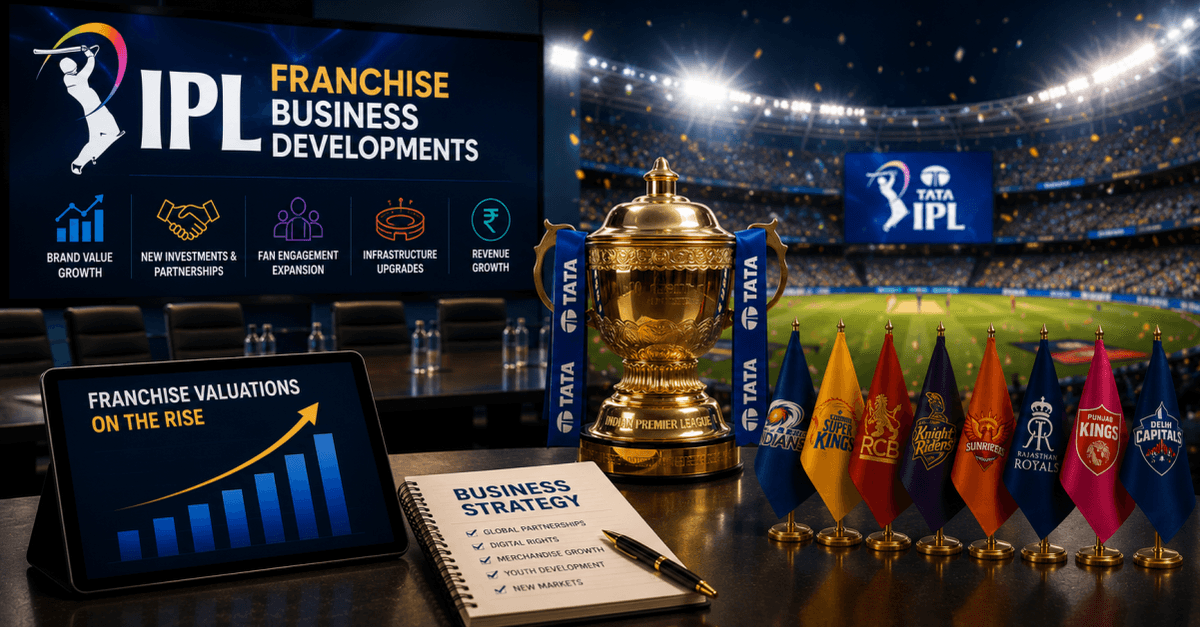
IPL Franchise Business Developments: Investments, Revenue Growth, and Expansion Strategies
The Indian Premier League (IPL) has evolved into one of the world's most valuable sports business ecosystems, transforming cricket into a multi-billion-dollar commercial industry. Beyond on-field competition, IPL franchises have become sophisticated business organizations that generate revenue through media rights, sponsorships, merchandising, ticket sales, licensing, digital engagement, and global brand partnerships.
Over the years, franchise owners have expanded their business strategies beyond seasonal cricket operations by investing in international leagues, sports technology, fan engagement platforms, training academies, and digital commerce. These developments have significantly increased franchise valuations while strengthening the IPL's position as one of the most commercially successful sporting leagues globally.
As sports consumption increasingly shifts toward digital platforms and global audiences, IPL franchises continue exploring new revenue opportunities, strategic partnerships, and long-term growth initiatives.
IPL Franchises Continue Expanding Their Business Models
Modern IPL franchises operate as diversified sports businesses rather than teams participating in a single tournament. Franchise owners are investing across multiple areas to create sustainable revenue streams throughout the year.
Major business segments include:
-
Team operations
-
Commercial sponsorships
-
Media partnerships
-
Digital content
-
Merchandise sales
-
Fan engagement platforms
-
Sports academies
-
International cricket investments
-
Licensing agreements
-
Brand collaborations
This diversified approach reduces dependence on seasonal tournament earnings while improving long-term financial stability.
Revenue Streams Driving Franchise Growth
IPL franchises generate income from multiple commercial sources that collectively contribute to business expansion.
Primary revenue sources include:
-
Central media rights distribution
-
Title and team sponsorships
-
Jersey sponsorships
-
Match-day ticket sales
-
Hospitality packages
-
Merchandise and apparel
-
Digital advertising
-
Licensing and royalties
-
Brand endorsements
-
Prize money
The combination of recurring league revenue and independent commercial partnerships allows franchises to build predictable cash flows and attract long-term investors.
Sponsorships Remain a Key Growth Driver
Corporate sponsorship continues to play a central role in franchise economics. Brands increasingly partner with IPL teams to access millions of cricket fans across television, streaming platforms, and social media.
Popular sponsorship categories include:
-
Financial services
-
Consumer electronics
-
Automotive
-
E-commerce
-
Food and beverages
-
Telecommunications
-
Airlines
-
Healthcare
-
Technology
-
Consumer goods
Long-term sponsorship agreements provide financial stability while helping brands increase visibility through one of the world's largest sporting events.
Media Rights Boost Franchise Value
Broadcasting and digital media rights have significantly increased the commercial value of IPL franchises. Revenue generated from league-wide media rights is distributed among franchises, providing a stable source of income regardless of individual team performance.
The continued growth of digital streaming, connected television, and mobile viewing has increased demand for premium live sports content, strengthening the financial foundation of the IPL ecosystem.
Digital Transformation Across IPL Franchises
Technology has become an important component of franchise business strategy.
Teams continue investing in:
-
Artificial intelligence (AI)
-
Data analytics
-
Fan engagement applications
-
Customer relationship management (CRM)
-
Digital ticketing
-
Mobile commerce
-
Fantasy sports partnerships
-
Social media analytics
-
Cloud computing
-
E-commerce platforms
These technologies improve fan experiences, optimise marketing campaigns, strengthen commercial partnerships, and provide valuable business insights through audience analytics.
Global Expansion Strategies
Several IPL franchise owners have expanded beyond India by investing in cricket leagues across international markets.
Strategic objectives include:
-
Building global sports brands
-
Expanding fan communities
-
Diversifying revenue
-
Developing young talent
-
Creating international sponsorship opportunities
-
Strengthening commercial partnerships
-
Sharing operational expertise
-
Enhancing year-round brand visibility
Cross-border investments allow franchises to establish broader sports ecosystems while increasing global recognition.
Benefits of Franchise Business Development
Ongoing business expansion provides numerous advantages for franchise owners and stakeholders.
Key benefits include:
-
Higher franchise valuations
-
Diversified income streams
-
Greater investor confidence
-
Stronger sponsorship portfolios
-
Increased global visibility
-
Enhanced fan engagement
-
Expanded merchandising opportunities
-
Better digital monetisation
-
Sustainable long-term growth
-
Improved commercial resilience
These benefits continue attracting institutional investors, corporate partners, and global brands to the IPL business ecosystem.
Challenges Facing IPL Franchises
Despite remarkable commercial success, franchises face several business challenges.
Rising Player Costs
Player salaries, retention policies, auction strategies, and support staff expenses continue increasing, requiring disciplined financial planning.
Intense Commercial Competition
Brands have numerous sports marketing options, making sponsorship acquisition increasingly competitive.
Fan Engagement Expectations
Supporters expect continuous digital interaction throughout the year, encouraging franchises to invest heavily in content creation and technology.
Regulatory and Governance Changes
League regulations, salary caps, commercial guidelines, and governance frameworks continue evolving, requiring franchises to remain adaptable.
Maintaining Long-Term Profitability
Balancing investments in player development, infrastructure, technology, and marketing while maintaining healthy financial performance remains a key business objective.
Emerging Business Trends
Several trends are expected to influence future IPL franchise developments.
Digital Commerce Growth
Teams are expanding online merchandise stores, exclusive memberships, collectibles, and digital fan experiences.
AI-Powered Fan Engagement
Artificial intelligence is helping franchises personalise content, improve customer engagement, optimise marketing campaigns, and enhance sponsorship effectiveness.
International Sports Investments
Franchise owners continue exploring ownership opportunities in overseas cricket leagues and broader sports ventures.
Premium Hospitality Experiences
Demand for luxury hospitality, corporate boxes, VIP memberships, and exclusive match-day experiences continues to grow.
Sustainability Initiatives
Many franchises are adopting environmentally responsible practices, including sustainable stadium operations, waste reduction programmes, renewable energy initiatives, and community development projects.
Future Outlook
The IPL franchise business is expected to remain one of the fastest-growing segments of the global sports industry.
Key trends likely to shape future developments include:
-
Higher franchise valuations
-
Expansion into international cricket leagues
-
Growth in digital media revenue
-
AI-driven fan engagement
-
Increased sponsorship investments
-
Greater merchandise sales
-
Enhanced sports technology adoption
-
Premium hospitality expansion
-
Stronger global brand partnerships
-
Diversified commercial ecosystems
Franchises that successfully combine competitive performance, innovative business strategies, advanced technology, and meaningful fan engagement are expected to strengthen their market position and unlock new revenue opportunities in the years ahead.
Conclusion
IPL franchises have evolved into diversified sports businesses with multiple revenue streams extending well beyond cricket matches. Investments in sponsorships, media rights, digital platforms, international expansion, merchandising, and technology continue driving strong commercial growth and increasing franchise valuations.
Although challenges such as rising operating costs, competitive sponsorship markets, and evolving regulatory requirements remain, the long-term outlook for IPL franchises is highly positive. As the league continues to expand its global influence, franchise owners are expected to focus on innovation, strategic partnerships, and digital transformation to sustain long-term business growth and strengthen the IPL's position as one of the world's premier sports business properties.
 IPL Franchise Business Developments: Revenue Trends and Industry Outlook FAQs
POST A COMMENT (0)
All Comments (0)
Replies (0)