





India and Australia Unveil New Sports Cooperation Strategy as Australia Backs India’s 2036 Olympic Ambition
India and Australia have opened a new phase of bilateral sports cooperation with a formal roadmap covering athlete development, sports science, technology, major-event management, commercial investment and participation, while Australia has also expressed support for India's ambition to host the 2036 Olympic and Paralympic Games.
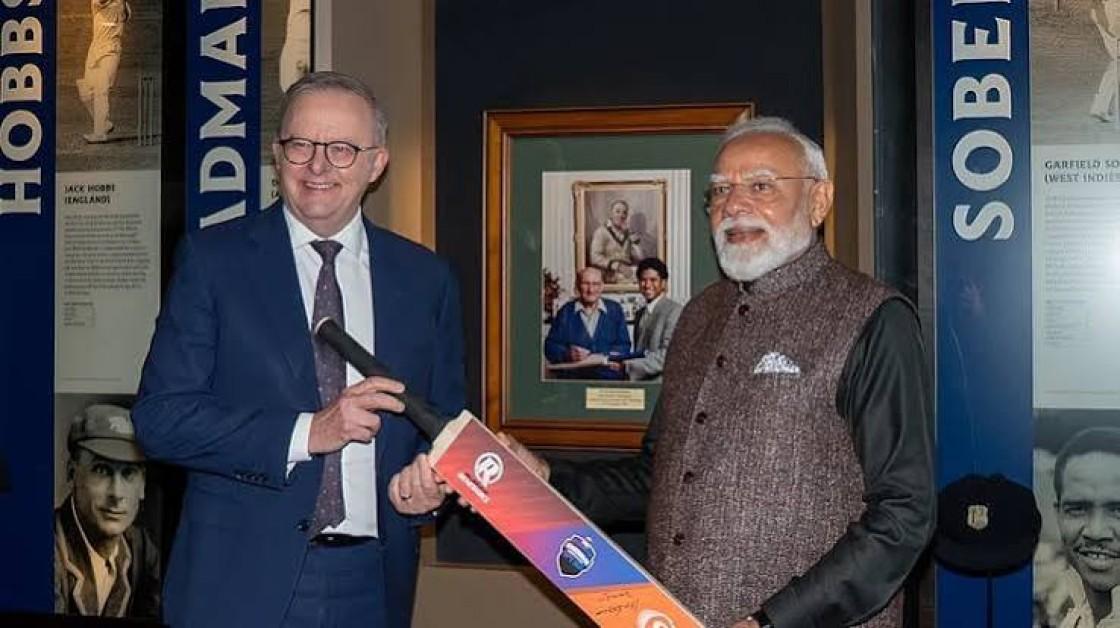
Prime Minister Narendra Modi and Australian Prime Minister Anthony Albanese launched the India-Australia Roadmap for Sports Collaboration at the Melbourne Cricket Ground in July 2026. The framework builds on the countries' 2023 sports cooperation agreement and is designed around a significant decade for both nations: Ahmedabad's 2030 Commonwealth Games, the Brisbane 2032 Olympic and Paralympic Games and India's ambition to stage a future Olympics.
The strategy carries significance beyond conventional sports diplomacy. It creates potential opportunities for sports businesses, universities, technology companies, coaches, event-management specialists and infrastructure providers as India accelerates investment in its sporting ecosystem.
India-Australia Sports Roadmap Creates Long-Term Framework

The new roadmap is designed to turn the two countries' longstanding sporting relationship into more structured institutional cooperation.
Cricket has traditionally dominated the sporting connection between India and Australia.
The new framework is much broader.
Priority areas extend into training, capacity building, sports science, technology, major sporting events, investment and women's participation.
The two governments intend implementation to be practical and tied to available resources and upcoming major-event timelines.
Major Sporting Events Drive Cooperation
The timing of the roadmap is particularly important because both countries face major international sporting commitments.
India is preparing to host the Commonwealth Games in Ahmedabad in 2030.
Australia will host the Olympic and Paralympic Games in Brisbane in 2032.
India is simultaneously pursuing its ambition to host the 2036 Olympics and Paralympics.
This sequence creates an unusually long period in which both countries can exchange expertise in planning and delivering major international events.
Australia Signals Support for India’s Olympic Ambition
Prime Minister Albanese publicly indicated Australian support for India's 2036 Olympic ambition while launching the cooperation initiative with Prime Minister Modi.
For India, such international backing has diplomatic significance as it develops its long-term hosting case.
Hosting an Olympics requires considerably more than constructing stadiums.
A prospective host needs capabilities across:
transport,
security,
accommodation,
sports infrastructure,
broadcasting,
technology,
venue operations,
athlete services,
and spectator management.
Australia's experience in major-event delivery could therefore become useful as India's preparations evolve.
Brisbane 2032 Creates Major Knowledge-Sharing Opportunity
Australia's next Olympics provides India with an opportunity to observe the organisation of a modern Games only four years before 2036.
That timing is strategically valuable.
India Can Study Event Operations in Real Time
Potential learning areas include venue planning, athlete villages, transport integration, sustainability, accessibility and spectator services.
Instead of studying previous Olympics only after completion, Indian sports administrators could potentially interact with Australian institutions during the planning and delivery cycle.
This can provide much deeper operational knowledge.
Ahmedabad 2030 Adds Another Major Milestone
India's preparations for the 2030 Commonwealth Games can serve as an important test of its growing major-event capabilities.
The experience gained from delivering the Games could strengthen institutional knowledge relevant to a future Olympics.
Event Infrastructure Has Long-Term Value
Large sporting events can accelerate investment in:
stadiums,
training centres,
urban transport,
accommodation,
and public spaces.
The commercial challenge is ensuring these assets remain productive after the event.
Australian experience with major sporting infrastructure can contribute to discussions around long-term venue utilisation.
Sports Science Is Central to the Partnership
One of the roadmap's important priorities is high-performance sport.
Modern elite competition increasingly depends on scientific support rather than training volume alone.
Athlete Performance Is Becoming Data-Driven
Sports programmes now use expertise in:
strength and conditioning,
nutrition,
biomechanics,
psychology,
recovery,
and performance analytics.
Australia has an established high-performance sports system and substantial expertise across these disciplines.
Greater institutional collaboration could help Indian athletes and coaches access additional knowledge as the country attempts to improve international medal performance.
Coaching Development Can Strengthen Indian Sport
Elite athletes depend heavily on coaching quality.
India's enormous population provides a large potential talent pool, but discovering talent is only the first stage.
Athletes need technically capable coaches throughout their development.
Coach Education Has Multiplier Effect
Training one athlete benefits one career.
Developing a high-quality coach can influence dozens or hundreds of athletes over time.
This makes coach-development programmes particularly valuable for countries attempting to expand sporting capacity rapidly.
Australia's coaching systems could provide useful expertise across several sports.
Sports Technology Creates Commercial Opportunity
The roadmap also creates space for technology cooperation.
Modern sport increasingly intersects with software, sensors, artificial intelligence and data.
Technology Can Improve Performance
Athletes can use wearable devices to monitor:
movement,
training loads,
recovery,
sleep,
and physical stress.
Video-analysis systems can study technique.
AI tools can identify patterns across large performance datasets.
These capabilities create commercial opportunities for technology companies as well as sporting organisations.
Indian Sports-Tech Startups Could Benefit
India has a growing startup ecosystem capable of building technology for sport.
Potential areas include:
performance analytics,
fan engagement,
ticketing,
venue management,
sports education,
fitness platforms,
and athlete monitoring.
Closer India-Australia cooperation could give startups access to new customers, partners and testing environments.
Australian sports organisations could similarly gain greater access to India's rapidly expanding sports market.
Sports Industry and Investment Receive Dedicated Focus
The bilateral roadmap explicitly recognises sport as an economic sector rather than simply a recreational activity.
This is an important shift.
Professional sport creates revenue across multiple industries.
These include broadcasting, advertising, equipment, tourism, infrastructure, events, technology and hospitality.
Business Cooperation Is Built Into the Roadmap
The framework seeks stronger links between Indian and Australian companies involved in sports equipment, sports media and broadcasting, event management and sports startups.
This could turn bilateral sporting ties into a meaningful commercial channel.
India’s Sports-Goods Industry Could Find New Opportunities
India already manufactures a wide range of sporting goods.
The roadmap identifies the potential to expand exports of competitively priced Indian sports products into Australia.
Manufacturing Can Benefit From Growing Sports Participation
Demand for sporting goods increases when more people participate in organised sport.
Equipment manufacturers can serve:
professional athletes,
schools,
sports academies,
clubs,
and recreational consumers.
International market access can further expand production opportunities for Indian companies.
Australia Can Export High-Performance Expertise
Australia's commercial opportunity lies partly in specialised sporting services.
These can include:
coaching,
coach development,
strength and conditioning,
nutrition,
athlete wellbeing,
and sports psychology.
As India invests more heavily in elite sport, demand for these capabilities could increase.
The relationship can therefore involve both physical goods from India and knowledge-intensive services from Australia.
Sports Infrastructure Could Become Major Investment Theme
India's major-event ambitions require substantial infrastructure development.
That creates opportunities extending beyond stadium construction.
Modern Sporting Ecosystems Need Multiple Facilities
Elite athletes require:
training centres,
recovery facilities,
sports-science laboratories,
accommodation,
and competition venues.
Spectators require transport and hospitality infrastructure.
Broadcasters need advanced connectivity and production facilities.
The scale of these requirements can create opportunities for construction, engineering and technology companies.
Venue Management Matters After Construction
Building infrastructure is only the first stage.
Facilities need sustainable operating models.
Stadiums Must Generate Long-Term Activity
A venue used only for occasional major competitions can become financially inefficient.
Successful facilities can host:
professional leagues,
concerts,
community sport,
corporate events,
and training programmes.
Australia's experience operating major sporting venues could offer useful lessons as India expands infrastructure.
Big Bash League Match in Chennai Adds Commercial Dimension
The sports roadmap also includes a significant cricket development.
Australia announced that an opening men's Big Bash League match would be played in Chennai in December 2026, marking the first foreign cricket league match staged in India.
The roadmap encourages Cricket Australia and the BCCI to explore annual BBL matches in India.
India Offers Enormous Cricket Audience
For Australian cricket, India represents an extraordinary commercial market.
A BBL match in India can potentially generate:
broadcast audiences,
sponsorship,
ticket sales,
merchandise,
and brand recognition.
It also demonstrates how bilateral sports diplomacy can create direct commercial opportunities.
Cricket Can Become Gateway to Broader Sports Cooperation
Cricket remains the most powerful sporting connection between the countries.
But the roadmap aims to use that relationship to introduce audiences to other sports.
Australia has significant expertise in swimming, cycling, hockey, rugby and Australian rules football, among other disciplines.
India possesses deep traditions in sports including hockey, kabaddi and kho kho.
Cross-promotion can expand participation on both sides.
Australian Rules Football Is Growing in India
Australian Prime Minister Albanese highlighted the expansion of Australian rules football participation in India during the roadmap launch.
That development illustrates how sporting cultures can travel between markets.
Participation Creates Long-Term Commercial Value
A sport first needs players.
Players create communities.
Communities generate fans.
Fans eventually create audiences for professional competitions.
This process can take years, but it forms the foundation of sustainable international sports expansion.
Kabaddi Provides Reverse Opportunity
India can similarly introduce traditional and established Indian sports to Australian audiences.
Kabaddi has already gained international visibility through professional competition.
Diaspora Can Accelerate Adoption
Australia has a substantial Indian-origin population.
Diaspora communities can provide an initial audience for Indian sports.
From there, leagues and federations can attempt to reach wider Australian consumers.
Sports cooperation therefore becomes another dimension of people-to-people relations.
Women in Sport Receives Dedicated Attention
The roadmap includes a specific Women in Sports Partnership.
Joint initiatives are expected to promote women's leadership, participation, health and high performance.
Women's Sport Is Also Growing Commercially
Women's competitions are attracting larger broadcast audiences, sponsorship and investment globally.
India's Women's Premier League demonstrates how quickly a strong commercial sports property can develop when elite competition receives professional investment and media distribution.
Collaboration with Australia's mature women's sporting ecosystem could provide additional knowledge and commercial opportunities.
Inclusion Is Moving Into Implementation
The roadmap is already beginning to produce practical initiatives.
In August, an Australia-India Included Through Sport Leadership Exchange brought Australian and Indian representatives together in Gujarat to discuss accessibility, inclusion and athlete-centred planning for major sporting events.
This matters for future Olympic and Paralympic preparation because accessibility cannot simply be added immediately before an event.
It needs to be incorporated into venue and operational design from the beginning.
Universities Can Become Important Partners
Sports development increasingly involves academic institutions.
Universities can contribute expertise in:
sports science,
medicine,
physiotherapy,
data analytics,
engineering,
and management.
Research Partnerships Can Create Long-Term Benefits
Joint research between Indian and Australian institutions could produce innovations applicable beyond elite sport.
Knowledge developed around rehabilitation, biomechanics or exercise science can also benefit healthcare and community fitness.
The commercial impact of sports research can therefore extend into broader health and technology sectors.
Sports Medicine Is Becoming Strategic Priority for India
India is separately working toward a national sports medicine framework as it strengthens its high-performance ecosystem ahead of future major sporting ambitions.
Athlete healthcare needs to move beyond treating injuries after they occur.
Prevention Is Equally Important
Modern sports medicine focuses on:
injury prevention,
load management,
rehabilitation,
nutrition,
recovery,
and long-term athlete health.
Australia's expertise in these areas makes sports medicine a natural field for deeper cooperation.
India Is Increasing Domestic Sports Investment
The bilateral roadmap arrives as India significantly increases public investment in sport.
The Union Cabinet approved an expanded Khelo India programme and enhanced assistance to national sports federations with a combined outlay of ₹36,441 crore for 2026-27 through 2030-31.
The increased funding is designed to strengthen talent identification, infrastructure, athlete development and India's broader sporting ecosystem.
This domestic investment creates a stronger foundation for international partnerships.
Khelo India Can Feed Elite Athlete Pipeline
India's challenge is not simply finding talented athletes.
It is building a pathway that allows promising children to progress toward elite competition.
Talent Needs Sustained Support
An athlete may require years of:
coaching,
nutrition,
equipment,
competition,
travel,
and medical support
before reaching international level.
Systems need to identify promising athletes early without losing them during development.
International cooperation can help India refine these pathways.
2036 Ambition Extends Beyond Hosting
An Olympics is most successful for a host nation when its athletes are also competitive.
Large stadiums alone do not create sporting success.
Athlete Development Requires Long Lead Time
A competitor who could win a medal in 2036 may currently be a child.
That means decisions made about grassroots sport today can directly influence India's performance a decade later.
This makes the sports roadmap's focus on coaching, science and youth participation particularly relevant.
Olympic Hosting Can Accelerate Sports Economy
Major sporting events can stimulate multiple sectors.
Potential beneficiaries include:
construction,
hospitality,
tourism,
transport,
media,
technology,
security,
and advertising.
Investment Needs Careful Planning
Olympic projects can also become expensive if infrastructure is poorly planned or underused after the Games.
India therefore has strong incentives to learn from previous host countries before committing large-scale capital.
Australia's Brisbane 2032 experience can provide timely operational lessons.
Sports Tourism Could Grow Between India and Australia
Large events encourage international travel.
Indian fans already travel to Australia for cricket.
Australian supporters similarly visit India for major competitions.
More Events Can Expand Travel Demand
The 2030 Commonwealth Games, Brisbane 2032 Olympics and potentially an Indian Olympics in 2036 create a sequence of tourism opportunities.
Airlines, hotels, travel companies and event operators could all benefit from increased sports-related movement between the two countries.
Broadcasting Creates Another Investment Opportunity
India possesses one of the world's largest sports-media audiences.
Australia produces globally recognised sporting competitions.
Greater cooperation can create opportunities around media rights and digital distribution.
Streaming Makes Sports More International
A league no longer needs traditional television distribution in every market.
Digital platforms can reach international audiences directly.
This lowers some barriers to exporting sports properties.
Australian leagues could use Indian streaming distribution to build new audiences, while Indian sports properties could explore Australian markets.
Sports Data Could Become Valuable Business
Professional sport generates enormous quantities of information.
Data can support:
performance analysis,
broadcast graphics,
fan engagement,
fantasy sports,
and commercial decision-making.
AI Can Expand Applications
Artificial intelligence can analyse complex sporting datasets far more rapidly than traditional methods.
India's technology capabilities combined with Australia's sporting expertise could create opportunities in sports analytics and performance technology.
This is one area where cooperation could eventually produce businesses with global markets.
2030, 2032 and 2036 Create a Decade of Opportunity
The roadmap's greatest strength is its timing.
India and Australia have major sporting milestones positioned sequentially across the next decade.
Ahmedabad 2030 provides India with a major-event platform.
Brisbane 2032 gives Australia an Olympic stage.
India's 2036 ambition could then extend the cycle.
Knowledge Can Move Between Events
Lessons from 2030 can inform Brisbane.
Brisbane's Olympic experience can then inform India's preparations.
This creates an unusual opportunity for continuous institutional learning rather than isolated exchanges.
Sports Diplomacy Strengthens Wider Bilateral Relationship
India and Australia already cooperate across trade, education, technology, defence and strategic affairs.
Sport adds a more public-facing dimension.
Fans Experience Bilateral Relations Differently
Government agreements can feel distant from ordinary citizens.
Sport is immediate.
A cricket series, kabaddi exhibition or BBL match creates direct cultural interaction.
That makes sports diplomacy particularly effective for strengthening people-to-people relationships.
Commercial Outcomes Will Determine Long-Term Success
Signing a roadmap is only the beginning.
The real test will be implementation.
Businesses need actual partnerships.
Athletes need actual exchanges.
Coaches need programmes.
Universities need research collaborations.
Major-event organisers need working relationships.
The roadmap explicitly adopts an outcomes-focused approach, with activities expected to be prioritised according to resources and major-event timelines.
That provides an opportunity to measure progress through tangible projects rather than diplomatic announcements alone.
Conclusion
The India-Australia Roadmap for Sports Collaboration creates a broad framework for turning one of the world's strongest cricket relationships into a much deeper sporting and commercial partnership.
The strategy extends across athlete development, coaching, sports science, technology, major-event management, women's sport, infrastructure and investment.
Its timing is particularly important.
India is preparing for the Ahmedabad 2030 Commonwealth Games, Australia is building toward the Brisbane 2032 Olympic and Paralympic Games, and India is pursuing its ambition to host the 2036 Olympics and Paralympics.
Australia's public support for India's ambition adds a diplomatic dimension, while its major-event expertise creates practical opportunities for cooperation.
For businesses, the emerging sports relationship could generate opportunities across equipment manufacturing, sports technology, broadcasting, tourism, infrastructure, event management and high-performance services.
The ultimate value of the partnership, however, will depend on implementation. If the roadmap produces sustained institutional exchanges, investment and knowledge transfer, the decade from Ahmedabad 2030 through a potential India 2036 Olympics could become one of the most consequential periods in the development of the India-Australia sports economy.
 India-Australia Sports Roadmap Deepens Cooperation Ahead of 2036 Olympic Bid FAQs
POST A COMMENT (0)
All Comments (0)
Replies (0)