





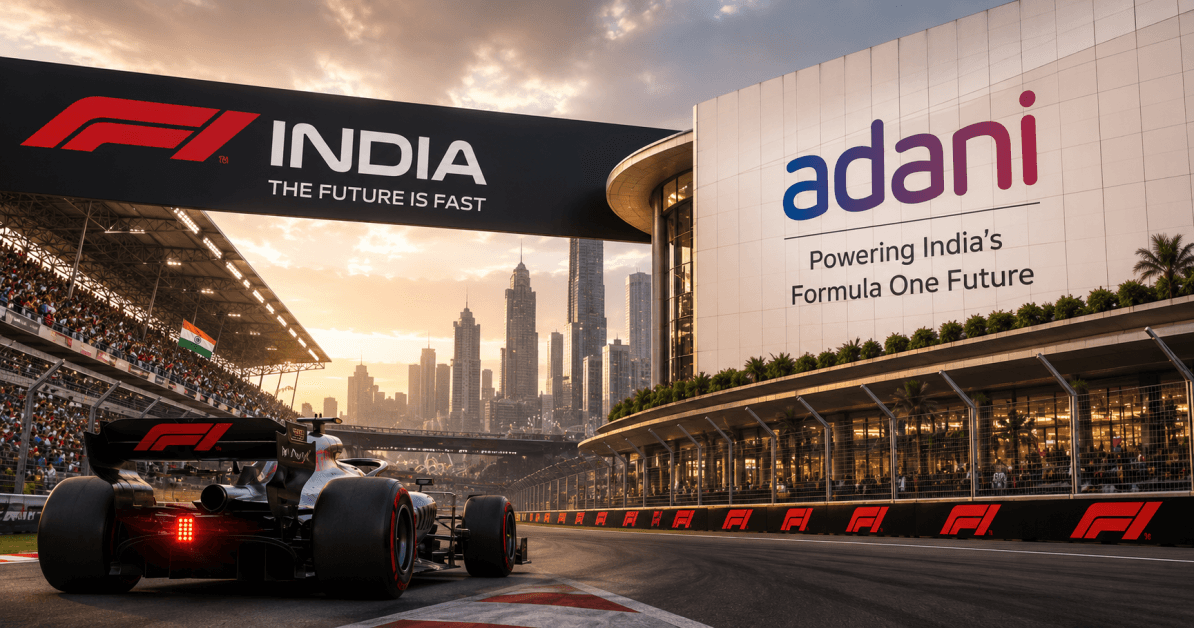
Adani Group Emerges as Key Stakeholder in Formula One Return Plan for India by 2028
The Adani Group is emerging as a key stakeholder in India's efforts to bring Formula One (F1) back to the country by 2028, reflecting growing private-sector participation in the development of world-class sports infrastructure and global sporting events. The proposed revival of the Indian Grand Prix is expected to strengthen India's position in international motorsport while creating significant opportunities across tourism, hospitality, infrastructure, media, and the broader sports economy.
The initiative comes as India continues investing in large-scale infrastructure and positioning itself as a destination for major global sporting events. With its diversified presence across airports, logistics, transport, energy, urban infrastructure, and digital businesses, the Adani Group is viewed as a strategic participant capable of supporting the large-scale operational requirements associated with hosting a Formula One race.
If the plans move forward, the return of Formula One could become one of India's biggest international sporting projects, attracting global audiences, corporate sponsors, and international visitors.
Formula One's Return Gains Momentum
India previously hosted the Formula One Indian Grand Prix, demonstrating its ability to organize one of the world's most prestigious motorsport events. Since then, the country's economy, infrastructure, and sports ecosystem have expanded considerably, creating renewed optimism about bringing the championship back.
The proposed return is supported by several long-term trends:
-
Rising sports consumption
-
Expanding middle-class spending
-
Growth in sports tourism
-
Better transportation infrastructure
-
Increased corporate participation
-
Global investor confidence
-
Higher digital engagement
-
Stronger event management capabilities
These developments improve India's attractiveness as a potential destination on the Formula One calendar.
Adani Group's Strategic Role
The Adani Group's infrastructure expertise could play an important role in supporting a project of this scale.
Its businesses span sectors directly connected to hosting international sporting events, including:
-
Airports
-
Transportation
-
Logistics
-
Urban infrastructure
-
Energy
-
Digital services
-
Hospitality partnerships
-
Event infrastructure
Such capabilities can contribute to seamless movement of teams, equipment, international visitors, media personnel, and commercial partners during a Formula One weekend.
The group's experience in executing large infrastructure projects also aligns with the complex planning requirements of global sporting events.
Boost for India's Sports Economy
The return of Formula One would have implications extending far beyond motorsport.
Potential economic benefits include:
-
Growth in sports tourism
-
Increased hotel occupancy
-
Higher airline traffic
-
Greater retail spending
-
Expansion of event management services
-
Increased sponsorship activity
-
Job creation
-
Infrastructure investment
-
International media exposure
-
Stronger global branding
Major international sporting events often generate substantial economic activity across multiple industries while strengthening a country's global profile.
Tourism and Hospitality to Benefit
Formula One attracts thousands of international visitors, including racing teams, sponsors, corporate executives, media organizations, and fans.
The event could drive demand for:
-
Luxury hotels
-
Airlines
-
Restaurants
-
Local transportation
-
Entertainment venues
-
Premium retail
-
Travel services
-
Tourism experiences
Such activity would support local businesses while promoting India as a destination for international sports tourism.
Corporate Sponsorship Opportunities
Formula One is one of the world's most commercially valuable sporting properties.
The championship provides opportunities for:
-
Automobile manufacturers
-
Financial institutions
-
Technology companies
-
Consumer brands
-
Telecommunications firms
-
Luxury brands
-
Airlines
-
Hospitality companies
-
Media organizations
-
Digital platforms
A successful Indian Grand Prix would likely attract significant sponsorship investments from both domestic and international corporations.
Infrastructure Development
Hosting Formula One requires world-class facilities that meet stringent international standards.
Areas expected to receive attention include:
-
Racing circuit upgrades
-
Road connectivity
-
Public transportation
-
Airport infrastructure
-
Digital communications
-
Broadcasting facilities
-
Medical services
-
Security systems
-
Hospitality infrastructure
-
Sustainable venue development
These investments often create long-term benefits for cities beyond the sporting event itself.
Technology Powers Modern Motorsport
Formula One is widely recognized as a showcase for technological innovation.
Modern racing increasingly depends on:
-
Artificial intelligence (AI)
-
Real-time telemetry
-
Predictive analytics
-
Hybrid powertrain technology
-
Cloud computing
-
Advanced aerodynamics
-
Digital broadcasting
-
Fan engagement platforms
-
High-performance engineering
-
Data-driven decision-making
Hosting the championship would further highlight India's growing capabilities in technology, engineering, and innovation.
Challenges to Address
While the initiative presents considerable opportunities, several challenges remain.
Commercial Sustainability
A Formula One event requires long-term financial planning supported by sponsorships, ticket sales, broadcasting revenue, and commercial partnerships.
Infrastructure Readiness
Facilities must meet international safety, operational, and hospitality standards before hosting a race.
Calendar Approval
India would need to secure a position on Formula One's global racing calendar through successful negotiations with the championship's commercial rights holders.
Multi-Stakeholder Coordination
Delivering a global sporting event requires collaboration among government agencies, private companies, sports authorities, and international partners.
Outlook
Industry experts believe India's expanding economy, improving infrastructure, and growing interest in global sports create favourable conditions for Formula One's return.
Key factors supporting the initiative include:
-
Strong economic growth
-
Rising corporate investment
-
Infrastructure development
-
Expanding sports industry
-
Increased international tourism
-
Higher digital media consumption
-
Growing motorsport audience
-
Long-term urban development
-
Public-private collaboration
-
Enhanced global visibility
If planning progresses as expected, Formula One could once again become one of India's flagship international sporting events by 2028.
Conclusion
The Adani Group's emergence as a key stakeholder in India's Formula One return plan reflects the increasing role of private-sector participation in developing world-class sporting infrastructure. With expertise across transportation, logistics, airports, and infrastructure, the group could contribute significantly to the successful organisation of an international motorsport event.
Beyond the race itself, Formula One's potential return promises substantial economic benefits through tourism, investment, employment, and global brand recognition. As planning advances, the project could mark a major milestone in India's ambition to become a leading destination for international sporting events and large-scale infrastructure-driven economic growth.
 Adani Group Emerges as Key Stakeholder in Formula One Return Plan FAQs
POST A COMMENT (0)
All Comments (0)
Replies (0)