





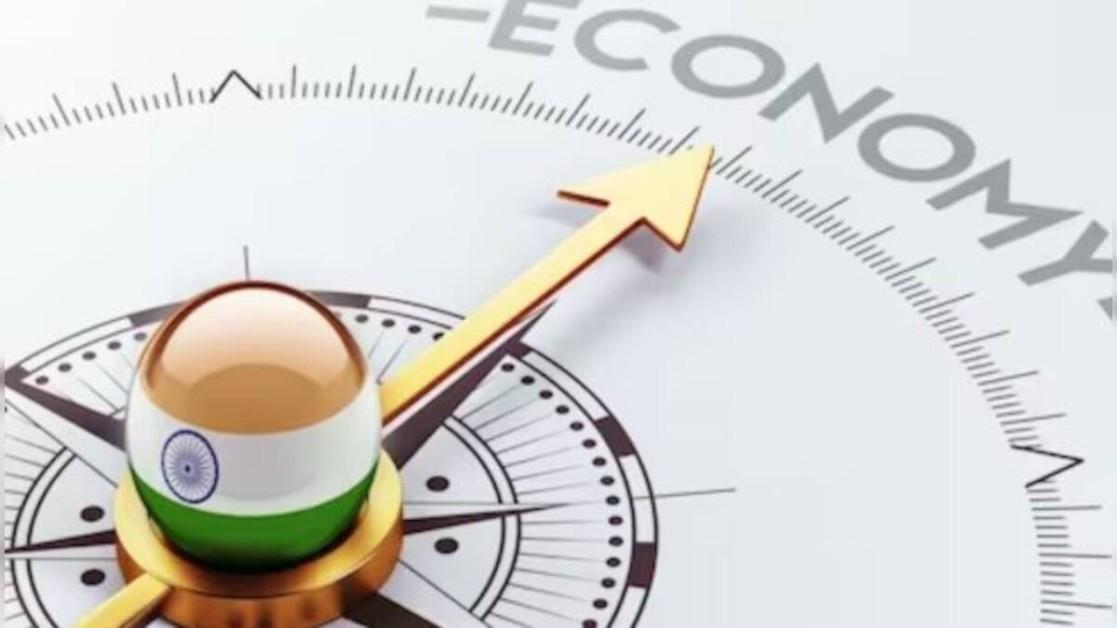
India's Economy Could Reach $7 Trillion This Decade
Already the world's fourth-largest economy, India is on a trajectory that forecasters say could lift it to $7 trillion and third place by 2030 — if it sustains growth and tackles the gaps beneath the headline numbers.
By Naina, 30th June 2026
India's economy could reach $7 trillion within this decade, a milestone that would make it the world's third-largest and cement its rise as a global economic power. Already the fourth-largest economy after recently surpassing Japan, India is growing faster than any other major economy, with recent quarters posting growth around 8 percent. Government and private forecasters project that, on current trends, India's gross domestic product could climb to roughly $7.3 trillion by 2030, overtaking Germany along the way. Driven by strong domestic demand, a manufacturing push, a thriving services sector, and structural reforms, the trajectory is striking, though significant challenges remain beneath the headline figures.
The ascent has been rapid. India's GDP, around $4 trillion today, has roughly doubled over the past decade, and forecasters expect it to add several trillion more by the early 2030s. Reaching $7 trillion would reflect not just size but a deeper transformation, as India formalises its economy, builds infrastructure, and integrates into global supply chains. Yet the milestone also masks lower per-capita incomes, jobs pressures, and external risks that will shape whether the goal is met and whether its benefits are widely shared. Here is what could drive India to $7 trillion and what stands in the way.
The $7 Trillion Target
The projection is ambitious but widely cited. Official and private forecasters expect India's GDP to reach around $7.3 trillion by 2030, making it the world's third-largest economy. On the way, India is projected to cross the $5 trillion mark around 2027 and overtake Germany for third place by roughly 2028. Independent estimates, including from international institutions, point to GDP rising by close to $3 trillion between 2025 and the early 2030s. Beyond the decade, longer-term visions target far larger figures by 2047. While exact timing varies by forecast, the consensus is that $7 trillion is achievable this decade if growth holds.
The Current Standing
India's starting point is strong. With GDP around $4 trillion, India recently surpassed Japan to become the world's fourth-largest economy, and it remains the fastest-growing major economy globally. Recent quarters have been particularly robust, with growth reaching around 8 percent, among the highest of any large economy, and averaging well above its peers over recent years. A sovereign credit-rating upgrade has recognised India's improving financial resilience. This combination of scale and speed is what underpins the $7 trillion projection: a large economy still growing at a pace that compounds rapidly, steadily closing the gap with the economies ranked above it.
The Domestic Demand Engine
The primary driver is domestic demand. With more than 1.4 billion people and a young, growing population, India's economy is powered largely by private consumption rather than exports, giving it resilience against global shocks. Rising incomes, urbanisation, and an expanding middle class are fuelling spending across goods and services. This demographic dividend, a large working-age population, is a structural advantage that few economies possess, supporting sustained growth for years if those workers are productively employed. Strong consumer sentiment and easing inflation have further boosted consumption, making domestic demand the bedrock of India's path toward $7 trillion.
The Manufacturing and Investment Push
India is betting heavily on manufacturing and investment. Government schemes to boost domestic production, from electronics and semiconductors to other industries, aim to raise manufacturing's share of the economy and attract global firms diversifying supply chains. Substantial public capital spending on infrastructure, including roads, railways, ports, and energy, is creating capacity and crowding in private investment, with investment running at around a third of GDP. This investment-led component complements consumption, building the productive base needed to sustain high growth. If the manufacturing push succeeds, it could add a powerful new engine to an economy long driven by services and consumption.
The Services and Digital Edge
Services and digital infrastructure are a defining strength. India's robust services sector, spanning IT, global capability centres, and a fast-growing enterprise-technology market, drives exports and high-value jobs, and has repeatedly powered growth beyond expectations. Underpinning this is a world-leading digital public infrastructure, with systems like its real-time payments network formalising commerce and widening financial inclusion. The digital economy is becoming a larger share of output, and the rapid adoption of artificial intelligence could add further value. This services-and-digital edge differentiates India's growth model and provides a scalable, globally competitive foundation for its expansion toward $7 trillion.
The Reform and Macro Backdrop
A supportive macro environment is aiding the climb. India has pursued a series of structural reforms, and a sovereign rating upgrade has affirmed its strengthening fundamentals. The economy has been enjoying what some describe as a rare period of high growth alongside low inflation, with healthy savings and investment rates supporting expansion. Easing inflation has created room for supportive monetary policy. This combination, reform momentum, macro stability, and strong fundamentals, has made India a prime destination for global capital. Sustaining this backdrop, including continued reforms and prudent policy, is essential to keeping the growth trajectory on track toward the $7 trillion goal.
The Per Capita Reality
The headline size masks a sobering reality. Despite ranking among the world's largest economies, India's GDP per capita remains far below that of advanced economies, reflecting its vast population and incomes still rising from a low base. A $7 trillion economy spread across more than 1.4 billion people translates to far lower average prosperity than in smaller, richer nations. This gap underscores that total GDP is only one measure of progress, and that the real test is how widely the benefits are shared. Lifting per-capita incomes and living standards, not just aggregate output, is the deeper challenge behind the milestone.
The Risks to the Trajectory
Several risks could slow the climb. Creating enough quality jobs for the millions of young people entering the workforce each year is a pressing challenge, as is reducing inequality and regional disparities. External factors, including global trade tensions, tariffs, volatile energy prices, and a weak monsoon, can dent growth, while the dollar value of GDP is sensitive to the rupee's exchange rate, meaning currency moves can affect when milestones are hit. Infrastructure gaps and the need for deeper financial markets also remain. Meeting the $7 trillion target will require navigating these risks while sustaining high growth over several years.
The Road Ahead
India's path to a $7 trillion economy this decade is plausible and, on current trends, increasingly likely, but it is not guaranteed. The drivers, domestic demand, demographics, manufacturing, services, and reform, are powerful, and the recent pace of growth supports the projection. Yet the milestone will mean most if it is accompanied by rising incomes, quality jobs, and broadly shared prosperity, rather than size alone. Sustaining reforms, deepening capital markets, and investing in people and infrastructure will determine both whether India reaches $7 trillion and what that achievement means for its citizens. The trajectory is set; execution will decide the outcome. This is analysis, not investment advice.
Frequently Asked Questions
When could India become a $7 trillion economy?
Government and private forecasters project India's GDP could reach around $7.3 trillion by 2030, making it the world's third-largest economy. India is expected to cross $5 trillion around 2027 and overtake Germany by roughly 2028.
How big is India's economy now?
India's GDP is around $4 trillion, making it the world's fourth-largest economy after recently surpassing Japan. It is also the fastest-growing major economy, with recent quarters posting growth around 8 percent.
What is driving India's growth?
Strong domestic demand and private consumption, a young and growing population, a manufacturing and infrastructure push, a robust services and digital sector, and structural reforms supported by macroeconomic stability.
What are the main risks to reaching $7 trillion?
Creating enough quality jobs, reducing inequality, global trade tensions and tariffs, volatile energy prices, a weak monsoon, currency fluctuations affecting the dollar value of GDP, and the need for deeper financial markets and infrastructure.
Does a large economy mean India is wealthy?
Not necessarily. Despite its size, India's GDP per capita remains far below advanced economies because of its vast population. Total GDP is only one measure of progress; lifting per-capita incomes and sharing prosperity widely is the deeper challenge.
 Related News
POST A COMMENT (0)
All Comments (0)
Replies (0)