





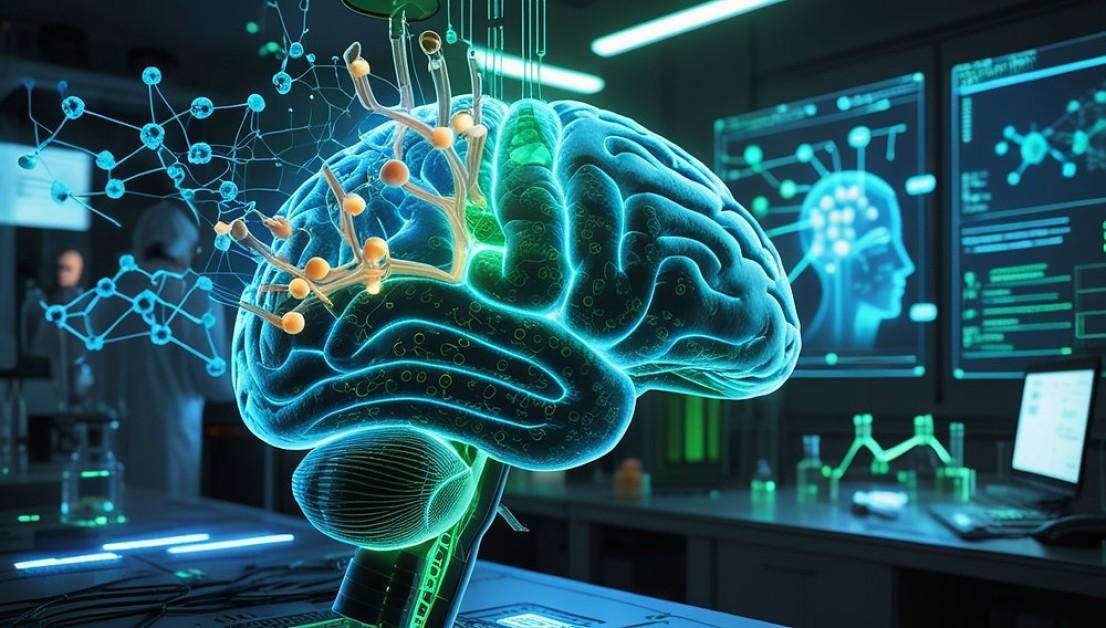
Inside the Race to Build a Human Brain in the Lab
What once sounded like science fiction is now a cutting-edge scientific pursuit: growing a human brain in a lab. Across the world, teams of neuroscientists, geneticists, and bioengineers are racing to develop lab-grown human brain models—tiny clusters of neurons that mimic the structure and activity of the real human brain.
These biological creations, called brain organoids, are unlocking new frontiers in understanding mental illness, consciousness, memory, and even the foundations of artificial intelligence.
What Are Brain Organoids?
Brain organoids are 3D clusters of human brain tissue grown from stem cells. Using induced pluripotent stem cells (iPSCs), researchers can coax human skin or blood cells to revert to a stem cell state and then differentiate into neurons, forming mini-brain-like structures.
Although these organoids lack consciousness or full functionality, they replicate key aspects of fetal brain development, such as layered organization, electrical activity, and even rudimentary neural networking.
Why Grow a Human Brain in the Lab?
The motivation behind this groundbreaking research is multifold:
-
Disease Modeling: Brain organoids help scientists understand diseases like Alzheimer’s, Parkinson’s, autism, and epilepsy in ways traditional animal models cannot.
-
Drug Testing: Lab-grown brains can serve as personalized platforms for testing treatments, reducing the need for human trials and animal testing.
-
AI and Neural Networks: Understanding how biological neurons interact may unlock new forms of artificial intelligence.
-
Consciousness Research: Some scientists aim to explore the neural basis of consciousness itself by observing self-organizing brain structures.
In 2024, researchers at Harvard’s Wyss Institute and Germany’s Max Planck Institute reported the first brain organoid to exhibit sleep-like oscillations, hinting at a new level of neural complexity.
Breakthroughs from the Lab
-
University of California, San Diego successfully grew brain organoids with working eye-like structures in 2023, marking a major milestone in developmental biology.
-
Cortical organoids are now capable of producing human-like brainwaves, though scientists caution against interpreting this as cognition.
-
Brain-on-a-chip technology is combining bioengineered tissue with electronic interfaces to create hybrids of biology and circuitry.
Companies like Cerebras, Emulate, and Deepcell are investing heavily in brain-based technologies, aiming to bridge biology and machine intelligence.
The Ethics of Growing Human Brains
With rapid advancement comes profound ethical concern. As these organoids grow more complex, could they develop some form of awareness? Should they be treated like lab animals—or something more?
Bioethicists are now debating:
-
Whether brain organoids deserve moral consideration
-
If they should be allowed to develop beyond certain stages
-
How to handle informed consent, especially when using personalized stem cells
-
The risks of creating entities with partial or suffering consciousness
International guidelines remain unclear. The National Institutes of Health (NIH) and UNESCO are now working on updated ethical frameworks to address this fast-evolving landscape.
Limitations and Scientific Challenges
Despite the hype, we are far from growing a full human brain. Current brain organoids:
-
Lack blood vessels and immune cells
-
Don’t develop into fully connected hemispheres
-
Can’t survive long or grow to adult-like sizes
-
Often differ significantly between samples
Still, the pace of progress is astounding. 3D bioprinting, microfluidics, and CRISPR gene editing are being integrated to overcome existing barriers and push the field forward.
What the Future Holds
By 2030, we may see:
-
Fully vascularized brain organoids for long-term studies
-
Hybrid neuro-bio computing chips inspired by lab-grown tissue
-
Personalized brain models to tailor psychiatric treatments
-
New insights into consciousness and memory formation
Governments and universities worldwide—from Japan and Israel to the U.S. and U.K.—are pouring millions into neuroscience innovation hubs. The EU’s Human Brain Project, China’s Brain Science and Brain-Inspired Technology Plan, and the U.S. BRAIN Initiative are leading the charge.
Conclusion: Rewiring Our Understanding of the Human Mind
The race to build a human brain in the lab is more than a scientific challenge—it’s a philosophical, ethical, and technological revolution. As researchers map the terrain between neurons and knowledge, we are redefining what it means to be human.
Whether this leads to cures for devastating diseases, new AI frontiers, or unprecedented ethical dilemmas, one thing is certain: our brains will never look the same again—inside or out.
 Related News
POST A COMMENT (0)
All Comments (0)
Replies (0)